
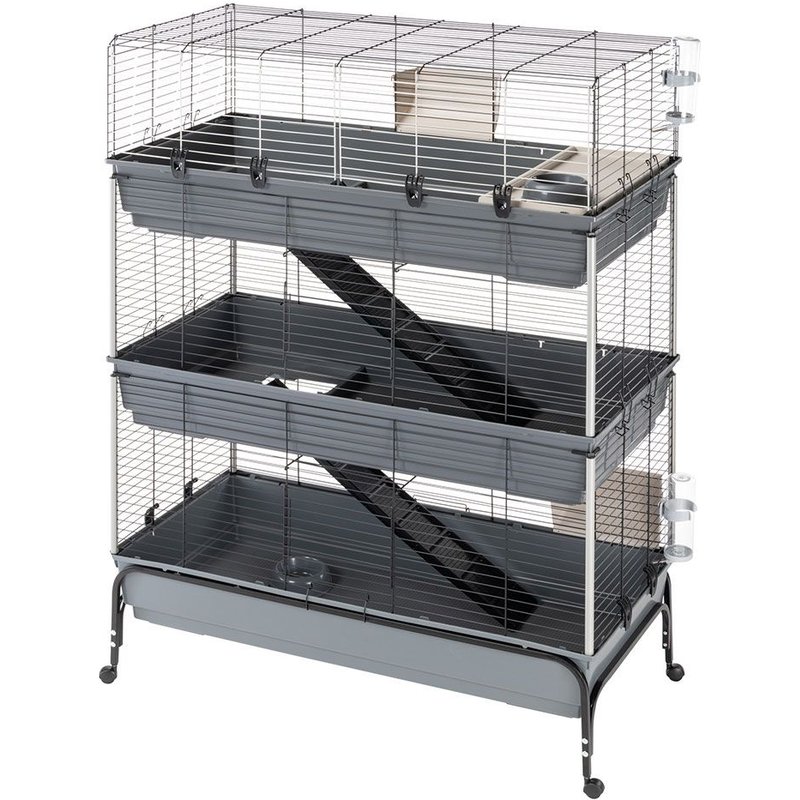
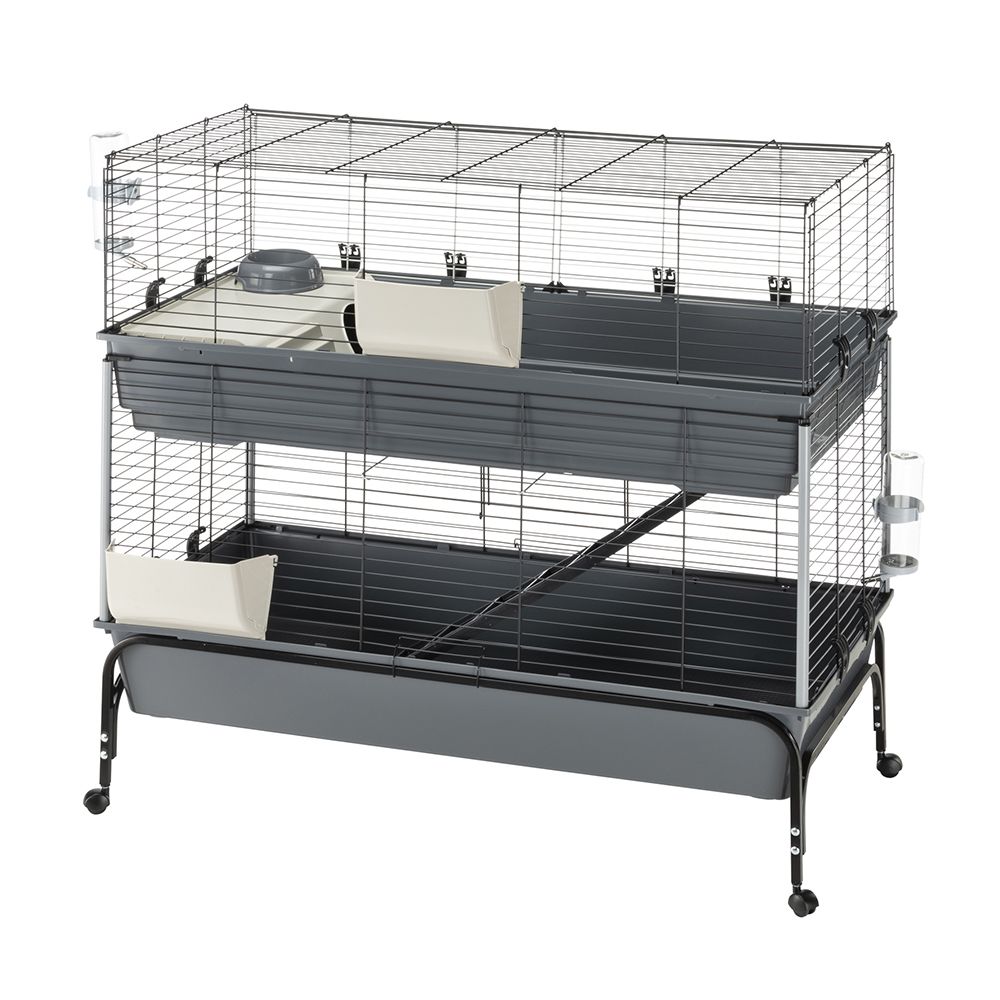
Floor space or height
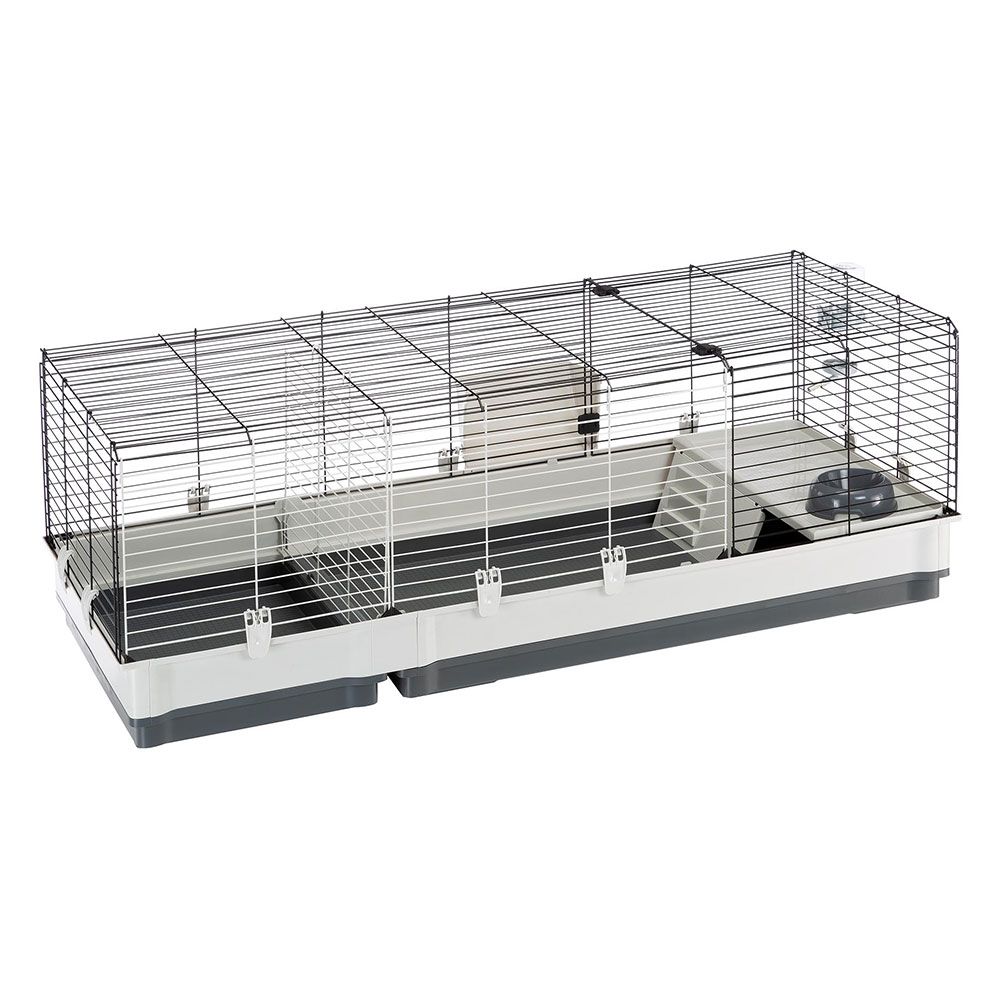
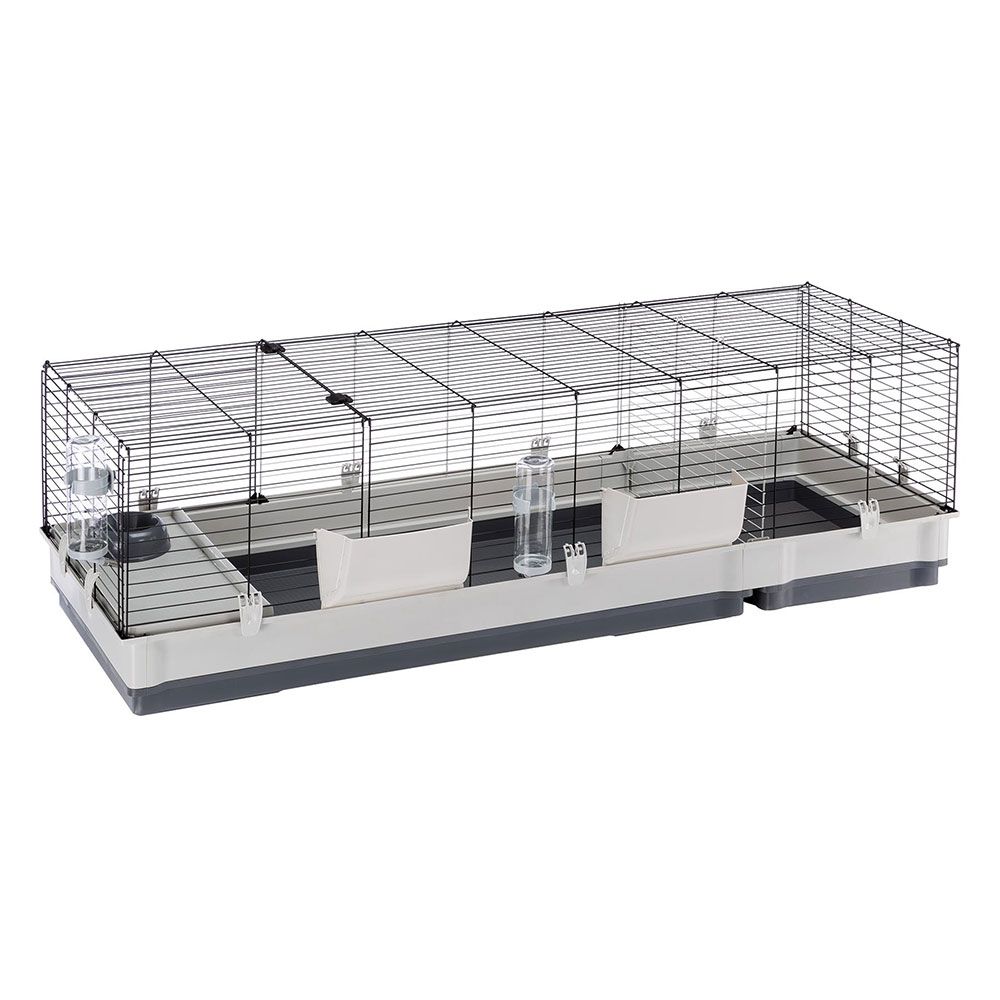
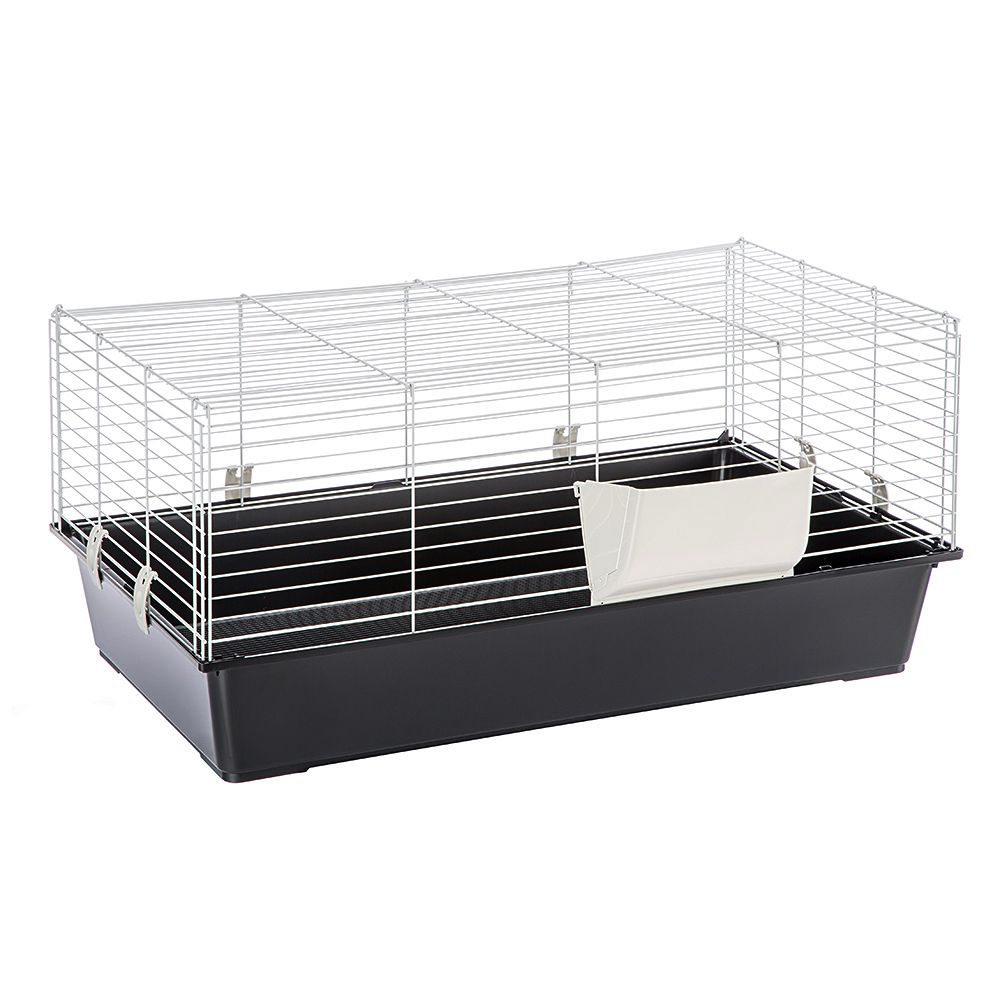
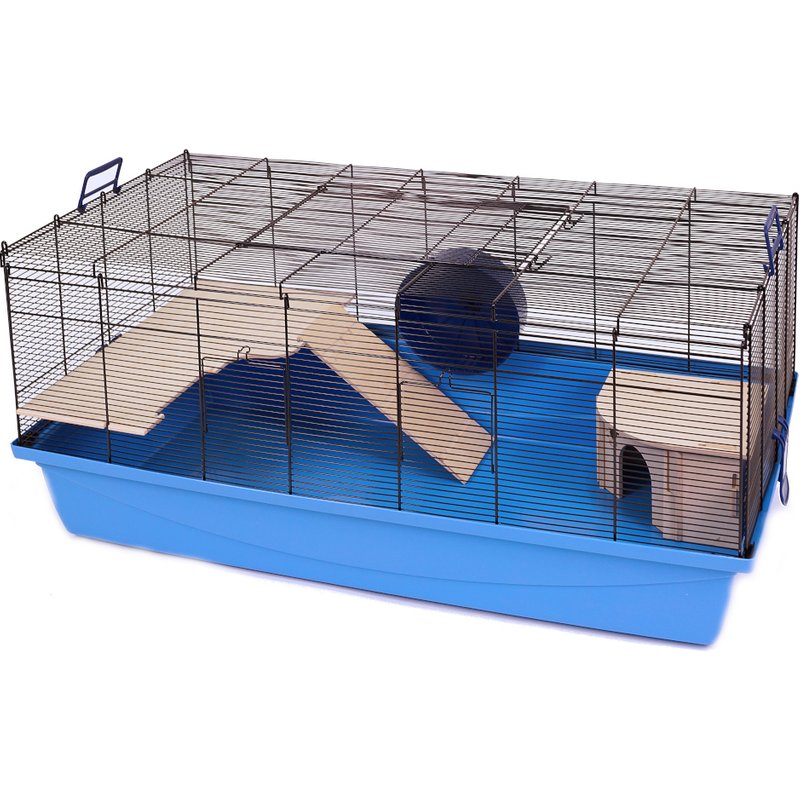
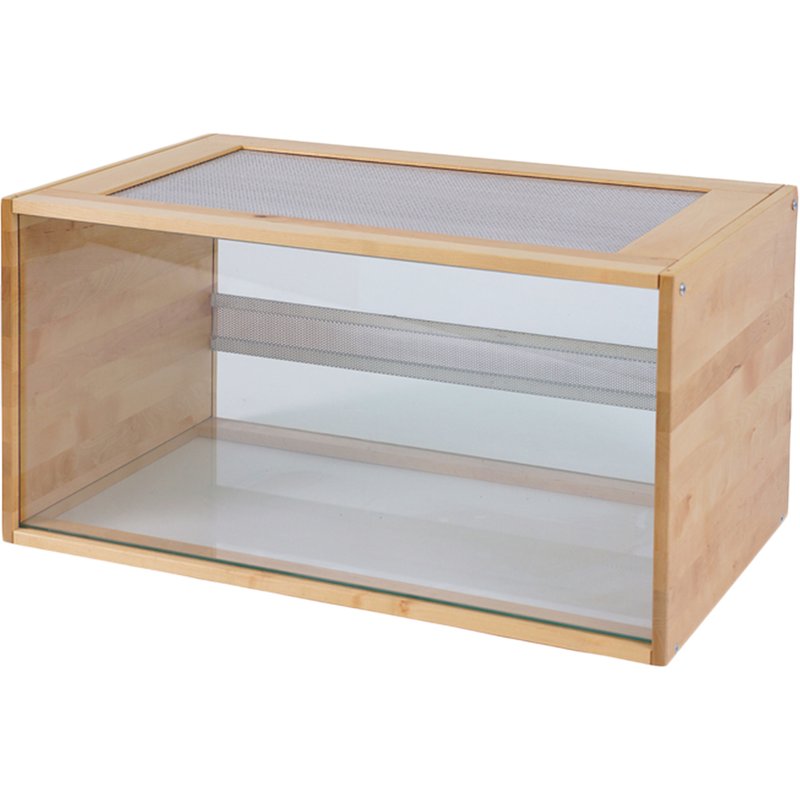
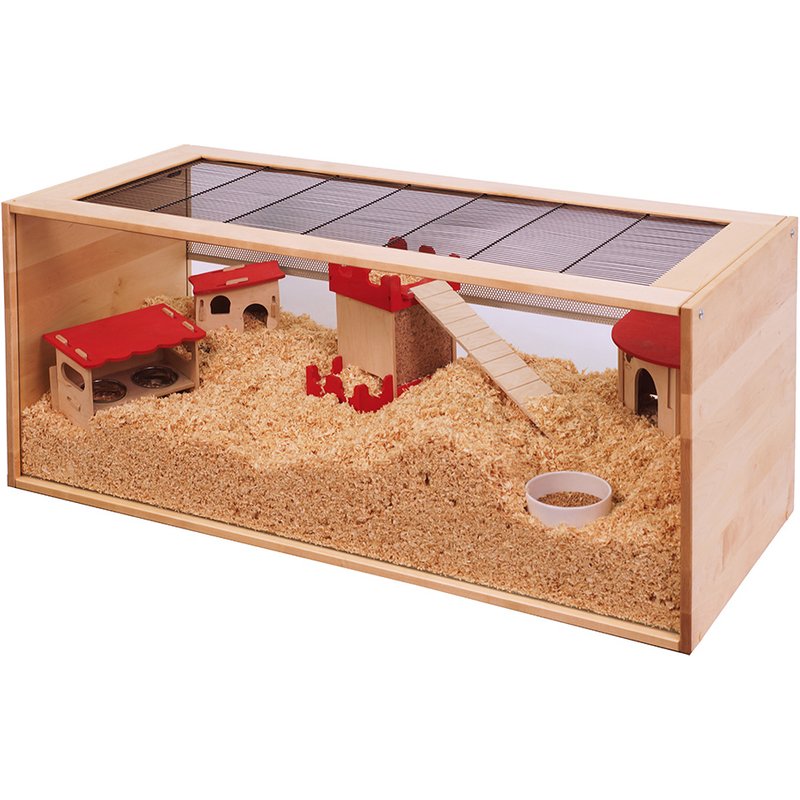
- Ground dwellers: rabbits, guinea pigs, hamsters and gerbils need floor area. A long, wide cage beats a tall one with extra levels.
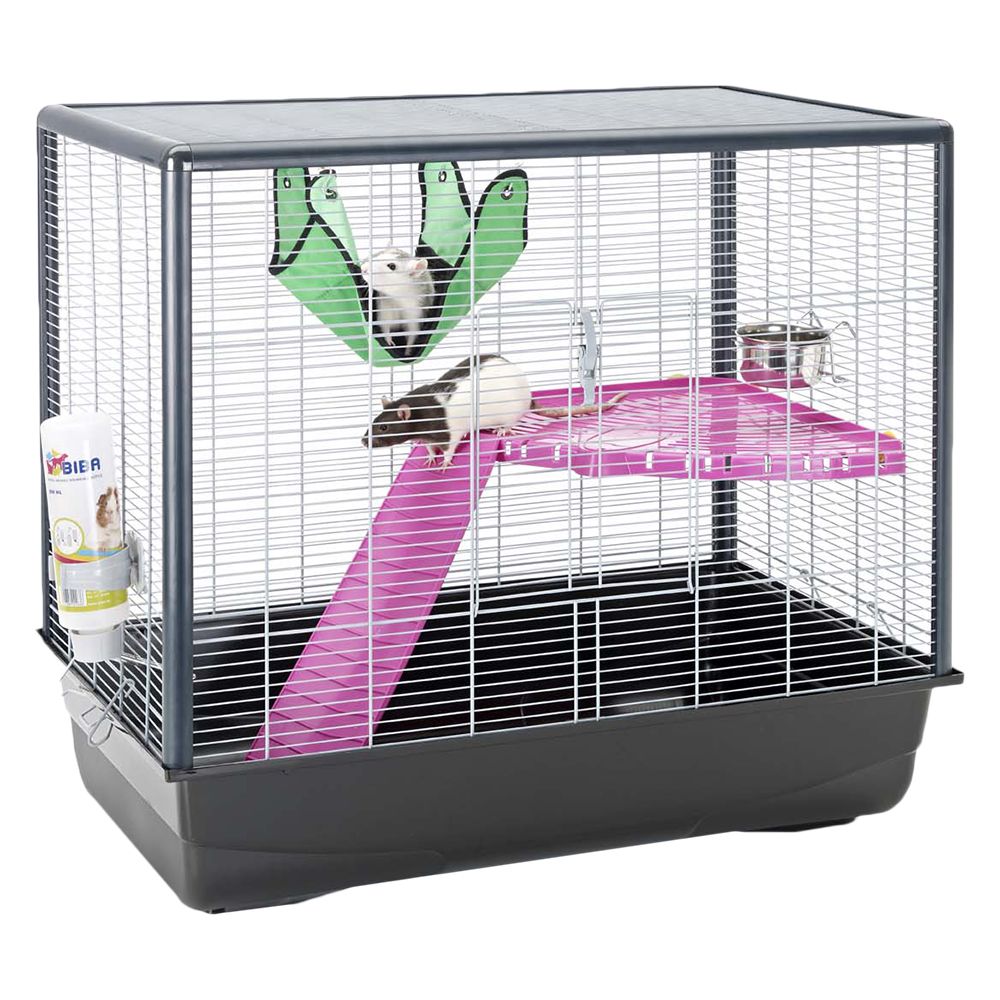
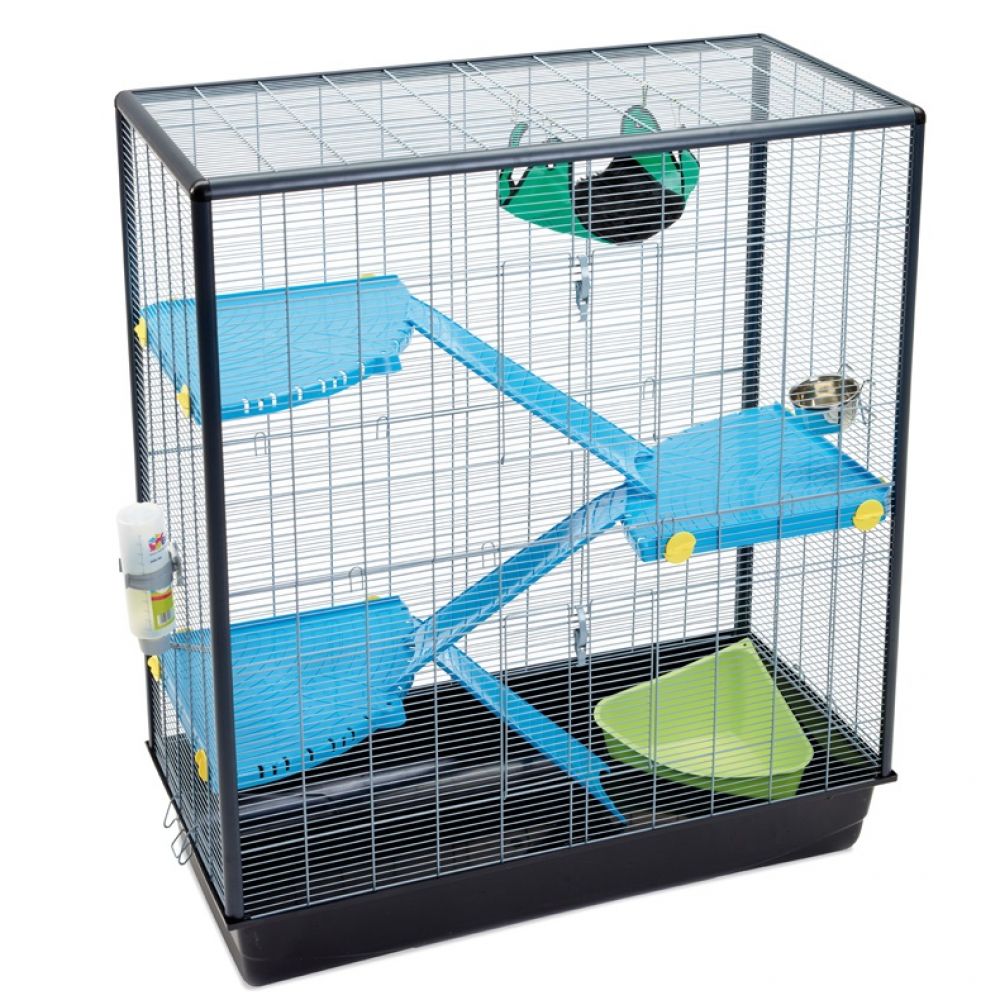
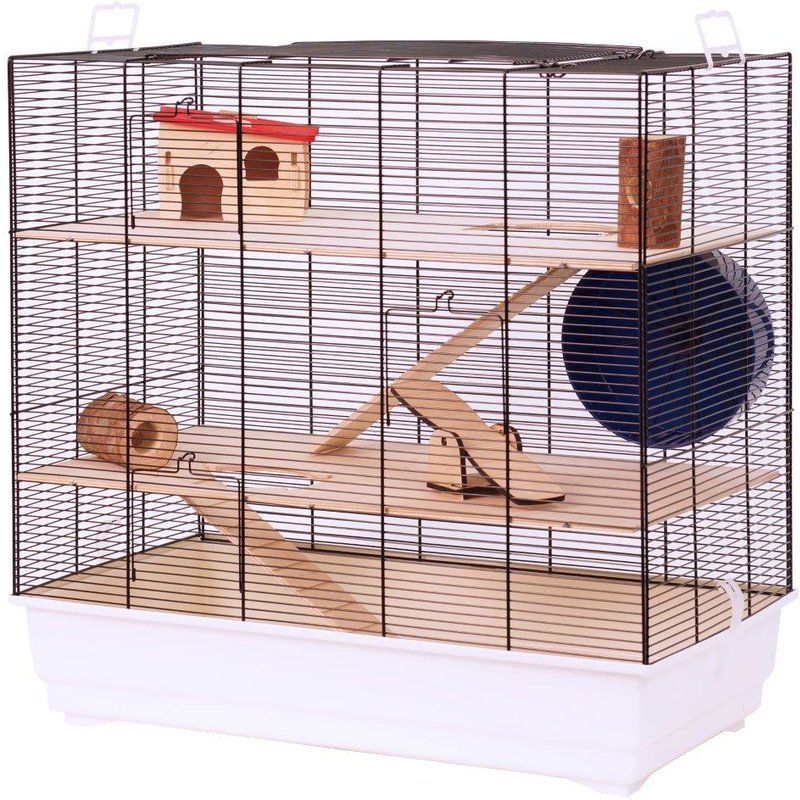
- Climbers: rats, mice, chinchillas, degus and ferrets use height and multiple levels as well as floor space, so tall cages with shelves suit them.
As reference points: the RSPCA minimum for guinea pigs is 120 cm x 60 cm floor area; the Rabbit Welfare Association and Fund recommends at least 3 m x 2 m of continuous space for a pair of rabbits, so a cage only works as the base of a larger set-up; and welfare guidance for hamsters is commonly at least 100 cm x 50 cm of floor space.
Bar spacing and materials
Bar spacing must suit the smallest animal you keep. Mice and dwarf hamsters can squeeze through surprisingly small gaps, young rats need about 1 cm, while rabbits and guinea pigs are fine with wider bars. Powder-coated bars are easier to clean and kinder to teeth than bare galvanised wire. Chewers such as rats and chinchillas will destroy plastic shelves and bases, so look for metal or wooden ones.
Base and floors
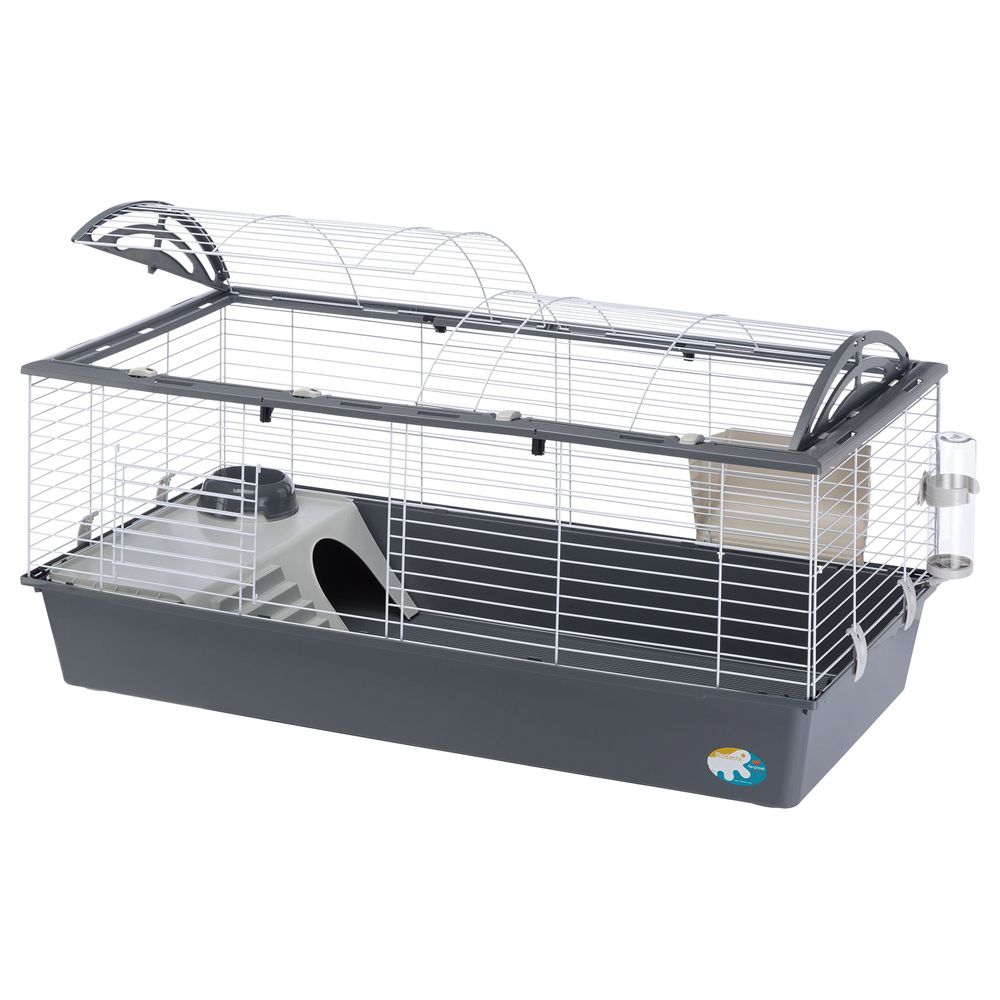
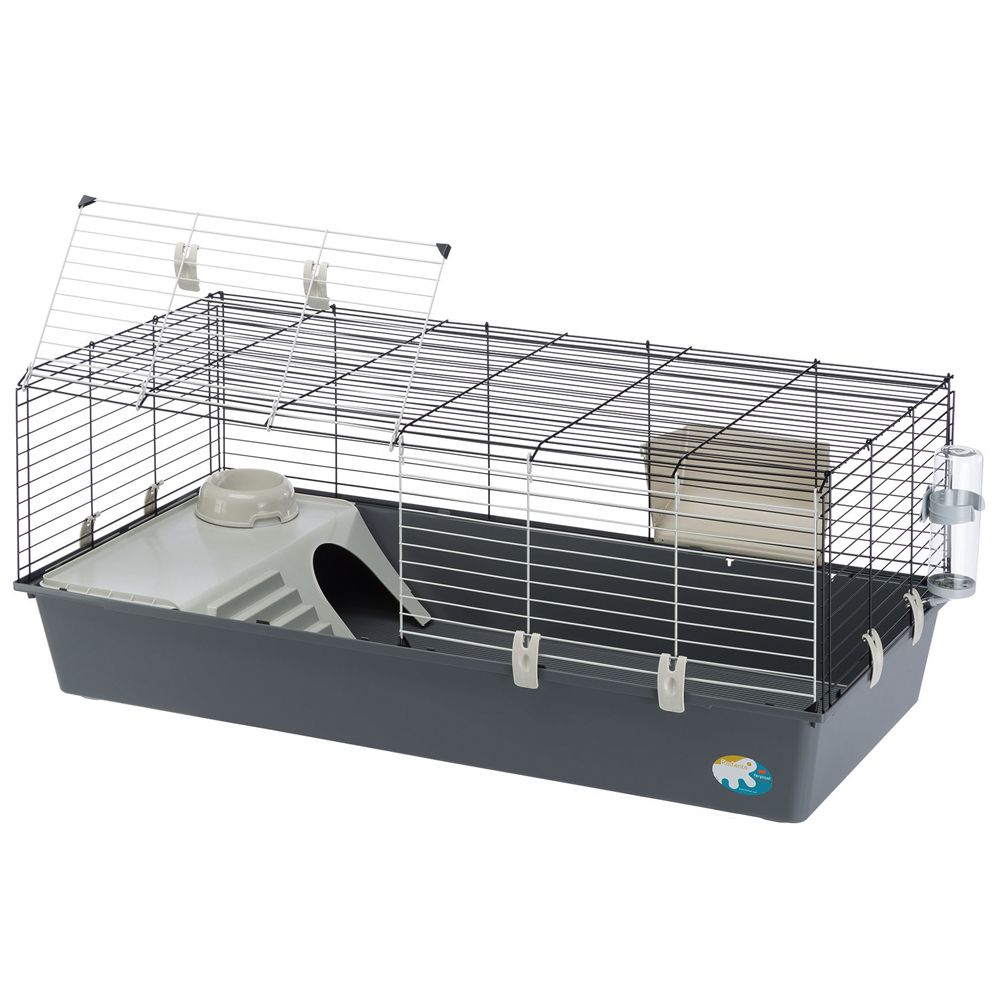
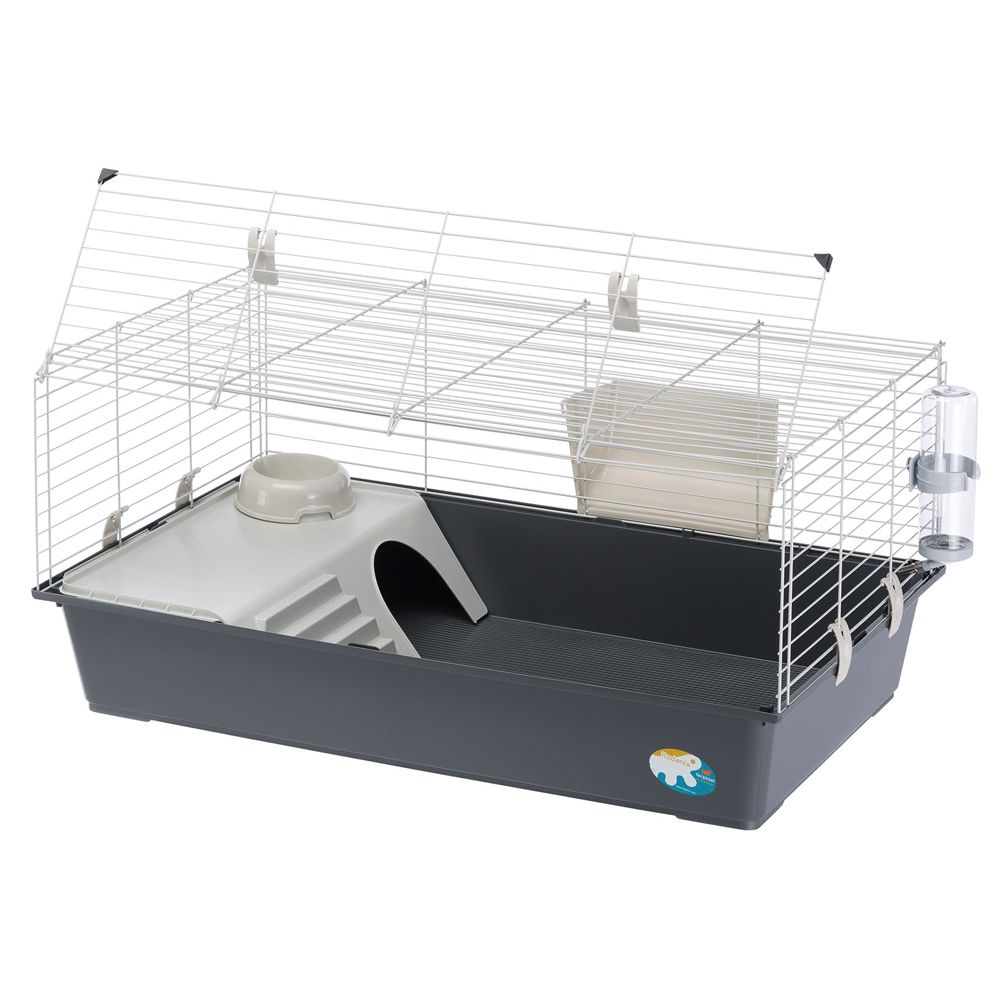
- A deep plastic base holds more bedding and keeps it inside the cage, important for burrowers like hamsters.
- Solid floors and shelves protect feet; wire mesh floors can cause sores and trap toes.
- Large or top-opening doors make cleaning and catching animals much easier.
Indoor cages, hutches and runs
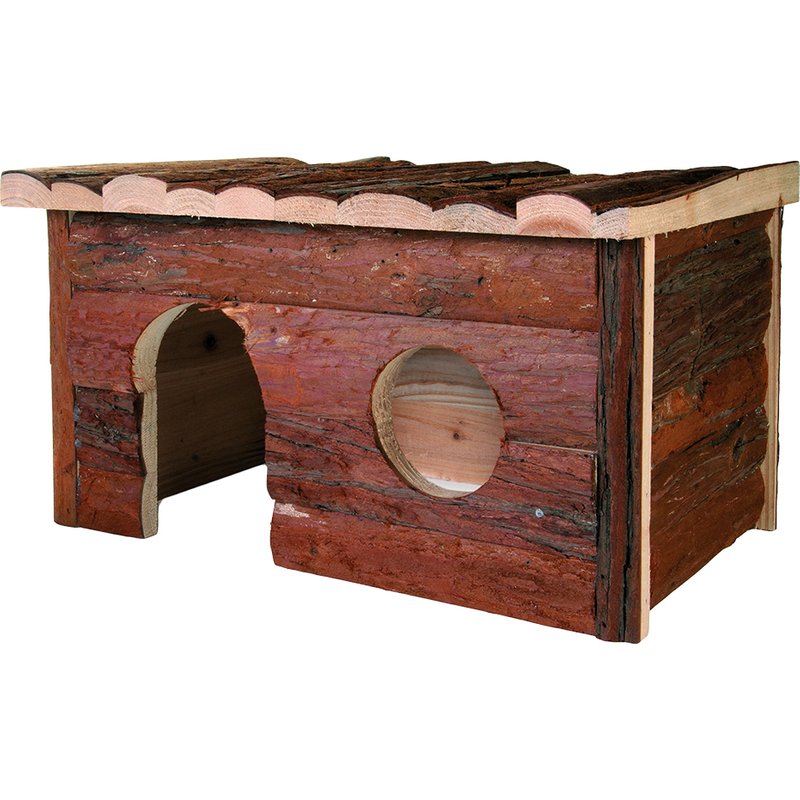
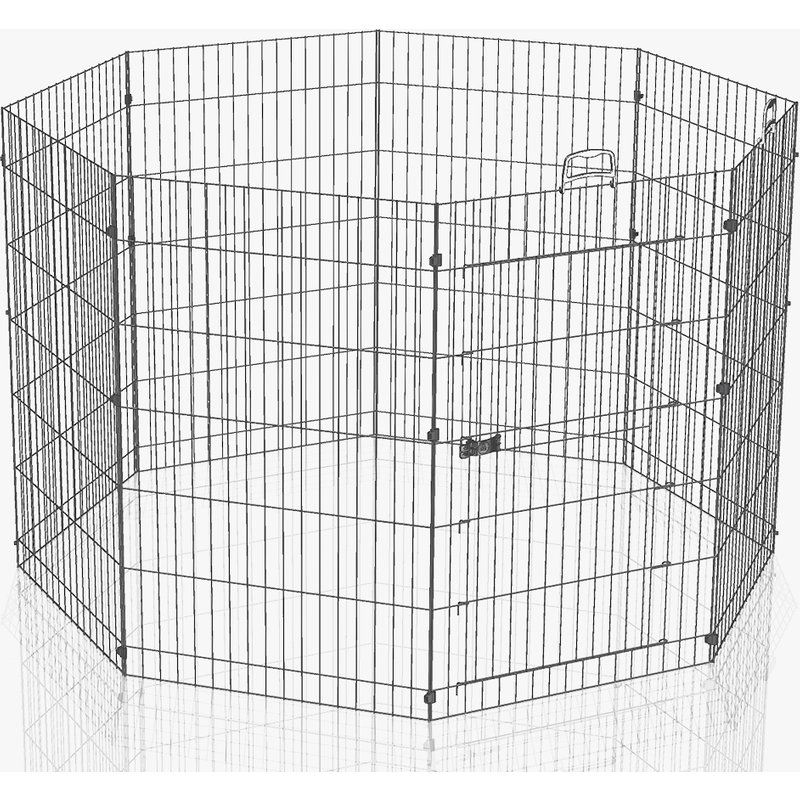
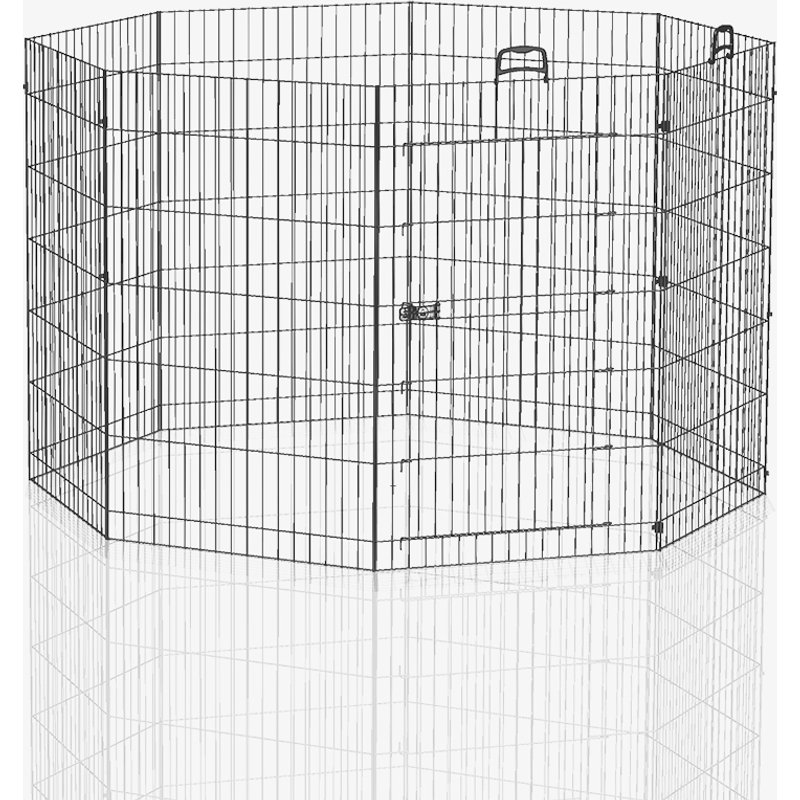
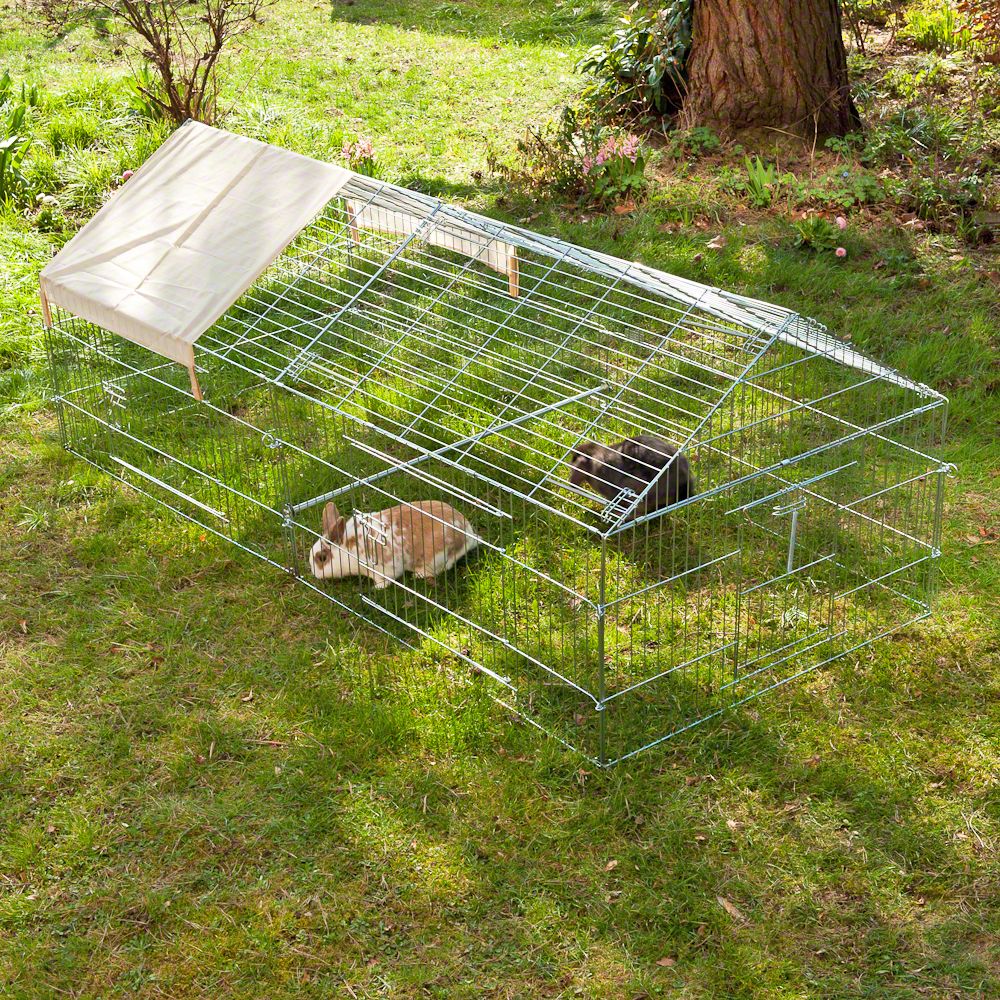
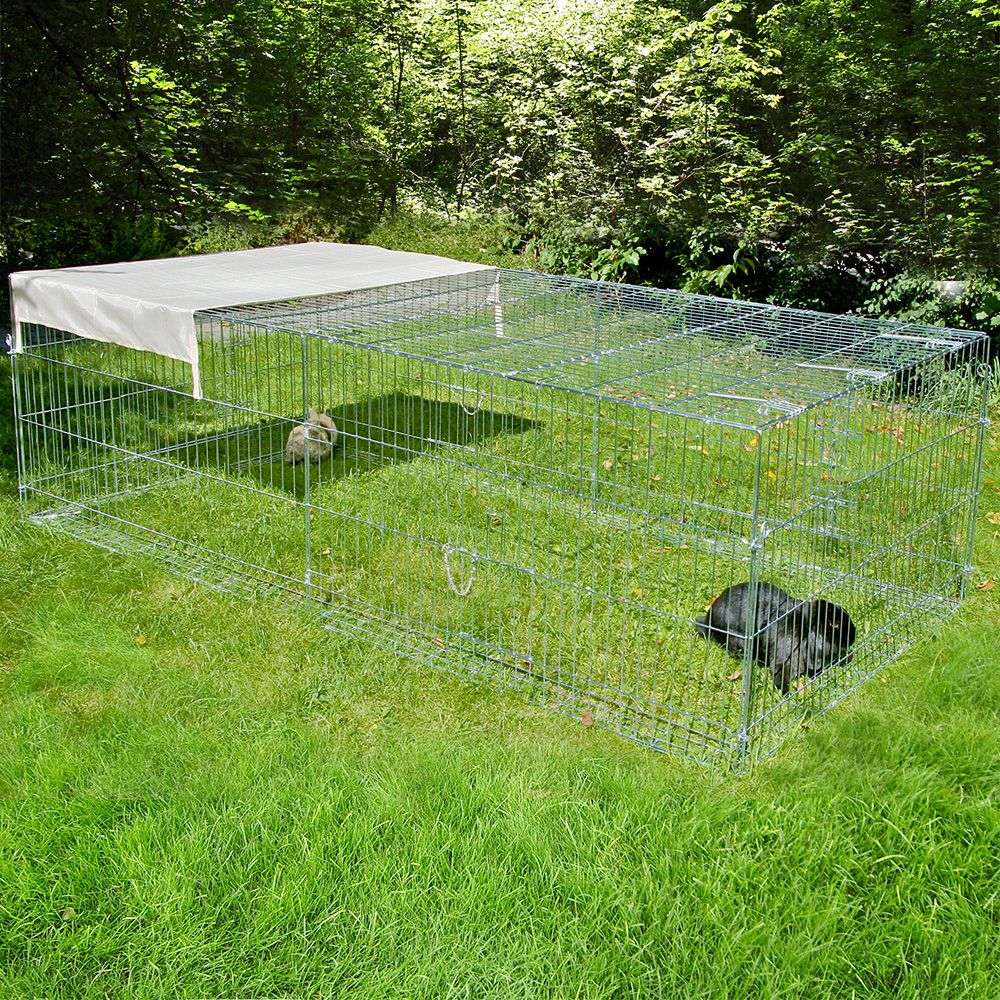
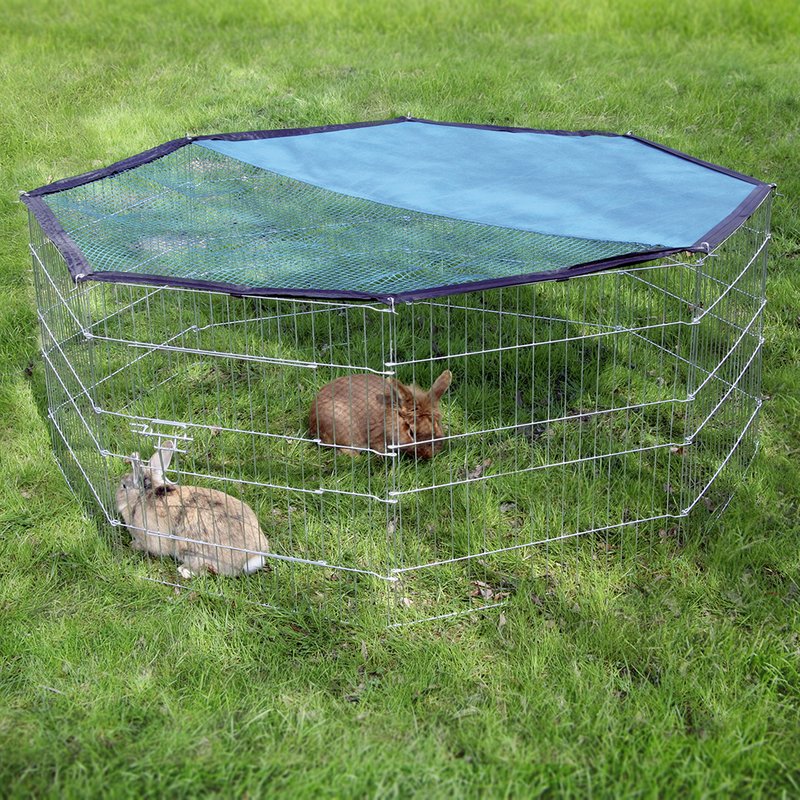
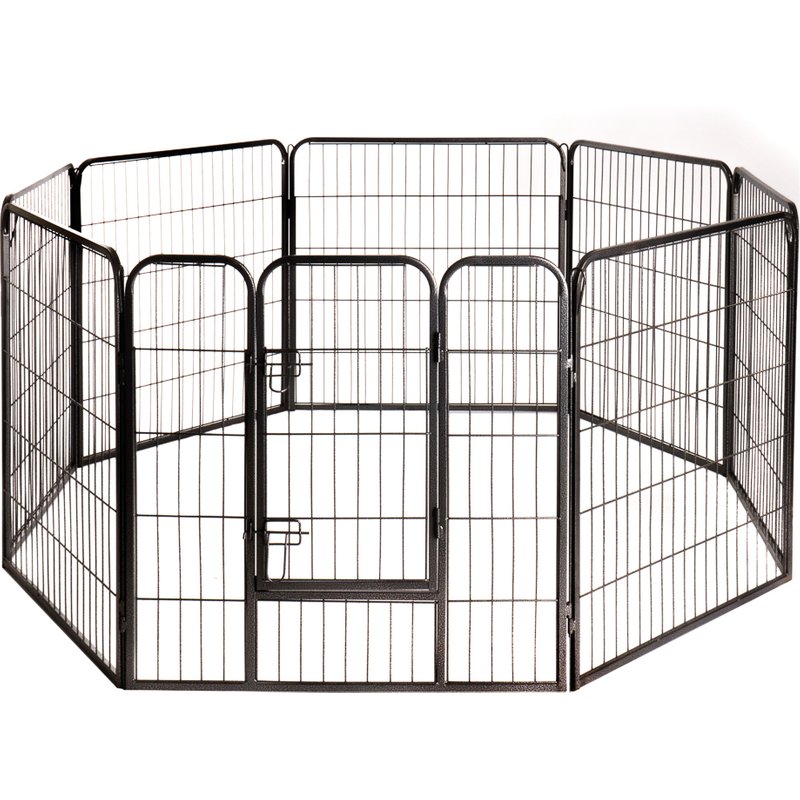
Indoor cages suit hamsters, rats, mice and indoor guinea pigs or rabbits with free-roaming time. Outdoor hutches need to be raised, weatherproof and well ventilated, with a separate sleeping area. Metal runs add exercise space on grass or inside; models with a roof or escape barrier stop rabbits jumping out and keep predators away. Add-on houses and platforms give shy animals somewhere to hide.
Setting up
Place cages away from radiators, direct sun, draughts and loud televisions. Keep them off the floor in homes with dogs or cats. Add bedding, hides for each animal, a water bottle or bowl, heavy food bowls, a hay rack for herbivores, and chew items.
Common questions
Is a 120 cm cage big enough for a rabbit?
Not on its own. The Rabbit Welfare Association and Fund recommends at least 3 m x 2 m of continuous space, 1 m high, for a pair of rabbits. A 120 cm cage can work as a base or bedroom if it opens on to a large run or a rabbit-proofed room.
Can I keep a hamster in a cage made for mice or rats?
Possibly, but check the floor space and bar spacing. Hamsters need lots of floor area and deep bedding more than height, while rat cages are often tall with wide bar spacing that a small hamster could slip through. A large tank or a dedicated hamster cage with a deep base is usually the safer choice.
Are wire-bottom cages bad for small animals?
Wire mesh floors can cause sore feet and trap toes, particularly in rabbits, guinea pigs and chinchillas. Choose cages with solid floors and shelves. If an existing cage has mesh levels, cover them with a solid board or fleece.