
Height and stability
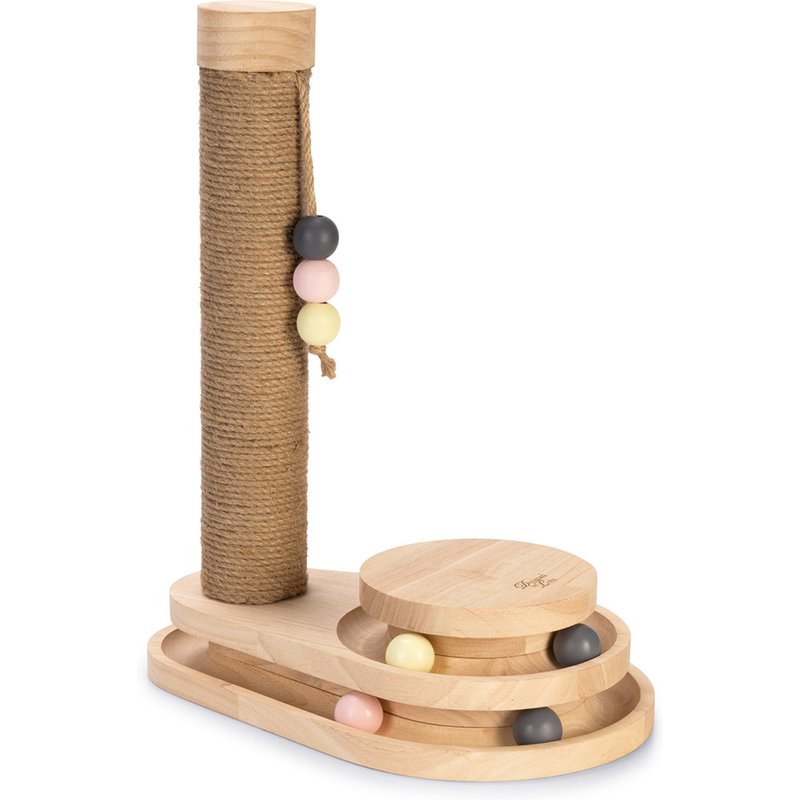
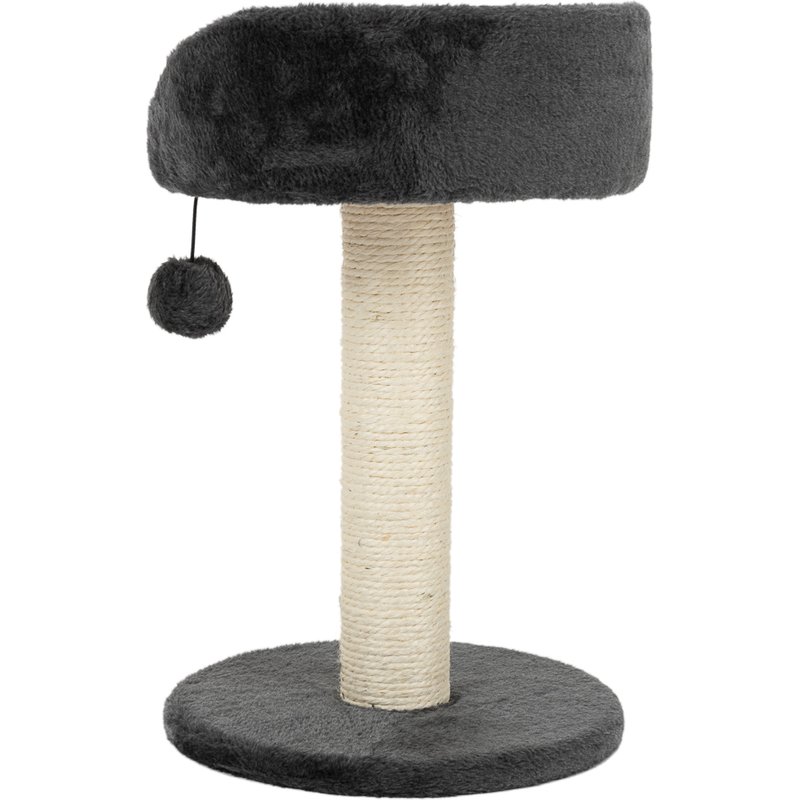
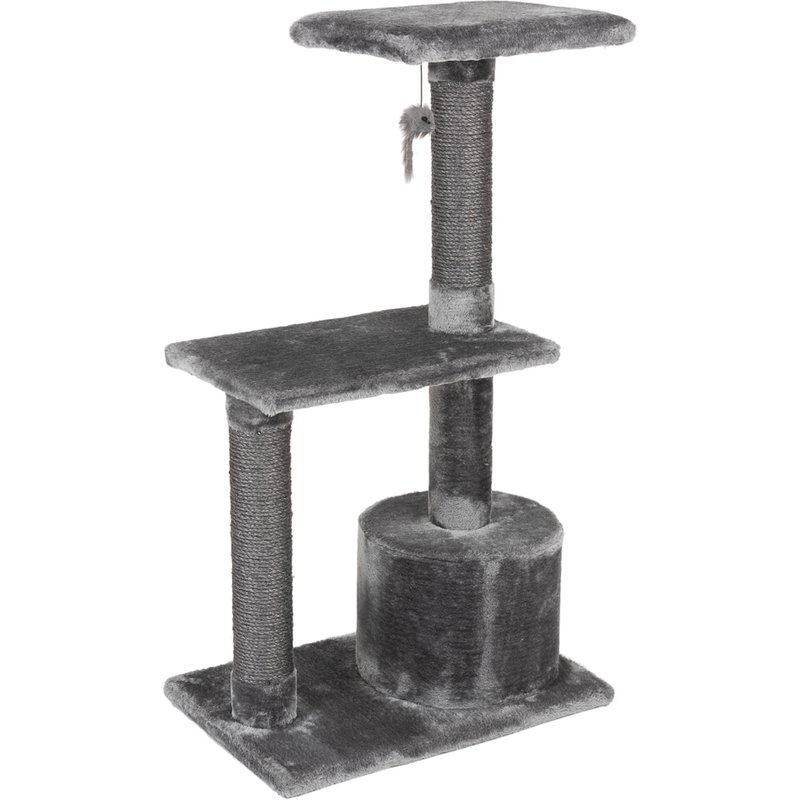
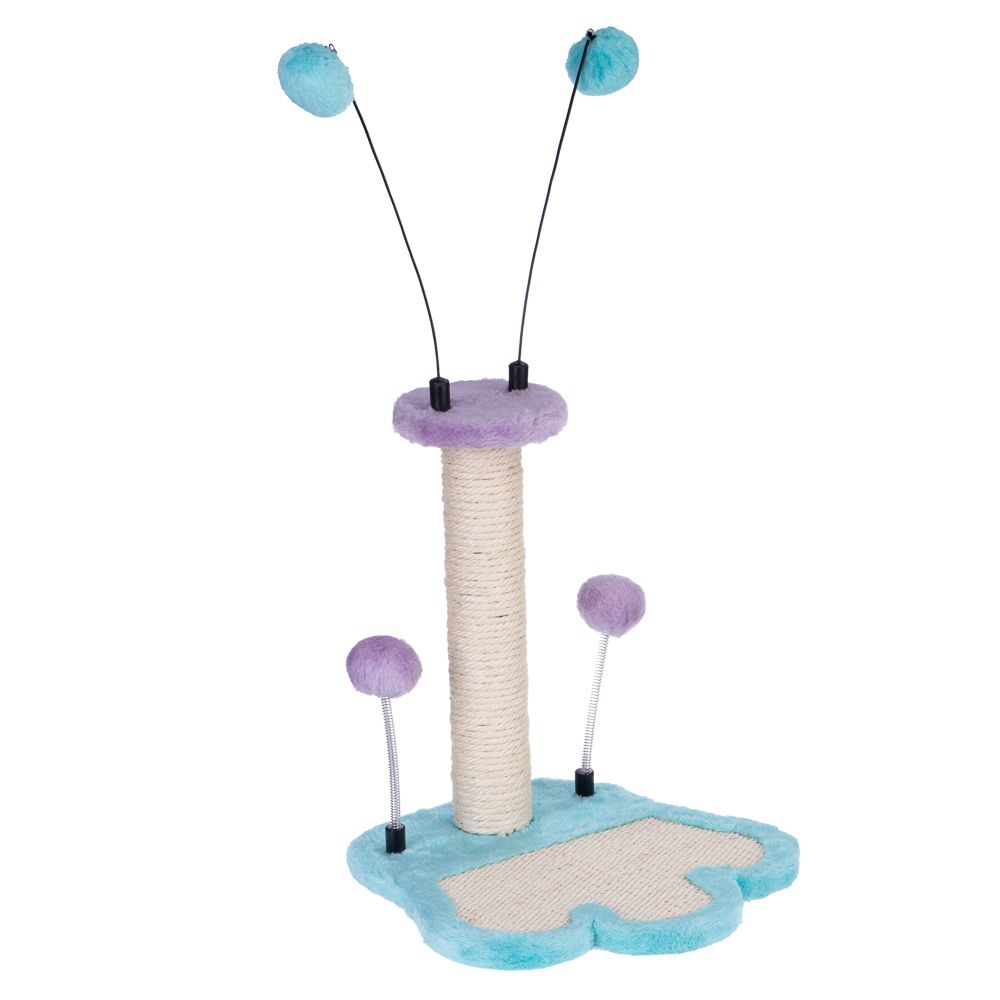
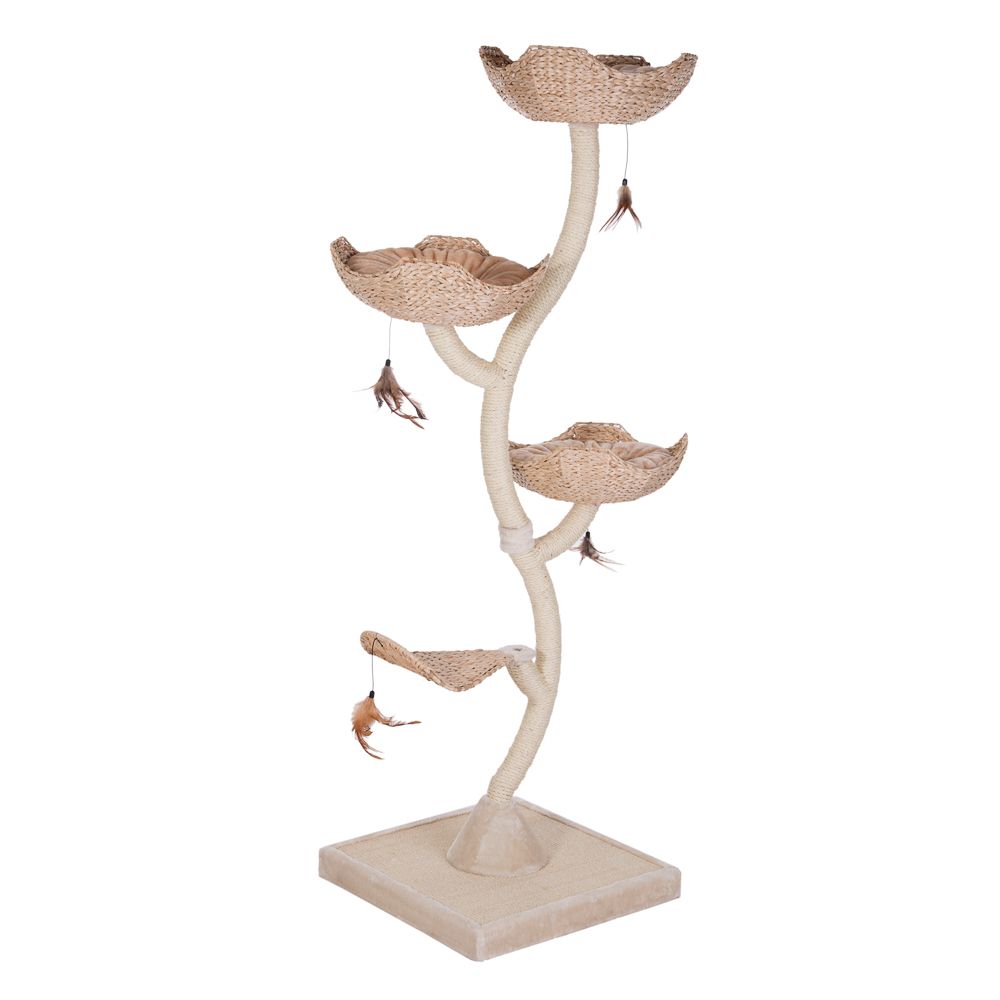
A post is only useful if your cat can stretch out fully on it and it does not move. Watch your cat stretch on its hind legs with front paws reaching up: the scratching surface should go higher than that. Short posts sold for kittens are soon outgrown.
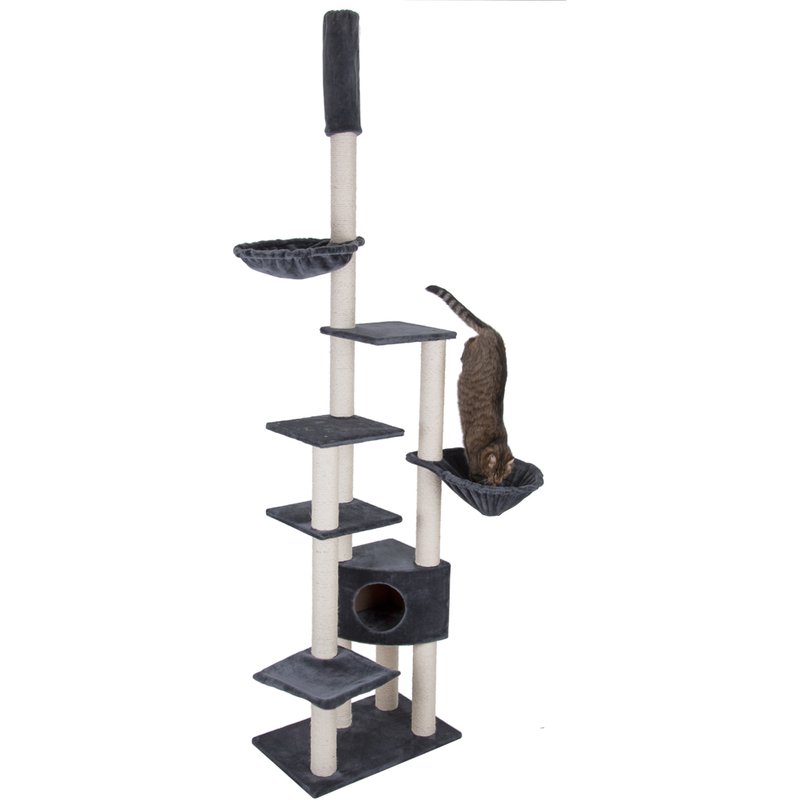
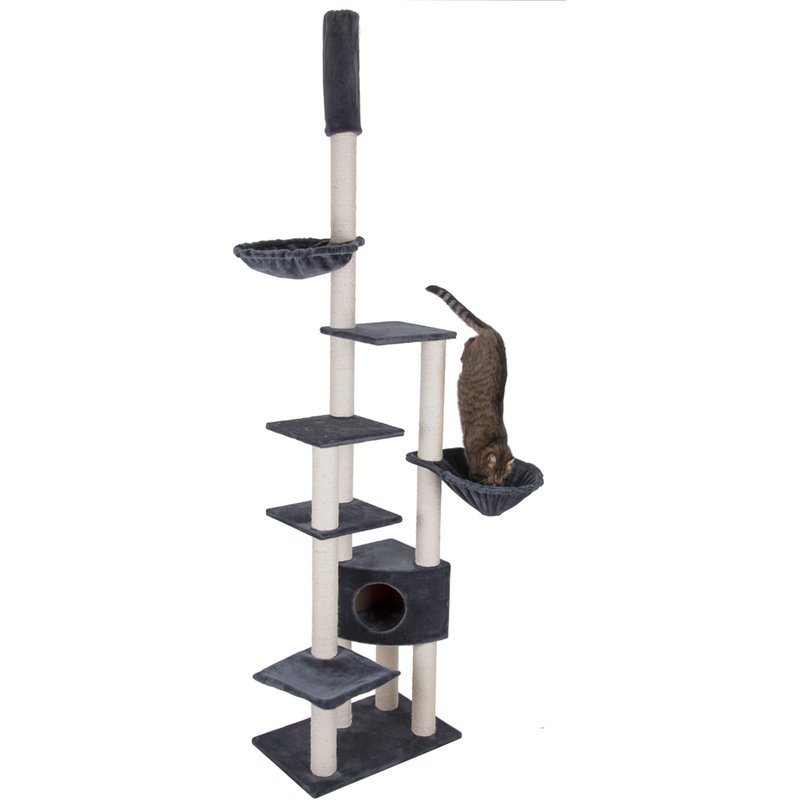
Stability matters just as much. A post that wobbles or tips once will often be avoided for good. Look for a wide, heavy base, and for tall trees use the wall fixing kit that most come with. Floor-to-ceiling trees are held in place by tension against the ceiling, so measure your ceiling height and check the adjustment range before buying.
Materials
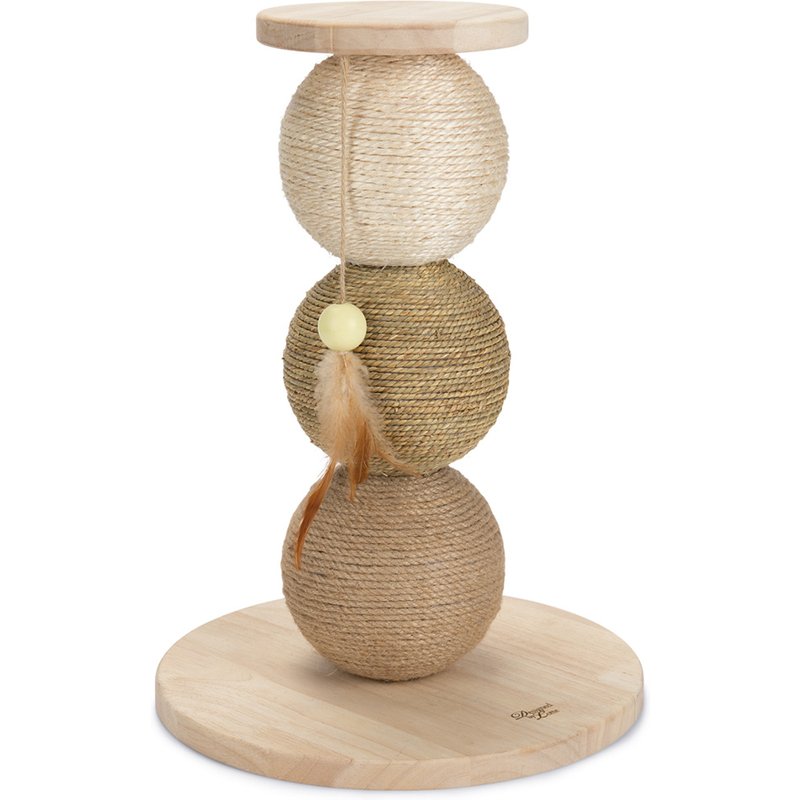
- Sisal rope: the most common covering, hard-wearing and satisfying to shred. Thick, tightly wound rope lasts longest.
- Sisal fabric: a flat woven covering that many cats like for long vertical strokes.
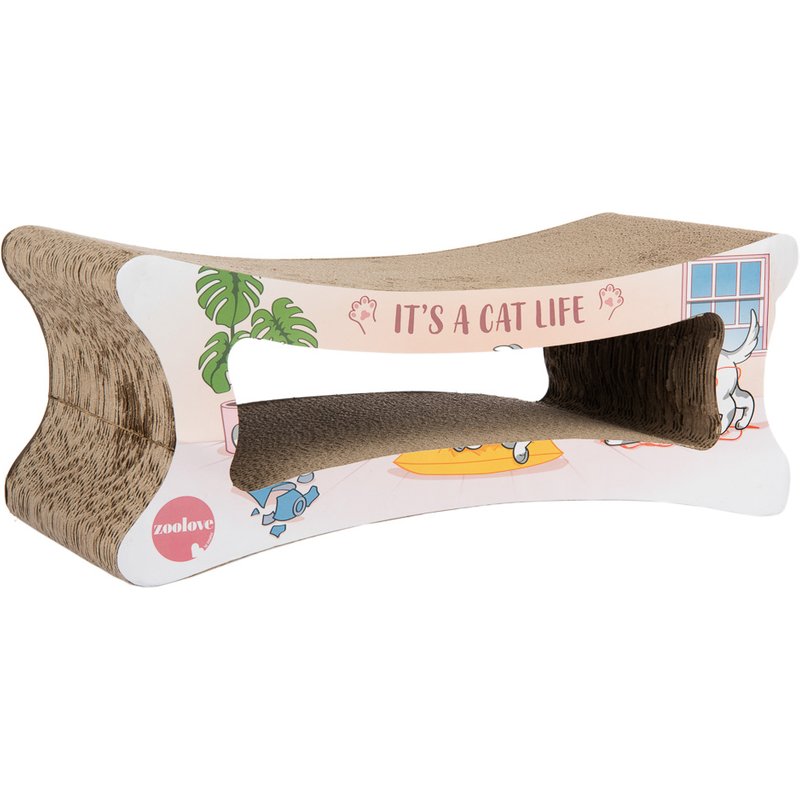
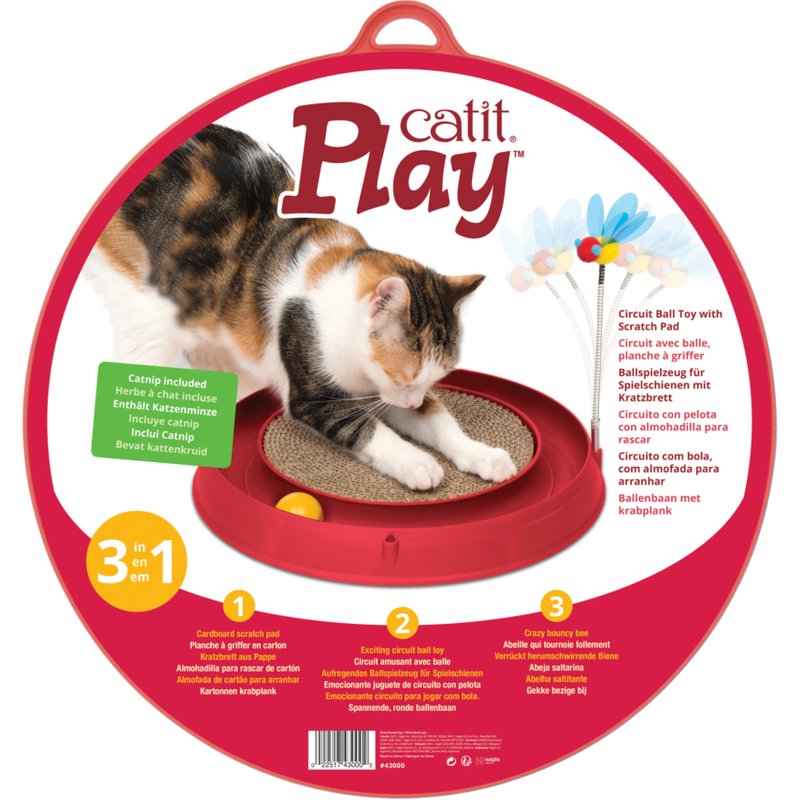
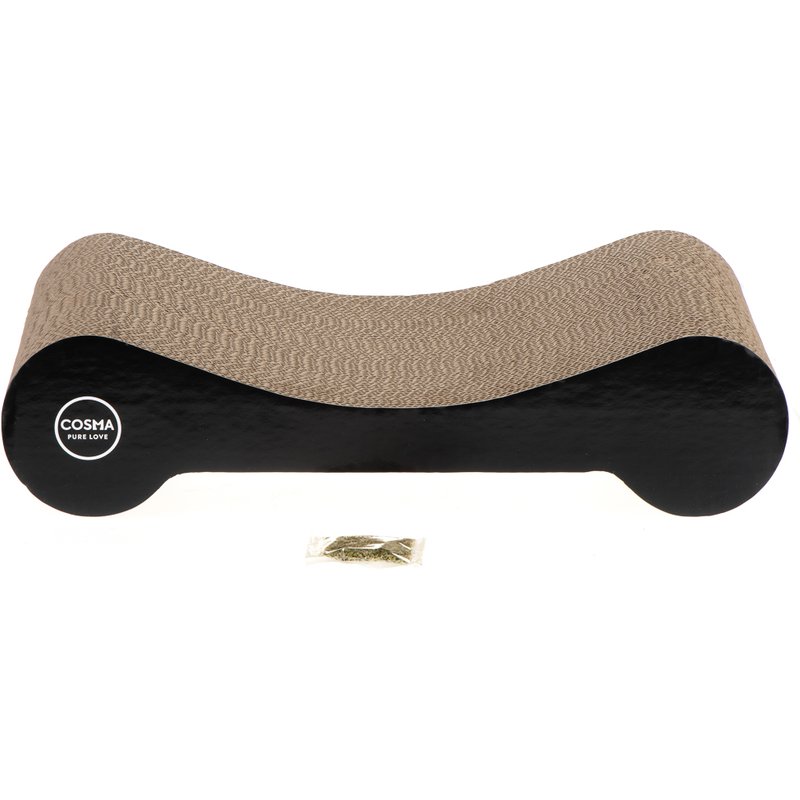
- Cardboard: cheap, often used for horizontal scratchers and loungers. It wears out quickly and leaves bits, but many cats love it.
- Carpet and plush: plush is common on platforms and dens for comfort. Looped carpet as a scratching surface can snag claws, and it teaches a cat that carpet is for scratching.
Vertical, horizontal or both
Watch how your cat scratches now. A cat that attacks the side of the sofa wants a tall vertical post. A cat that rakes the rug or the stairs prefers a horizontal scratcher, wave or board. Many cats use both, so a post plus a cardboard board is a good start, especially in a multi-cat home.
Choosing a cat tree
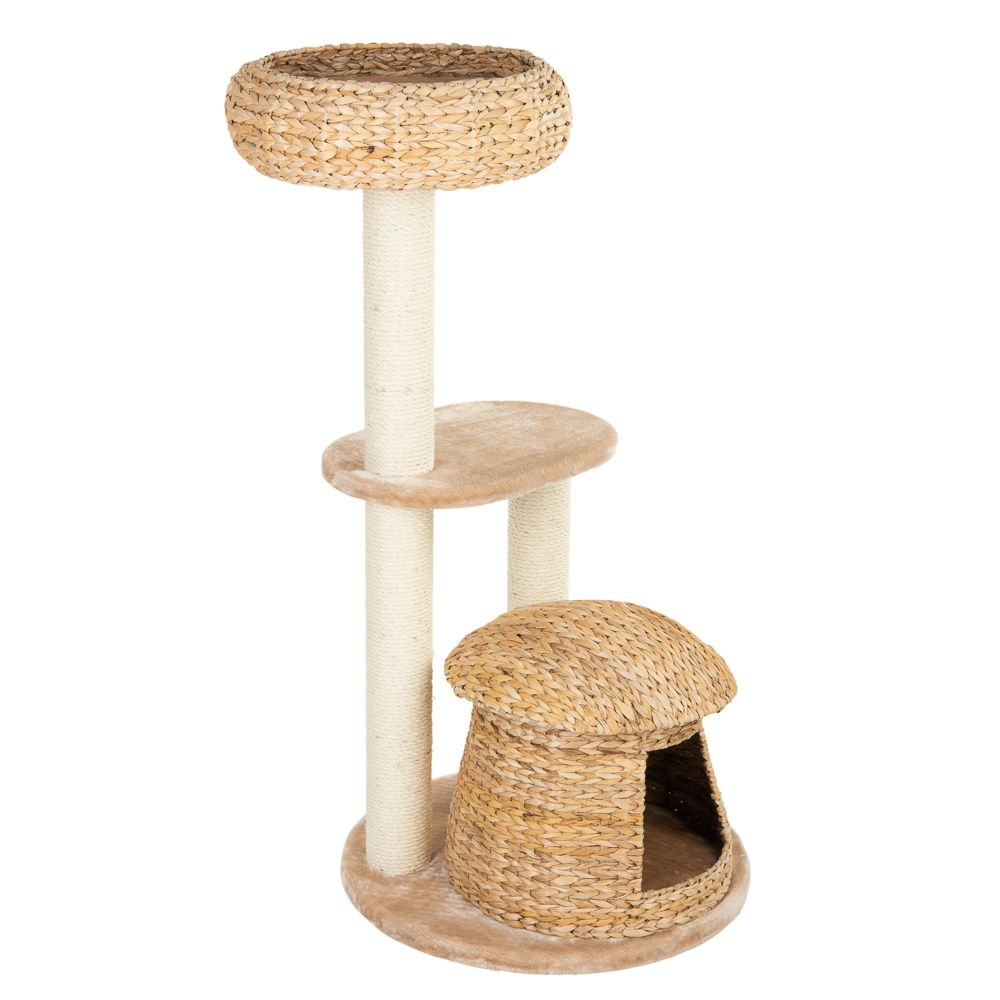
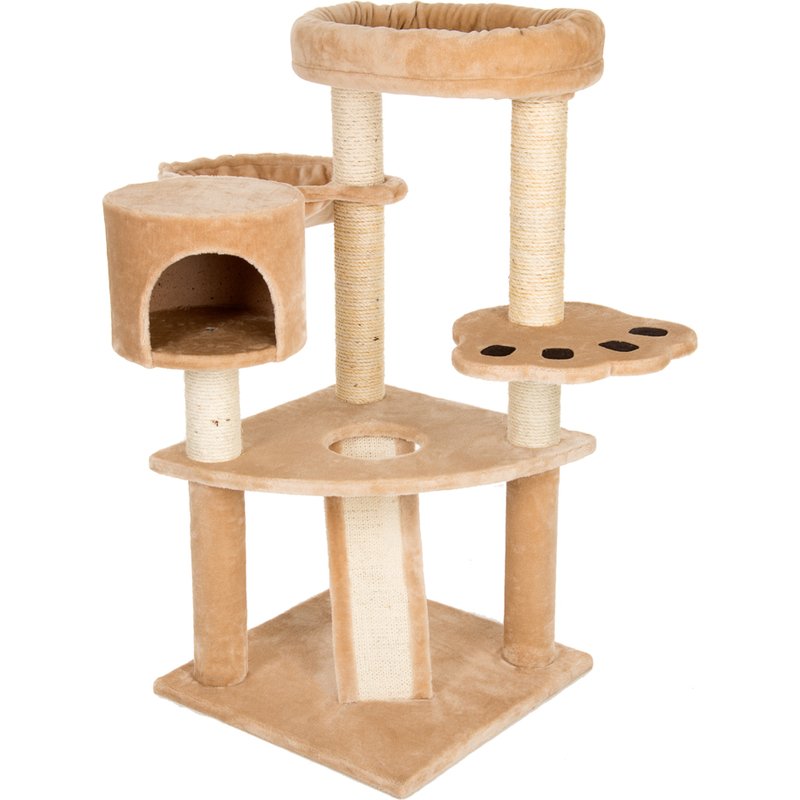
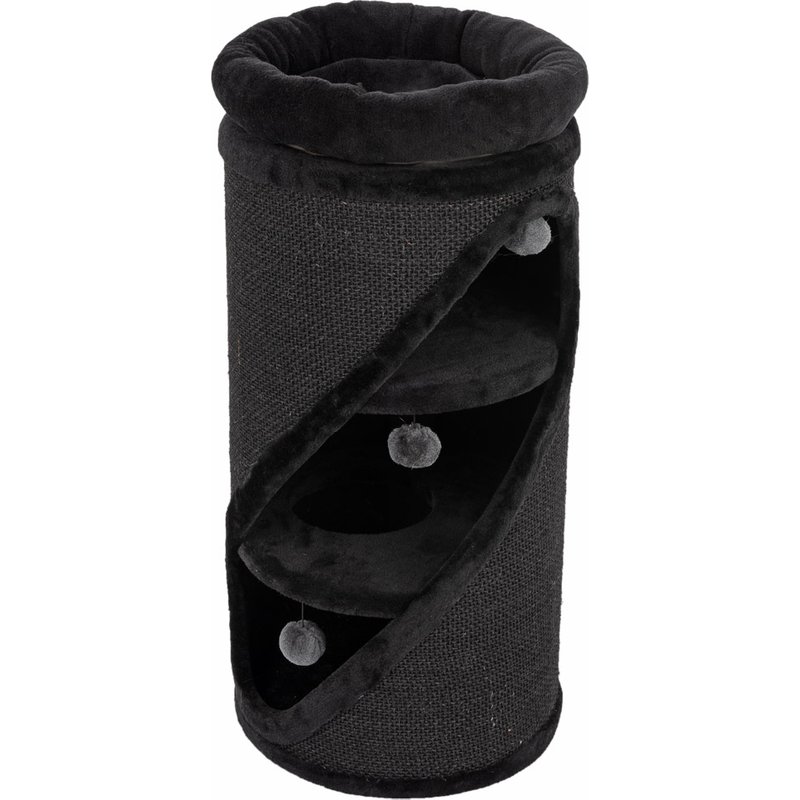
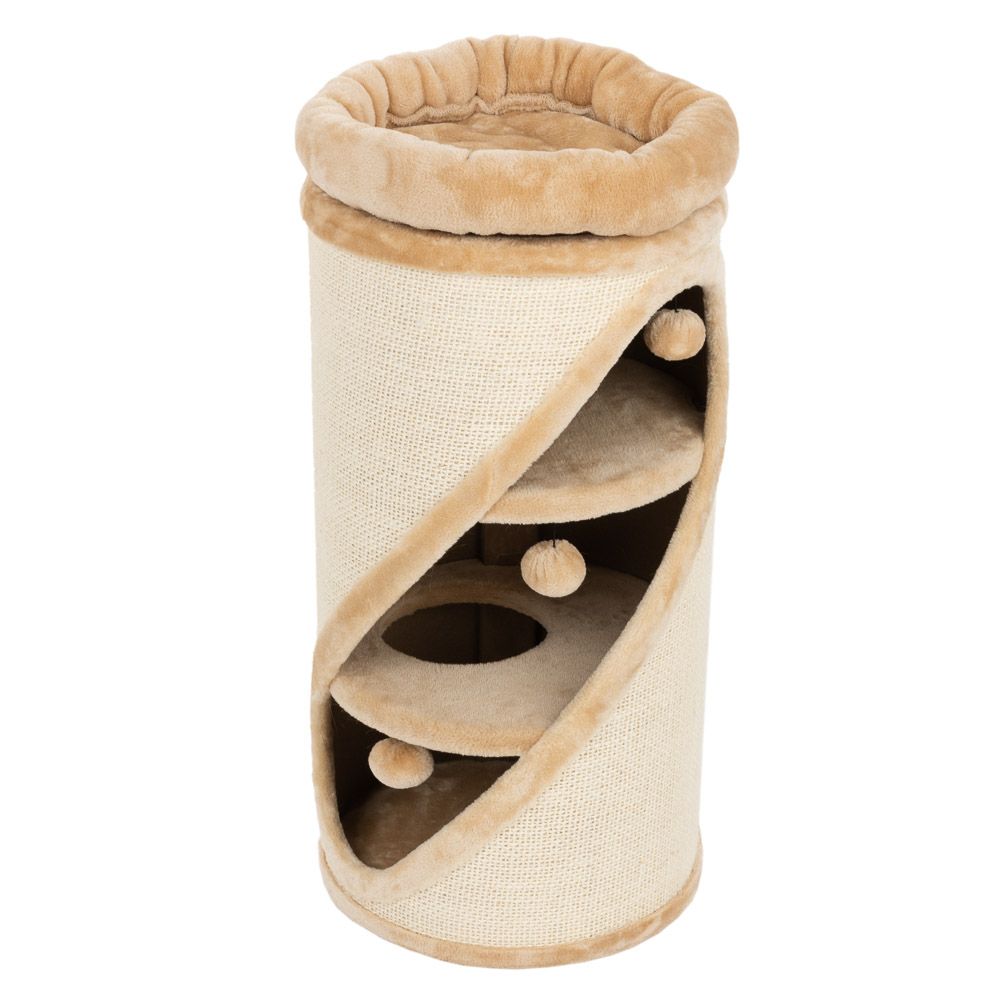
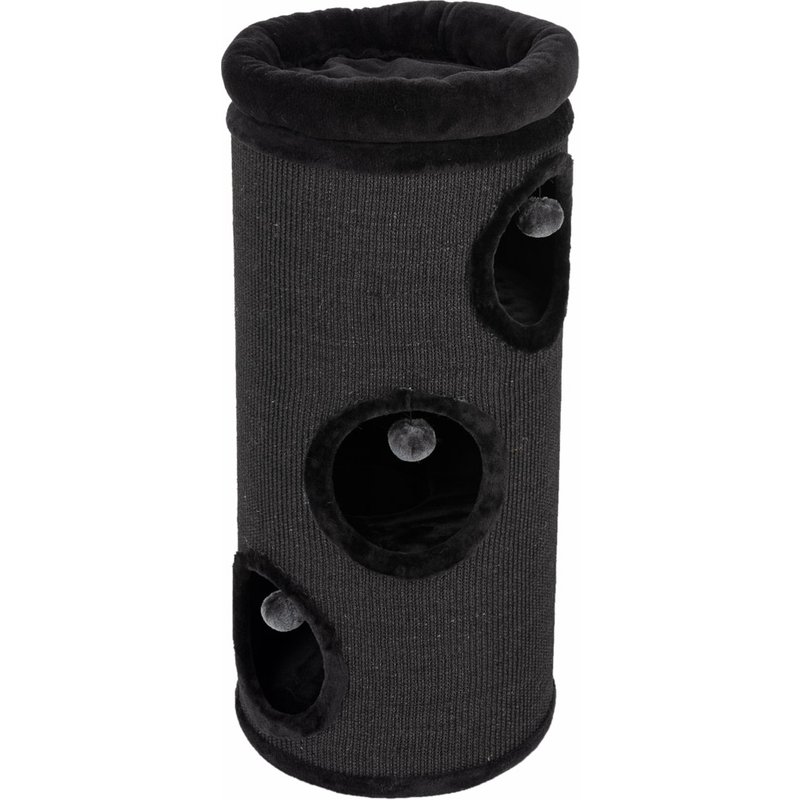
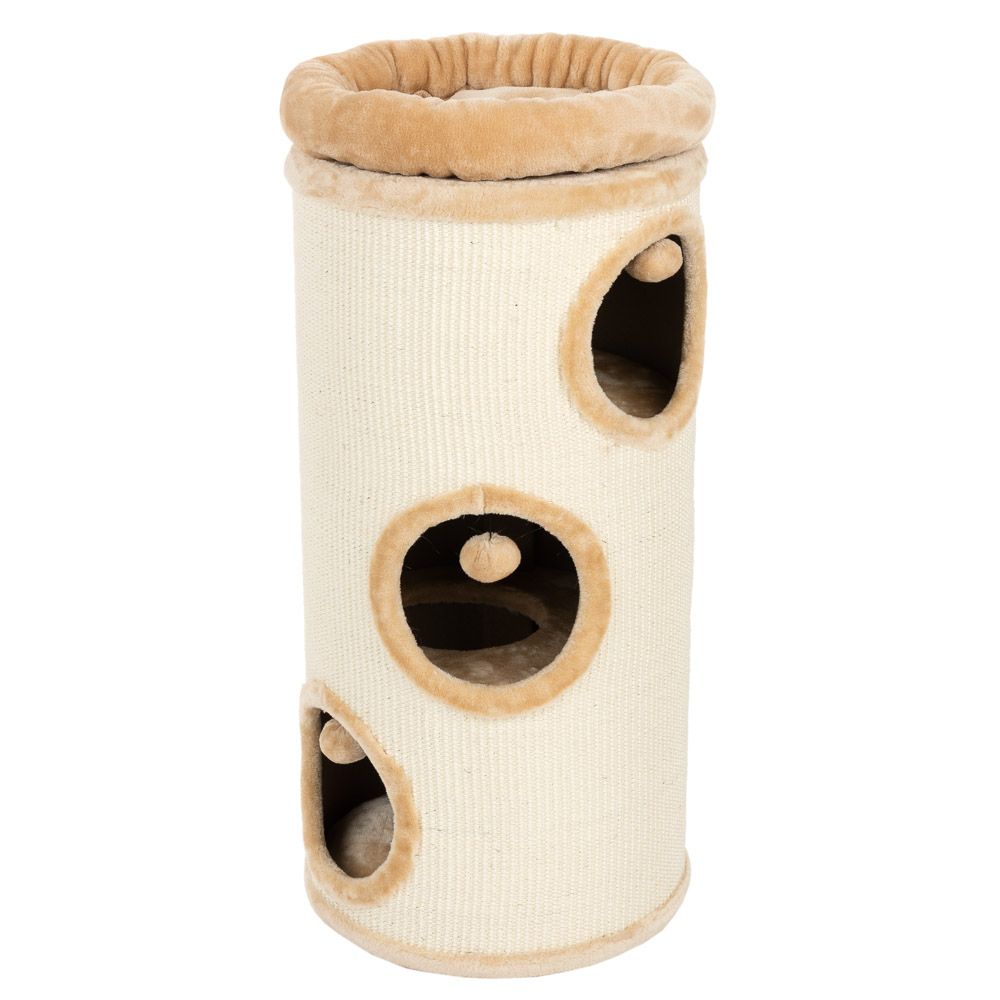
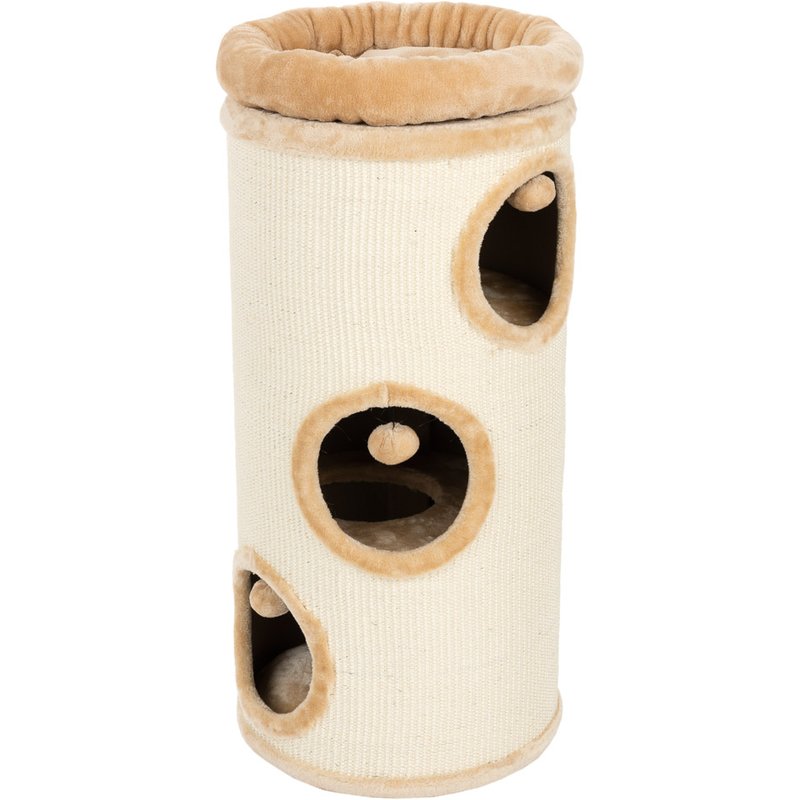
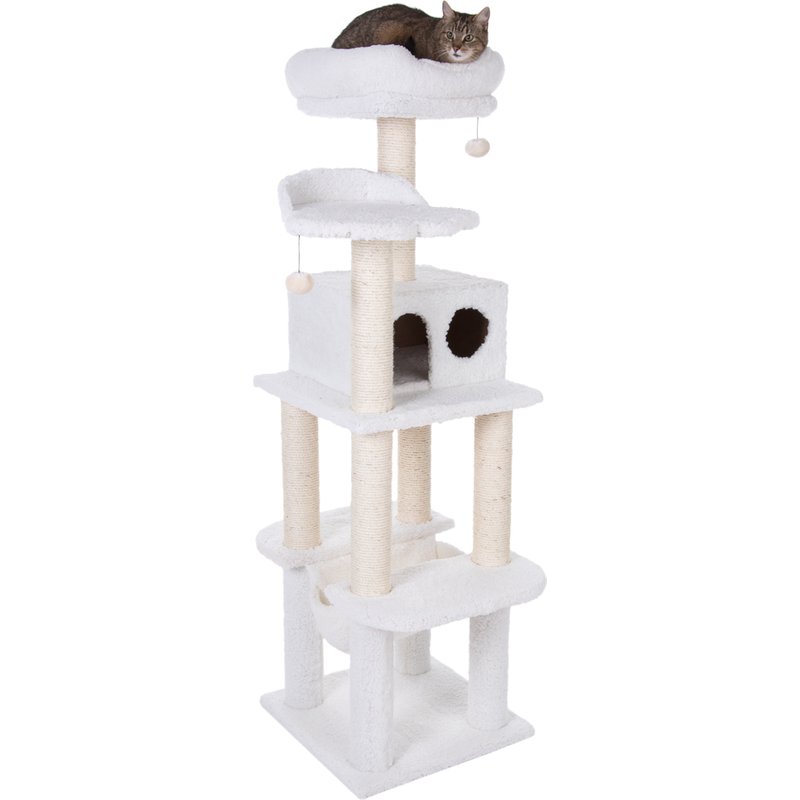
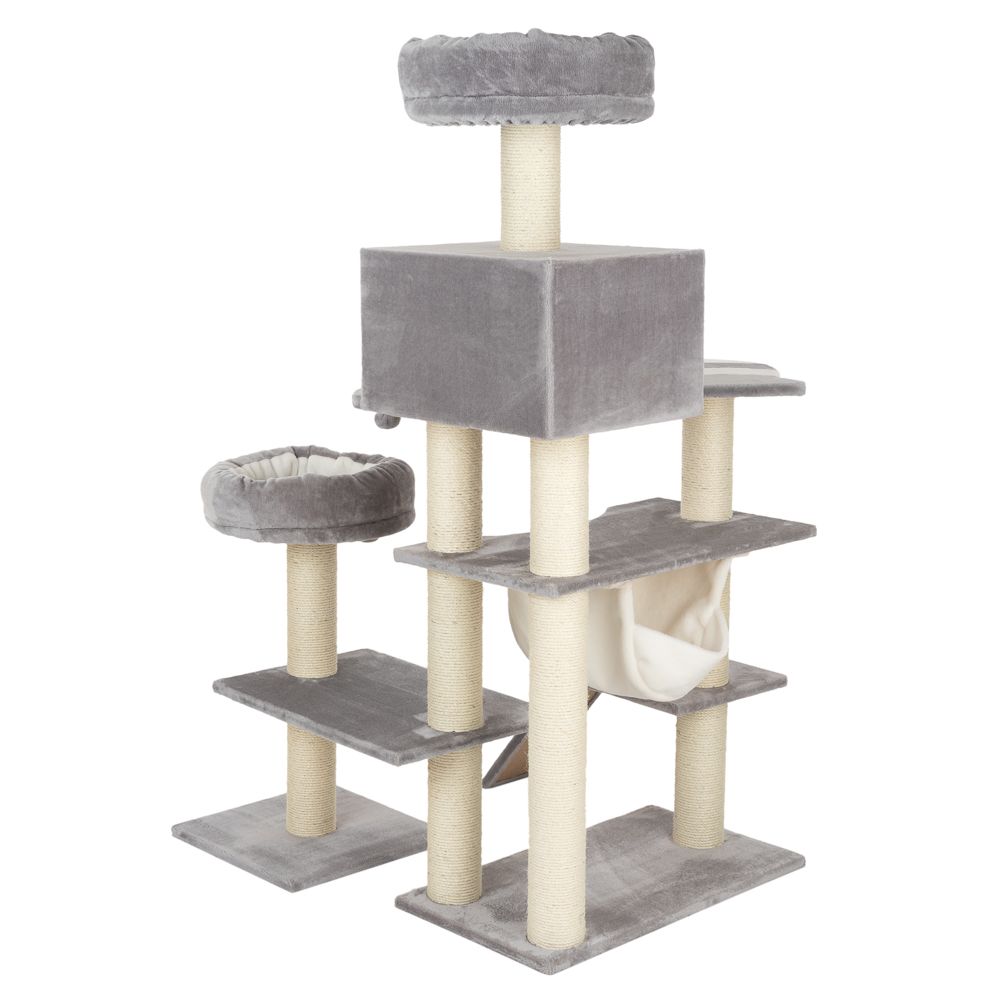
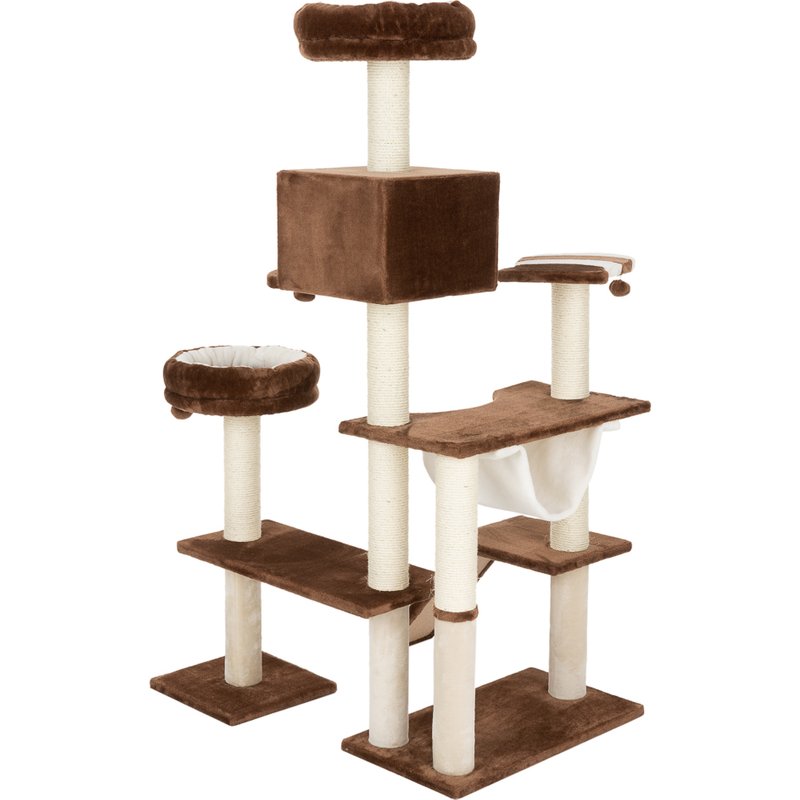
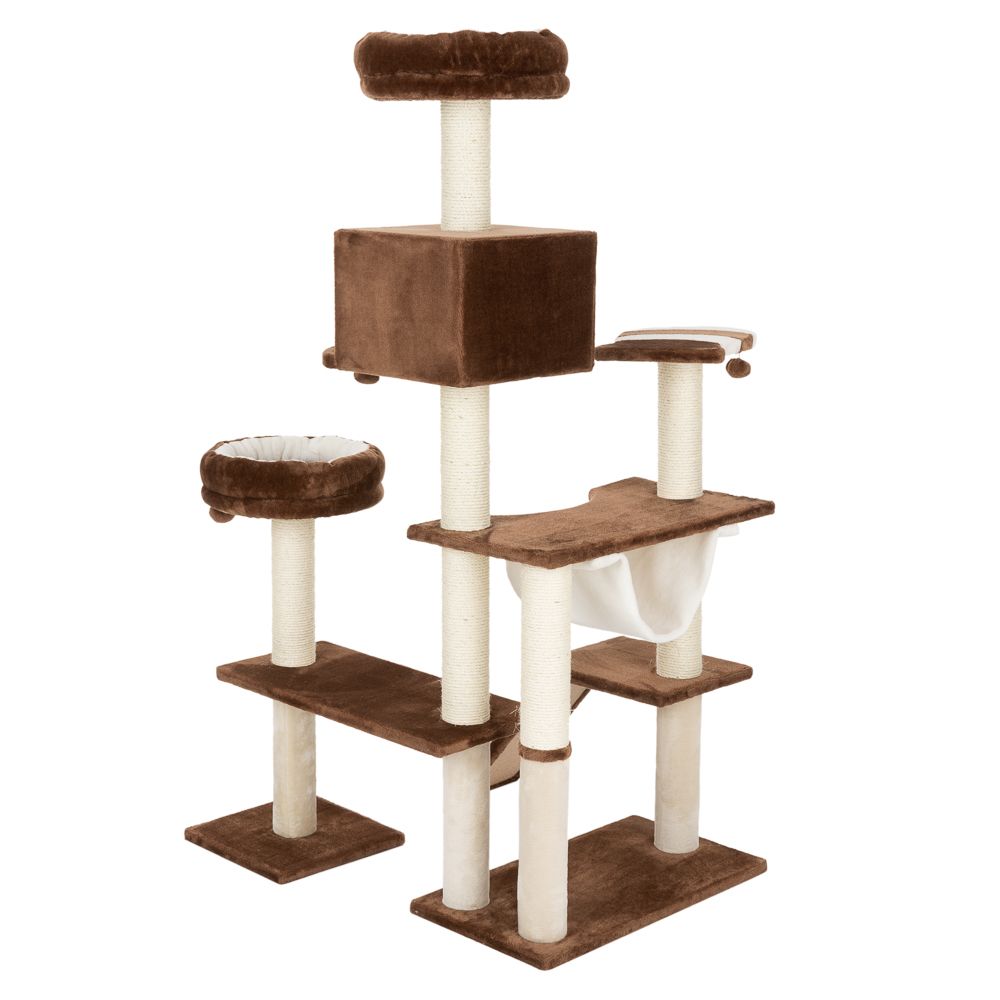
A cat tree combines scratching posts with platforms, dens and hammocks, which gives indoor cats more vertical space. Points to check:
- Platform size: large cats such as Maine Coons need wide, deep platforms and thick posts, often sold as XL or XXL models
- Several routes up and down, so one cat cannot block another
- A high lookout spot, ideally near a window
- Replaceable posts or sisal, so the tree outlasts the first worn post
- For senior cats, low steps, ramps or ladders and wide platforms instead of big jumps
Where to put it
Position matters more than design. Cats scratch most after waking and at places they pass often, so put a post next to where your cat sleeps, near the main entrance to a room, or right in front of the furniture it already scratches. Once the habit has moved to the post, you can shift it gradually to a better spot.
To encourage use, rub catnip or silver vine into the sisal, play with a wand toy around the post, and reward your cat when it scratches there. Do not throw a post away the moment it looks scruffy: the shredded, scent-marked surface is exactly what your cat likes about it. Vacuum plush parts regularly, as they collect hair and flea eggs.
Common questions
How do I stop my cat scratching the sofa?
Put a tall, stable scratching post directly in front of the area your cat scratches, and cover the sofa spot temporarily with a throw or double-sided tape. Reward your cat for using the post. Once the habit has moved, you can shift the post gradually to a better position.
How tall should a scratching post be?
Tall enough for your cat to stretch out fully on its hind legs with front paws extended, plus some extra. For most adult cats that means a much taller post than the small ones sold for kittens. The base must be heavy or fixed so the post does not wobble.
Is sisal or carpet better for scratching?
Sisal is usually the better choice. It is hard-wearing and gives a satisfying shred, while looped carpet can snag claws and teaches the cat that carpet is for scratching. Some cats also love cardboard scratchers.
How do I stop a tall cat tree from tipping over?
Use the wall fixing kit that most tall trees come with, and place the tree on a level floor against a wall. Floor-to-ceiling models need correct tension against the ceiling. Check bolts every few weeks, as they loosen with use.