
Diet
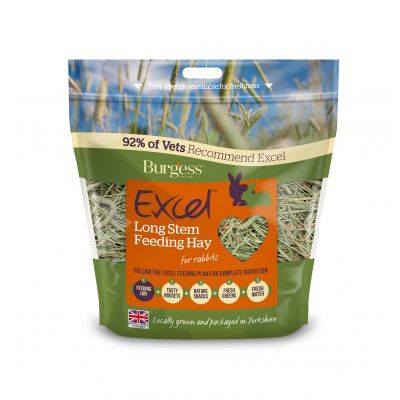
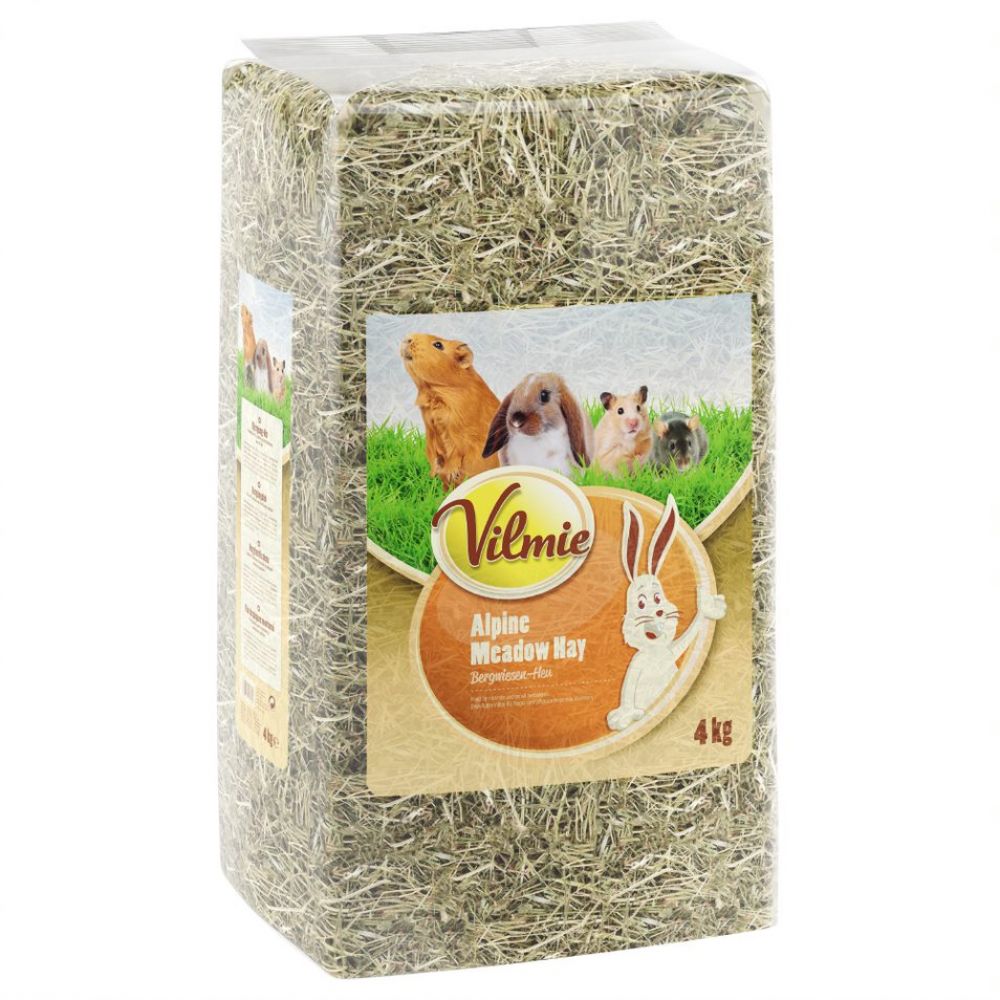
- Hay, unlimited. Timothy, meadow or other grass hays should be available at all times. Hay keeps teeth worn down and the gut working. Alfalfa hay is too rich in calcium for adults, though it is sometimes used for young or pregnant guinea pigs.
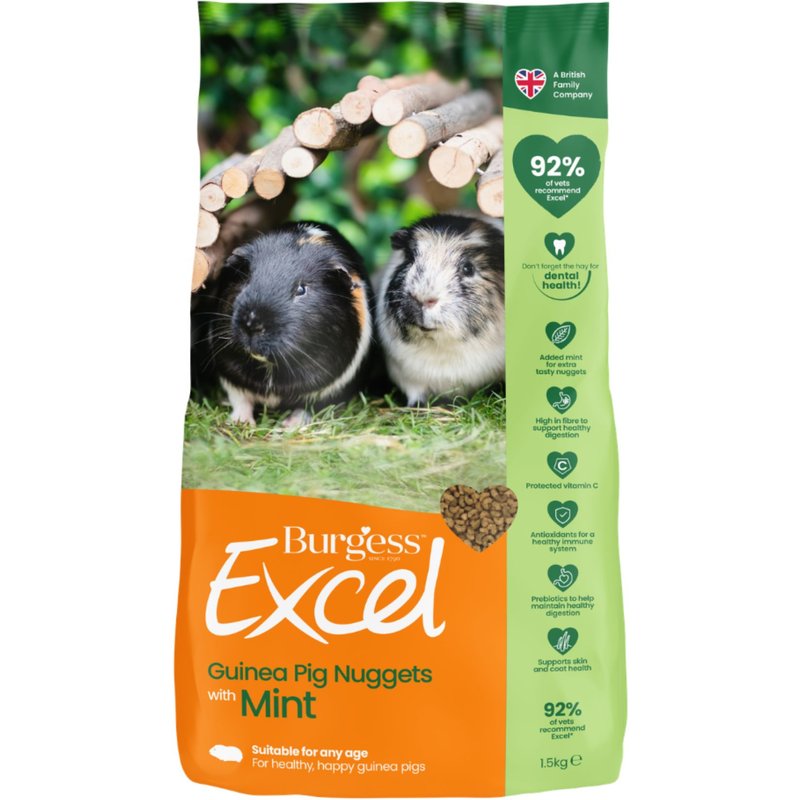
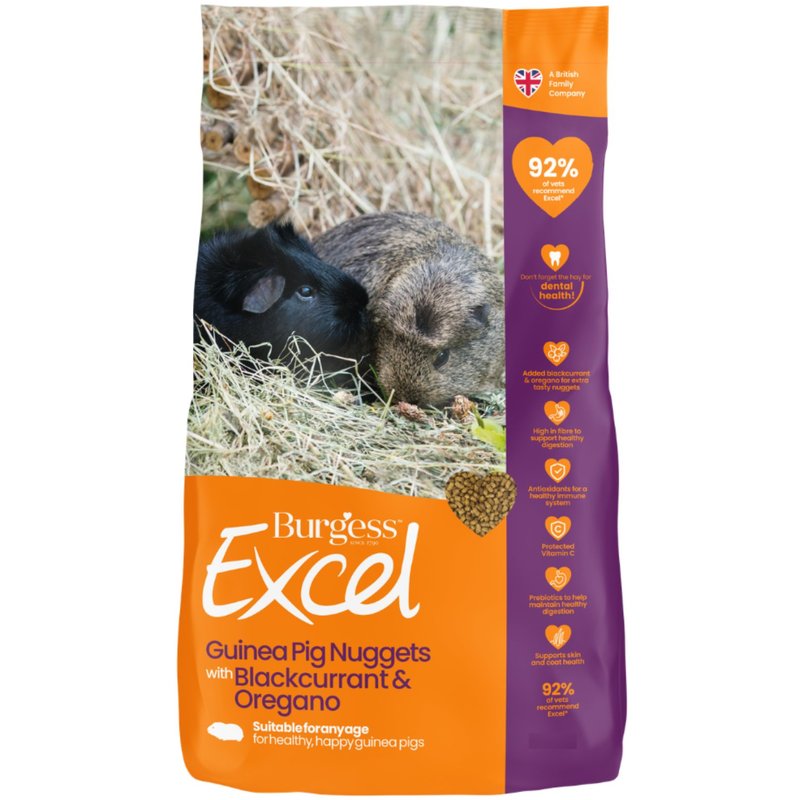
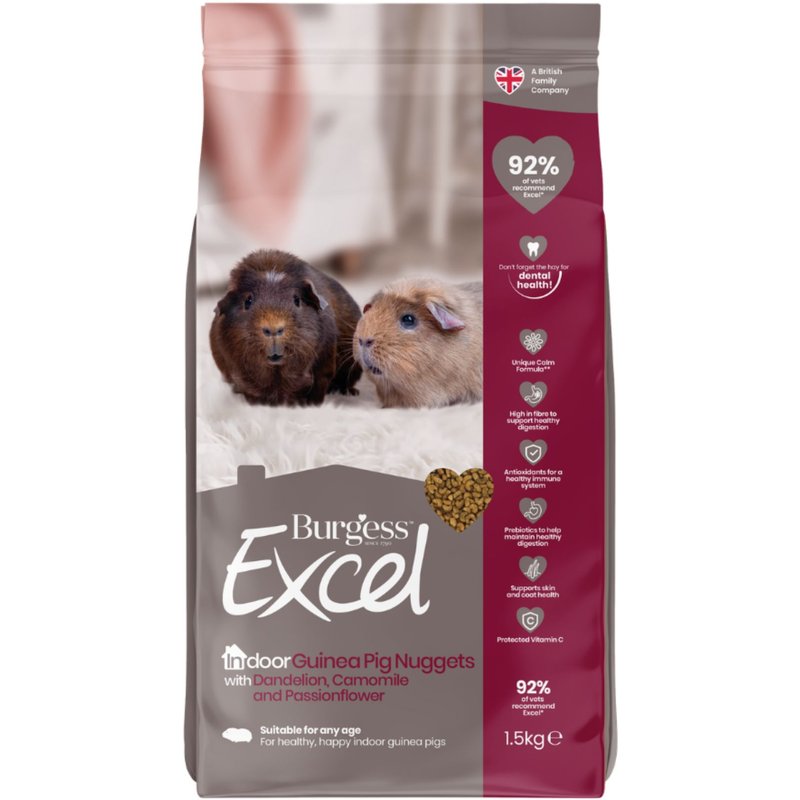
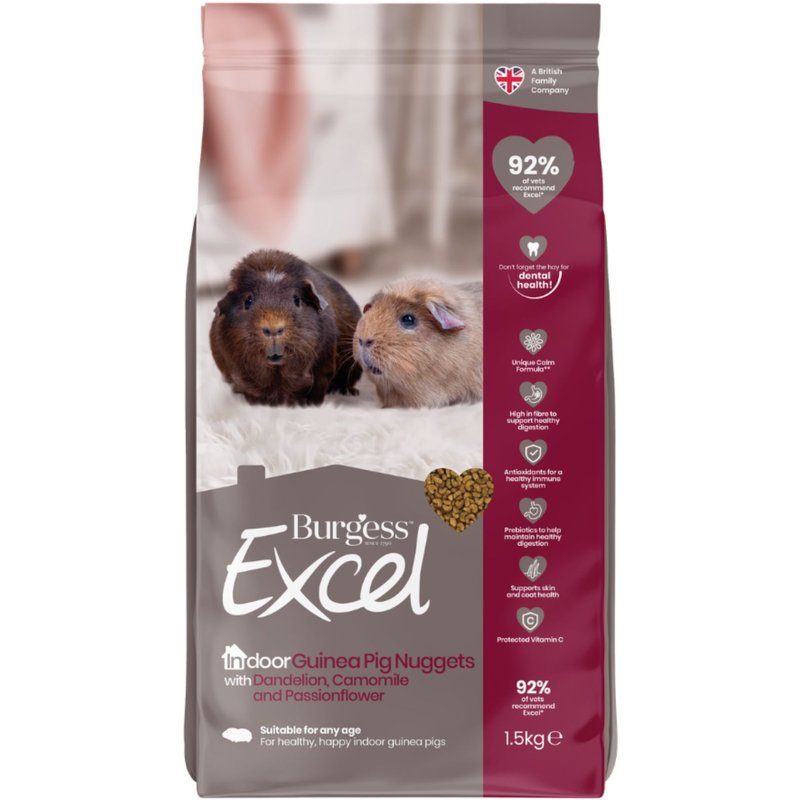
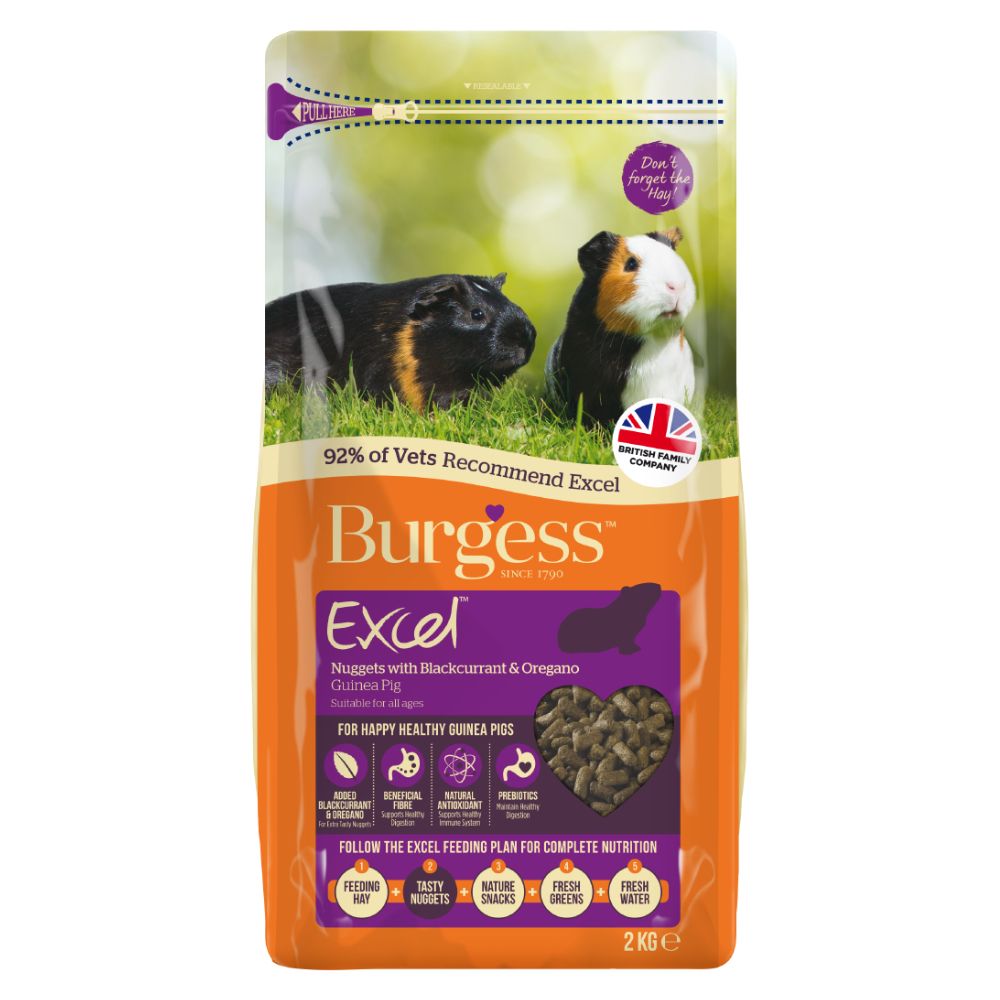
- Guinea pig nuggets, a small measured portion. Use food made specifically for guinea pigs, which is fortified with vitamin C. Rabbit food does not contain enough. Vitamin C breaks down over time, so check the best-before date and use opened bags within a reasonable time.
- Fresh vegetables daily, especially those high in vitamin C such as peppers, kale, spring greens and parsley. Fresh grass is also good.
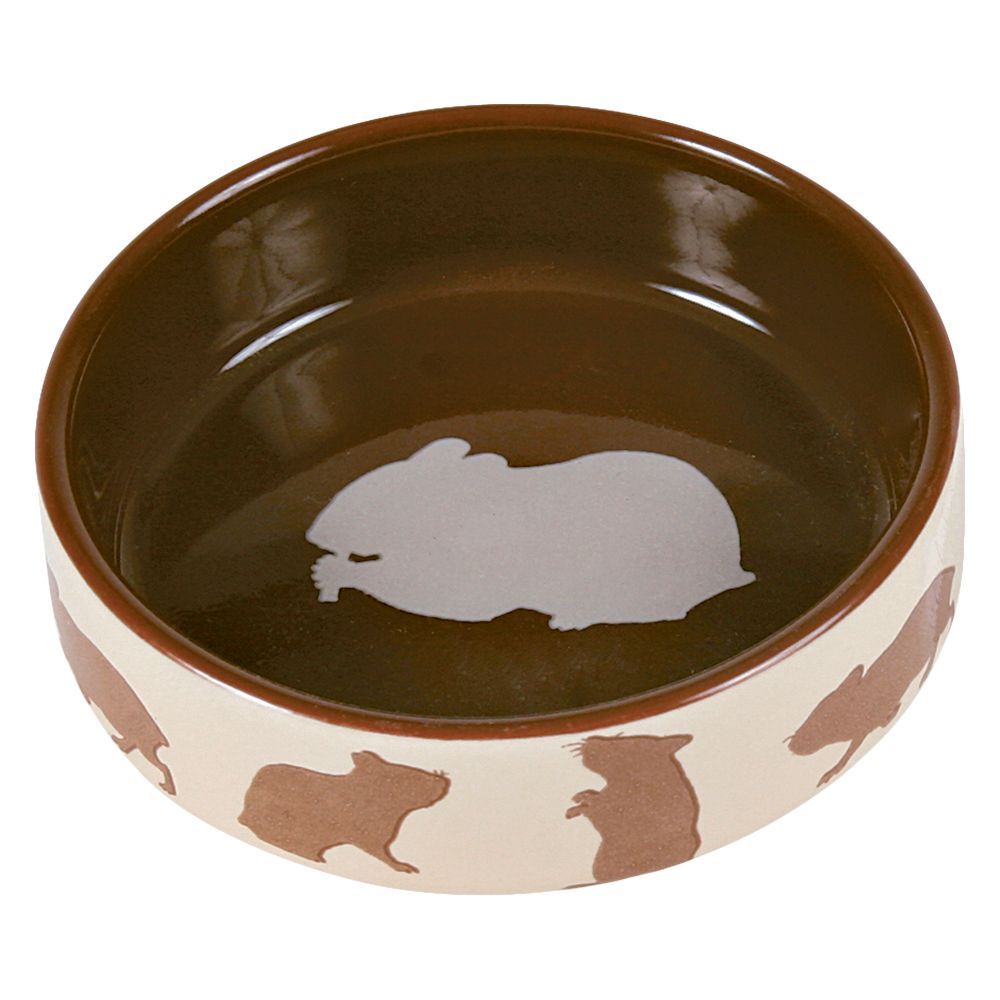
- Water in a bottle or heavy bowl, changed daily.
Vitamin C drops added to water are not considered reliable, as the vitamin breaks down quickly in water. If you are worried your guinea pig is not getting enough, ask your vet.
Housing
The RSPCA minimum is a floor area of 120 cm x 60 cm, 45 cm high, and more is better: guinea pigs do not climb much, so floor space is what counts. Indoor cages with a deep plastic base work well. Outdoors, the hutch needs to be dry and draught-free, and guinea pigs need to come in during cold or wet weather. They do not tolerate heat either, struggling above about 26°C, so keep them out of direct sun and conservatories in summer.
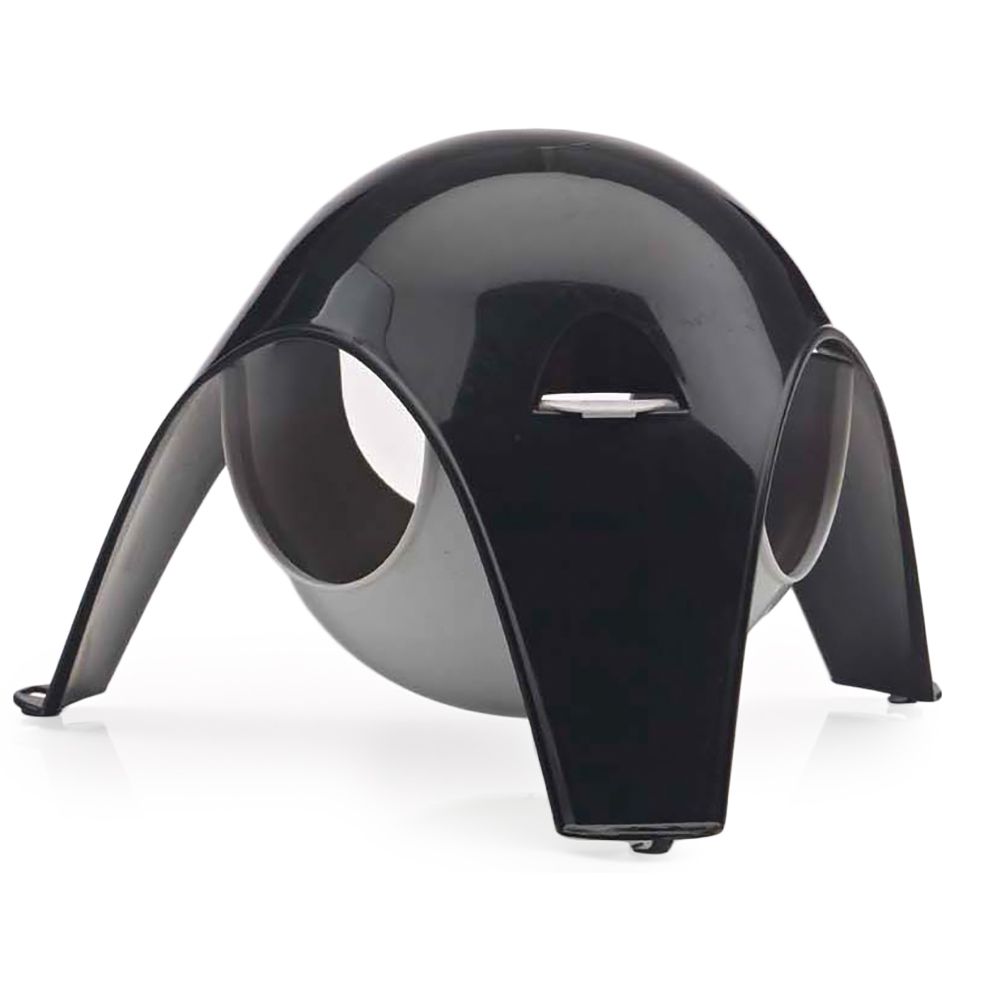
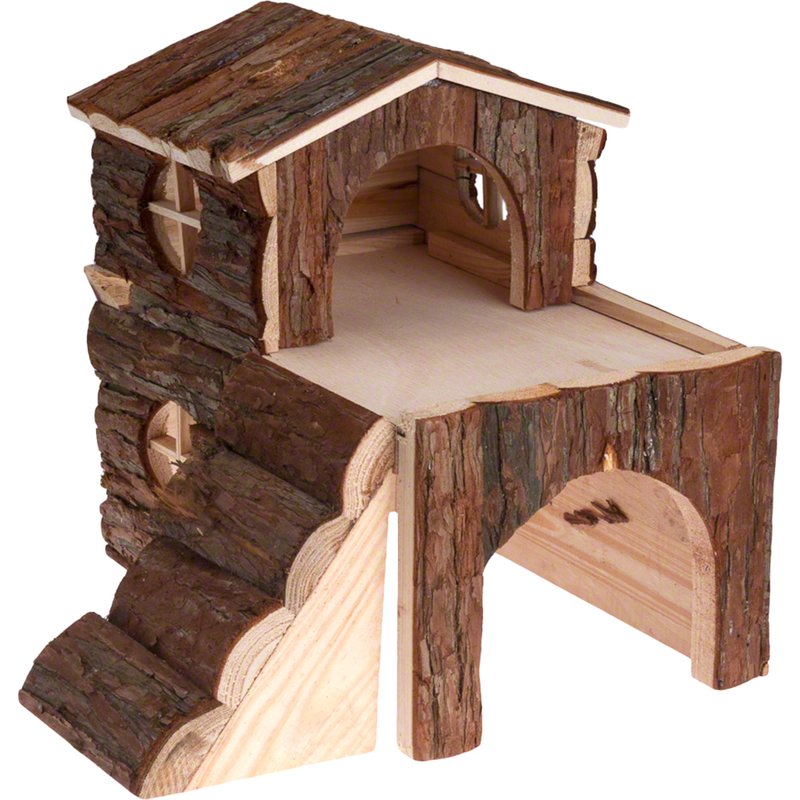
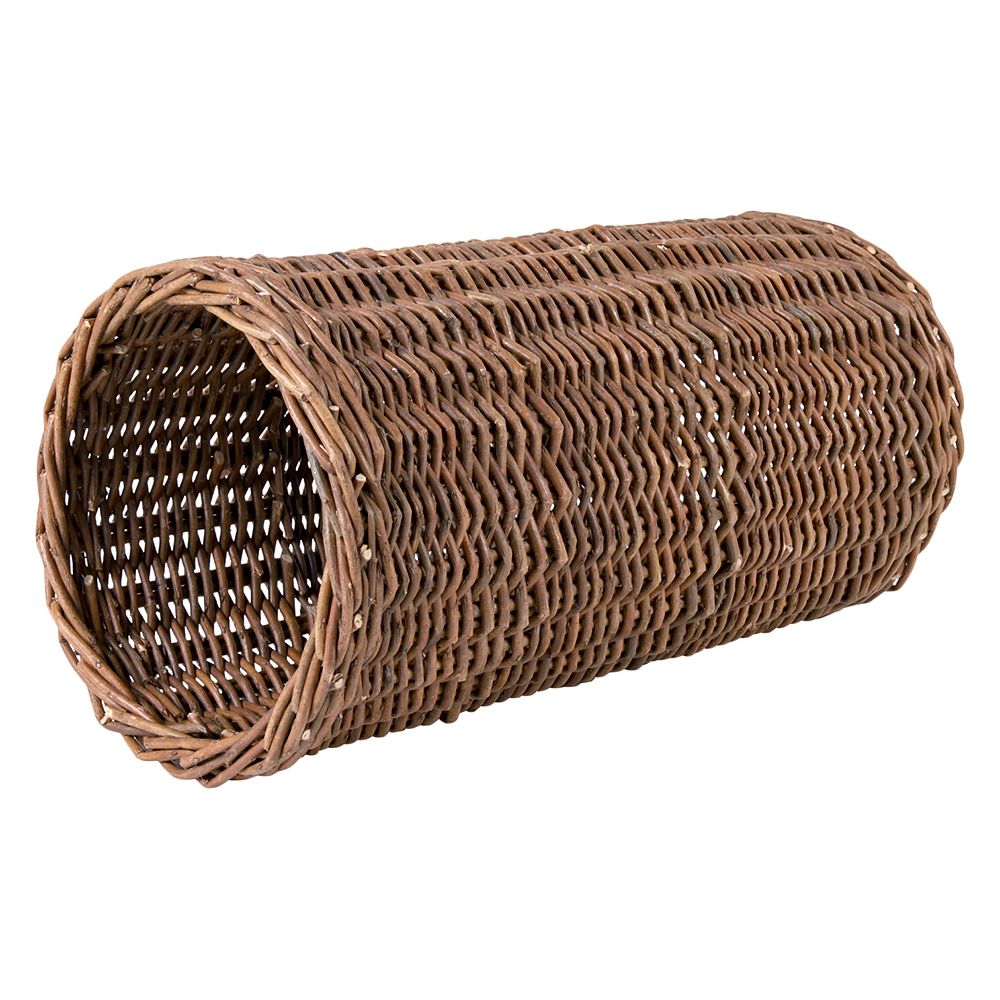
Give them a hide for each animal, as guinea pigs like to retreat, and use dust-extracted bedding such as paper, hemp or hay. Avoid pine and cedar shavings.
Company
Guinea pigs should not live alone. Two sows, two boars raised together, or a neutered boar with sows are common combinations. Do not house them with rabbits, which can bully them and carry bacteria that cause respiratory illness in guinea pigs.
Everyday care
- Weigh weekly: sudden weight loss is often the first sign of illness.
- Check teeth, nails and coat; long-haired breeds need regular grooming.
- Give them time out in a safe, enclosed run on grass in good weather.
- A guinea pig that stops eating needs a vet promptly.
Common questions
Can guinea pigs eat rabbit food?
It is not a good idea. Rabbit food does not contain the added vitamin C that guinea pigs need, and long-term deficiency can cause scurvy. Use a food made for guinea pigs and add vitamin C rich vegetables.
How big should a guinea pig cage be?
The RSPCA minimum is 120 cm x 60 cm with a height of 45 cm, and more space is recommended, particularly for more than two. Guinea pigs use floor area rather than height, so choose a long cage or connect it to a run. Daily time in a safe exercise area is also important.
Do guinea pigs need to live in pairs?
Yes, guinea pigs are social animals and should not be kept alone. Two females, two males raised together, or a neutered male with females all work well. A rabbit is not a suitable companion.