
Size and shape
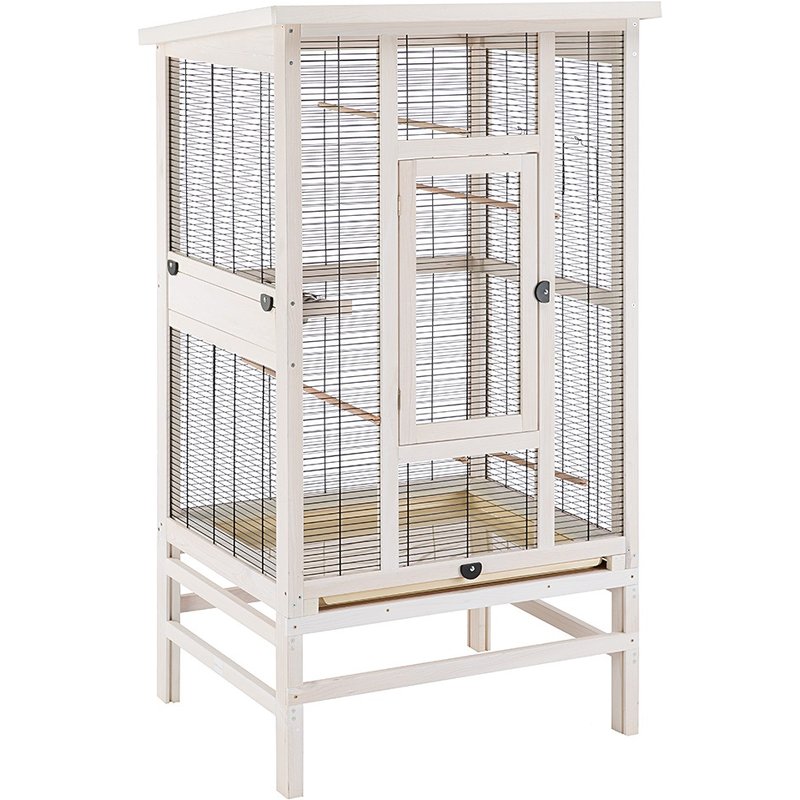
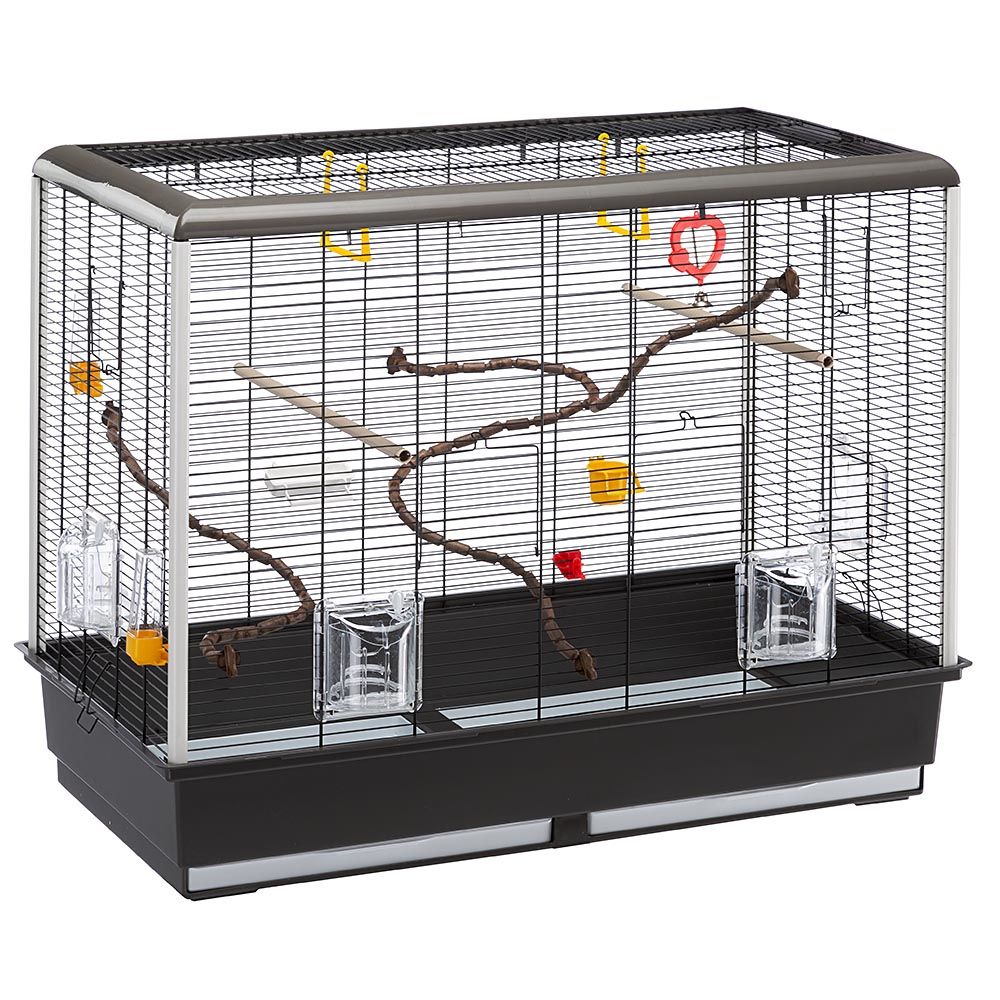
Look at the floor plan before the height. Budgies, canaries and finches fly horizontally, from perch to perch, so a wide cage gives them more useful flying room than a tall, narrow one of the same volume. Tall cages suit climbing birds such as parrots better, and an indoor aviary or flight cage gives small birds the most room of all.
Rectangular cages are better than round ones. A round cage has no corners for a bird to retreat to, the bars converge at the top, and perches and toys are harder to arrange. Decorative cages with pagodas and narrow towers often look larger than they are.
Bar spacing and direction
Bar spacing must suit the smallest bird in the cage. If the gap is too wide, a bird can push its head through and get stuck. Small species such as budgies, canaries and finches need narrow spacing, typically around 1 cm to 1.2 cm, while cockatiels and larger parrots need slightly wider gaps and thicker bars. Check the spacing on the product details rather than relying on the label alone.
Horizontal bars on at least two sides make climbing easier for budgies, cockatiels and parrots.
Build quality
- Choose powder-coated or stainless steel bars from a reputable maker. Cheap coatings can contain zinc or lead, which are toxic if chewed.
- Large doors make cleaning and handling easier; small side doors are useful for bowls.
- A pull-out tray and a grille above it save time every day.
- Seed skirts or guards around the base cut down on mess.
- A stand on castors helps with cleaning but should lock in place.
Where to put the cage
Place it against a wall, at roughly chest height, in a room where people spend time. Keep it out of the kitchen and away from cooking fumes, draughts, radiators and direct sunlight. A bird placed in the middle of a room or by a window where it can see cats or birds of prey can become stressed.
Common mistakes
- Buying a starter cage that only fits one bird, then adding a second.
- Filling the cage with so many toys and perches that there is no room to fly.
- Using a cage as permanent housing for a bird that never comes out. Most species need daily time outside the cage or a flight large enough to exercise properly.
- Forgetting to measure the space at home: check the full dimensions including any stand or roof.
Common questions
How big should a budgie cage be?
As large as you can fit, with width taking priority over height so the birds can fly between perches. A cage marketed as a budgie cage is often only just enough for one bird, so look for a flight cage or small aviary if you keep a pair. Daily time out of the cage is still recommended.
Are round bird cages bad?
Round cages are generally not recommended. They offer no corners where a bird can feel secure, the bars narrow towards the top, and they are harder to fit with perches and toys. A rectangular cage of similar size gives a bird much more usable space.
What bar spacing do I need for a cockatiel?
Cockatiels need slightly wider and stronger bars than budgies, and horizontal bars help them climb. Always check the stated bar spacing for the cage and make sure your bird cannot fit its head through the gaps. A cage made for small finches will be too cramped and too flimsy.