

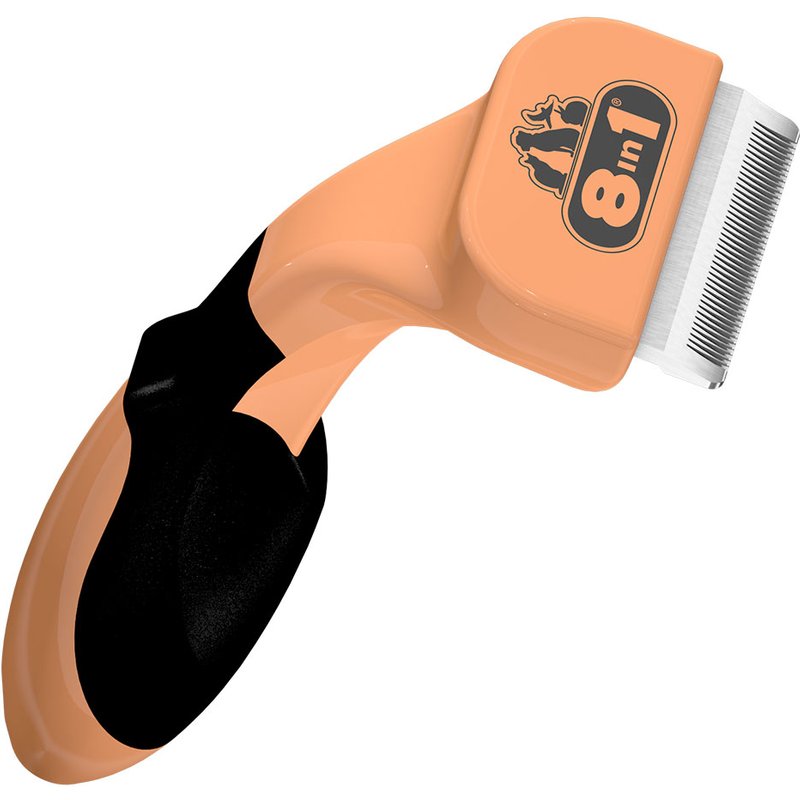






















Brushes and combs
- Slicker brush: fine wire pins that lift out loose undercoat. The everyday brush for most long-haired cats.
- Wide-toothed metal comb: finds and gently works through tangles before they become mats. Essential for Persians, Maine Coons and other long coats.
- Rubber brush or grooming glove: picks up loose hair from short coats, and many cats enjoy it like stroking.
- Deshedding tool: removes a lot of undercoat during moulting. Use it lightly and not every day, as heavy use can irritate the skin.
- Mat splitter: cuts through mats without the risk of scissors.
Short-haired cats generally need brushing once a week. Long-haired cats need daily attention, particularly behind the ears, under the legs and on the belly, where mats form first. Never cut out mats with scissors close to the body: cat skin is thin and easily cut. Use a mat splitter, or ask a groomer or vet to clip them.
Claws
Outdoor cats usually keep their claws worn down. Indoor and older cats often need trimming, as overgrown claws can curl into the pads. Use clippers made for cats and cut only the clear, curved tip. The pink area inside is the quick, which contains nerves and blood vessels and bleeds if cut. If you are unsure, ask your vet or vet nurse to show you at a routine visit.
Teeth
Dental disease is common in adult cats. Brushing with a soft cat toothbrush or finger brush and a toothpaste made for cats is the most effective home care. Never use human toothpaste, which is not designed to be swallowed. Start slowly: let the cat lick the paste first, then touch the teeth, then brush a few teeth at a time. Dental treats, gels and water additives are options for cats that will not accept brushing.
Bathing, eyes and ears
Most cats never need a bath. If one is necessary, for example after getting into something sticky or for a hairless breed, use a shampoo made for cats only. Human products and some dog products are not suitable, and some dog flea shampoos contain permethrin, which is toxic to cats.
Wipe tear stains on flat-faced breeds daily with a damp cotton pad. Clean only the visible part of the ear with a pad; never push cotton buds into the ear canal. Redness, smell or heavy dark wax are reasons to see the vet.
Making grooming easier
- Start with kittens, handling paws, ears and mouth from an early age
- Keep sessions short and stop before the cat gets cross
- Groom when your cat is relaxed, such as after a meal
- Reward with a treat or a lick of creamy snack after each session
While brushing, look for black specks in the fur. Put them on damp white kitchen paper: if they spread into red-brown smears, they are flea dirt, and it is time to treat for fleas.
Common questions
How often should I brush my cat?
Short-haired cats usually need brushing about once a week. Long-haired breeds such as Persians and Maine Coons need daily brushing to prevent mats. Older or overweight cats that cannot reach their back may need help more often.
Do I need to trim my cat’s claws?
Outdoor cats usually wear their claws down naturally, but indoor and older cats often need trimming every few weeks. Use cat claw clippers and cut only the clear tip. Ask your vet or vet nurse to show you if you have not done it before.
Can I bathe my cat?
Most cats never need a bath, as they groom themselves. If your cat gets something sticky or harmful on its coat, or is a hairless breed, use a shampoo made for cats. If your cat has licked a harmful substance, contact your vet.
How do I start brushing my cat’s teeth?
Use a toothpaste made for cats and let your cat lick some from your finger for a few days. Then touch the teeth and gums with your finger, then with a soft cat toothbrush, building up to a few teeth at a time. Keep it short and reward your cat afterwards.