
Outdoor kennels
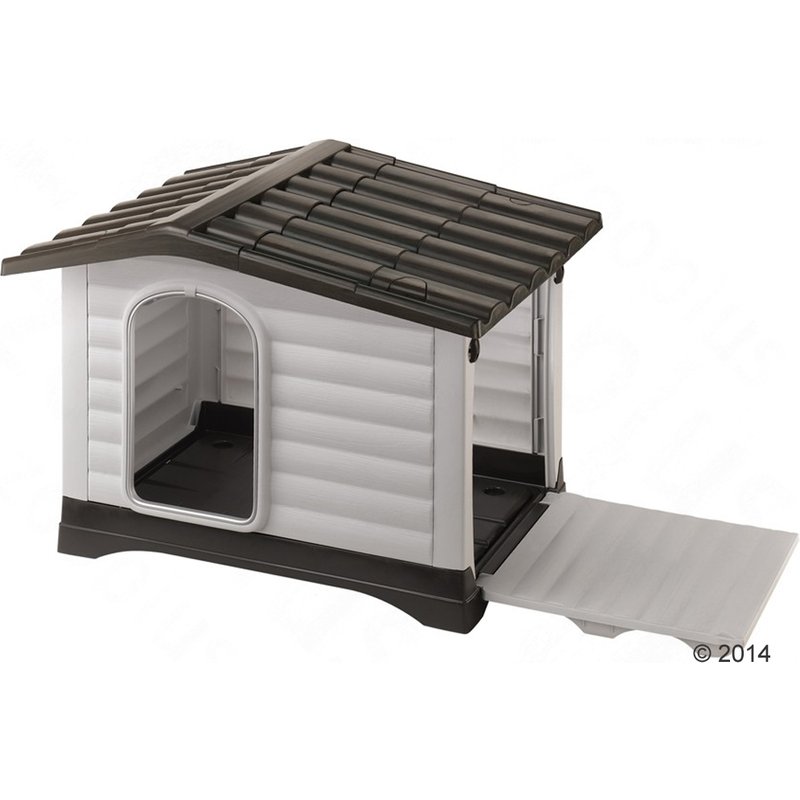
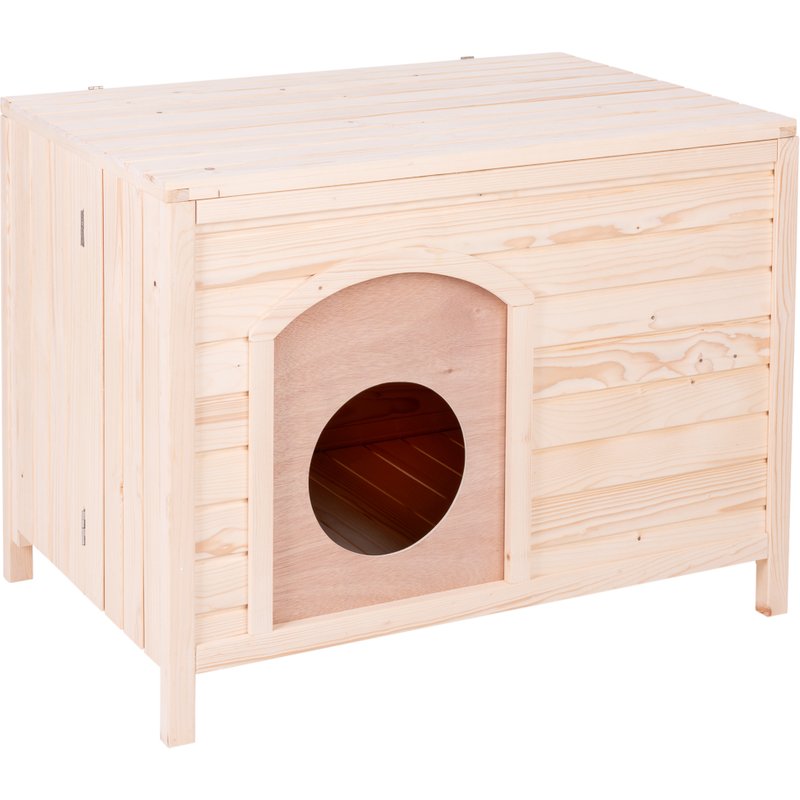
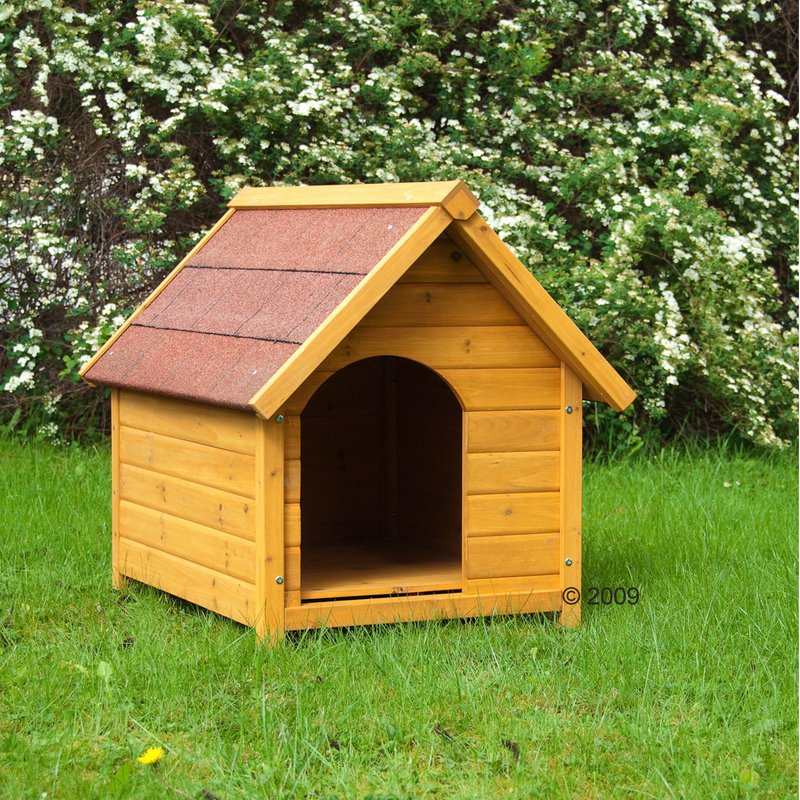
An outdoor kennel gives a dog shelter in the garden from sun, wind and rain. It is a shelter, not a substitute for living indoors with the family.
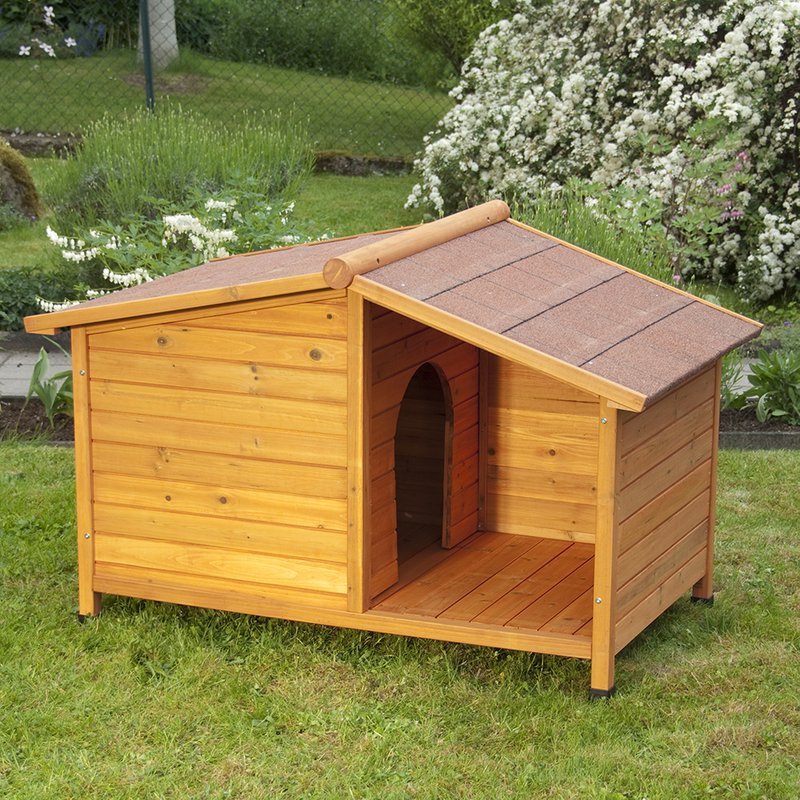
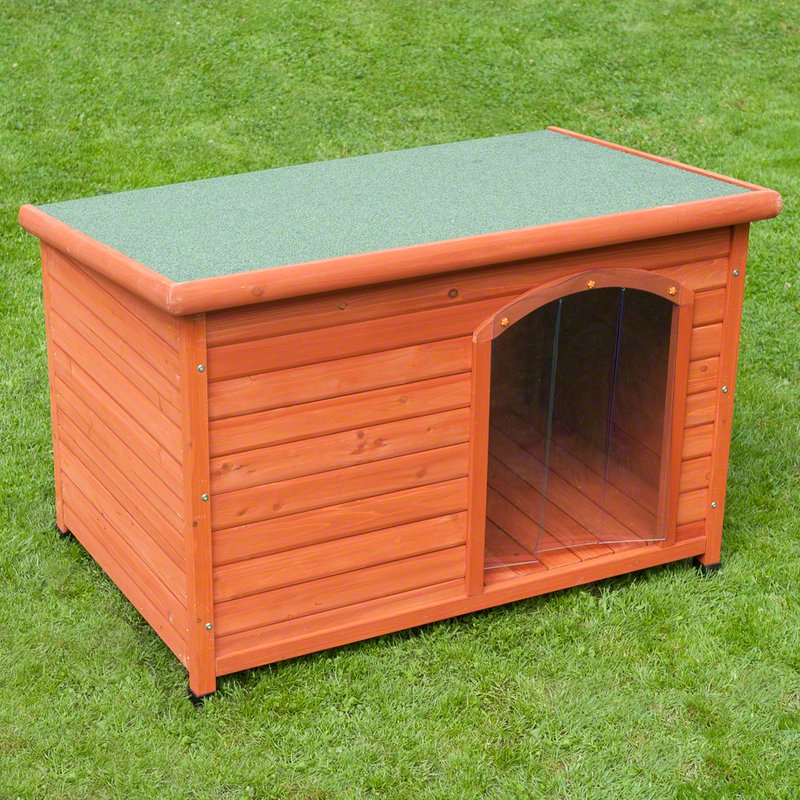
Size. Your dog should be able to stand up, turn round and lie stretched out inside. Do not go much bigger than that for a winter kennel: a dog warms a snug space with its own body heat, while a large one stays cold.
Construction.
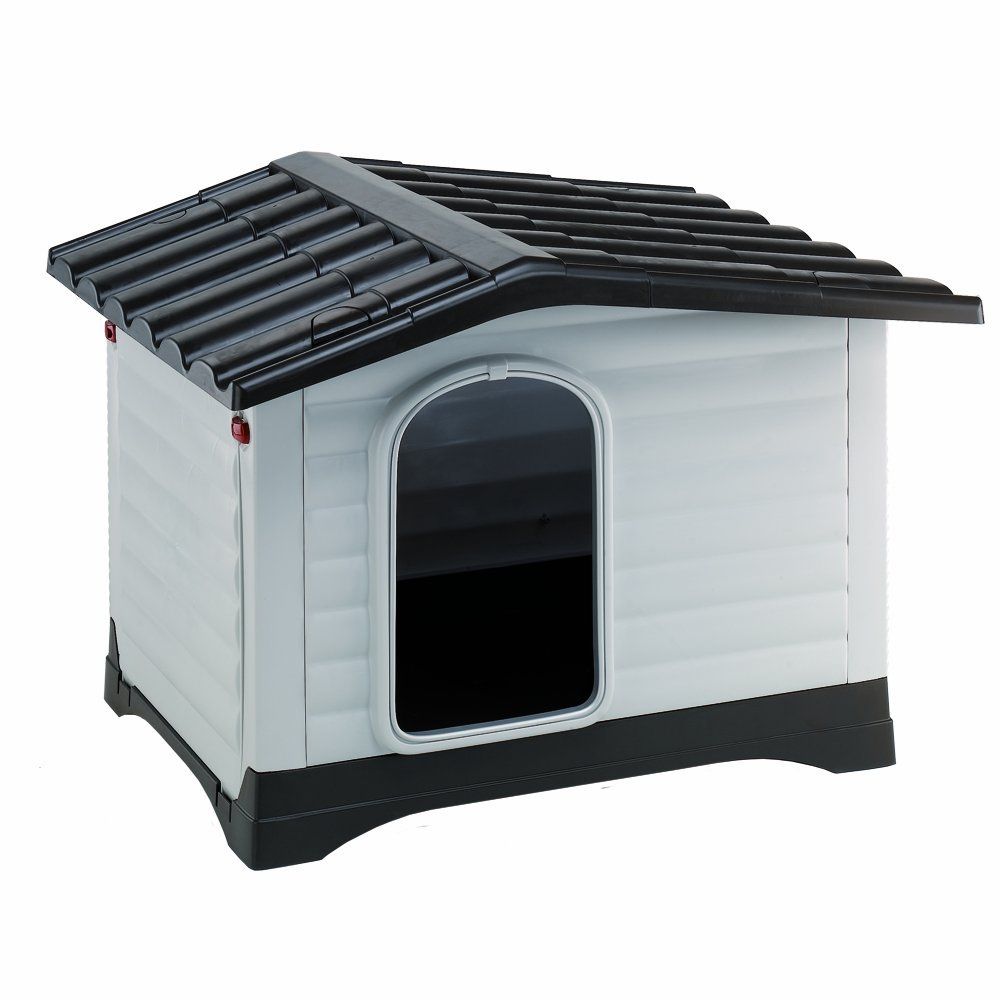
- Plastic kennels are easy to hose down, do not rot and are less attractive to mites and fleas. They offer less insulation than wood.
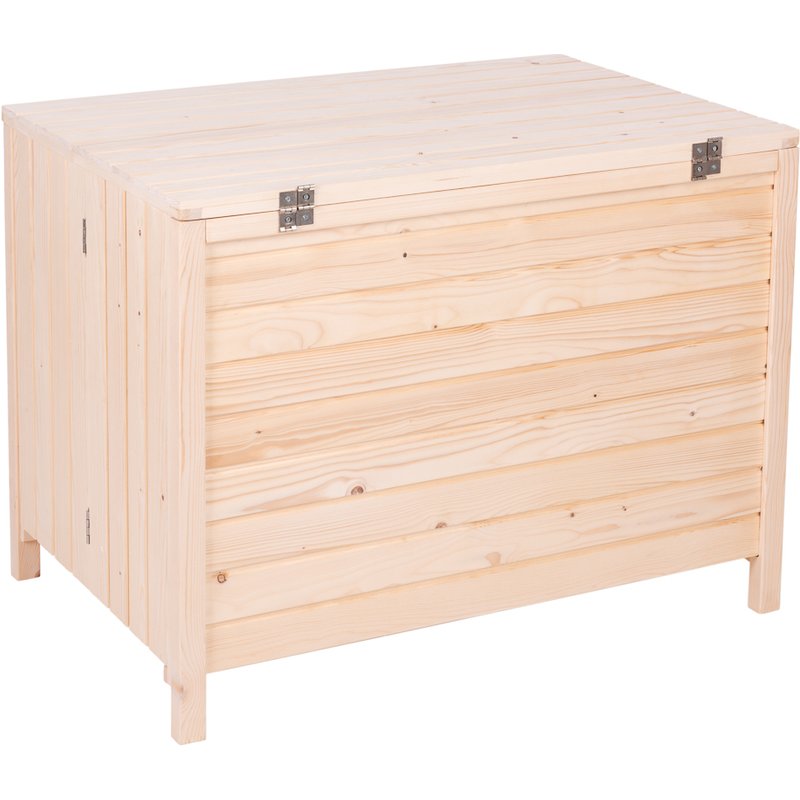
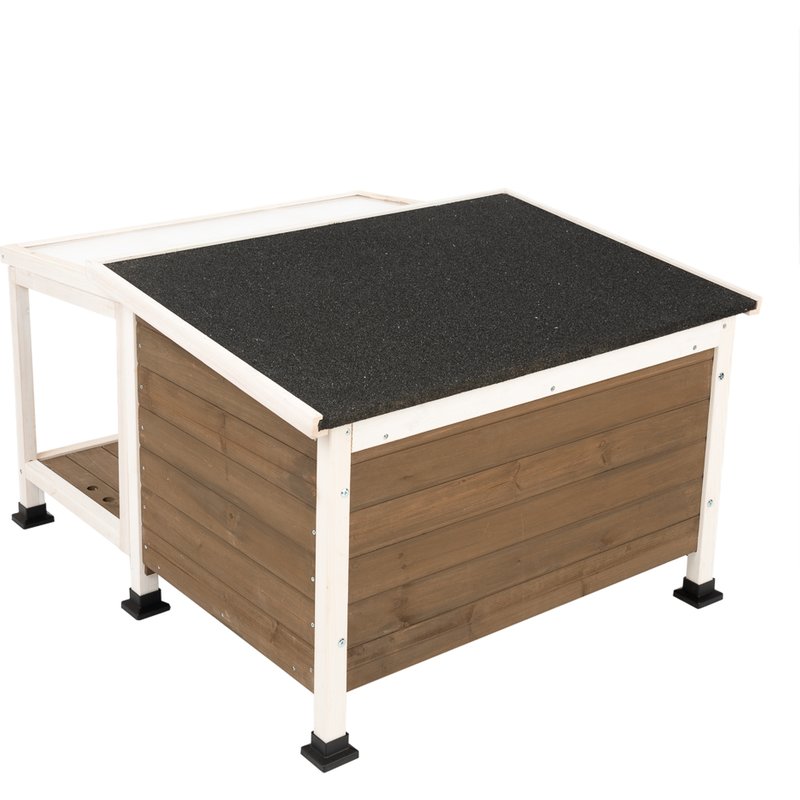
- Wooden kennels insulate better and look more at home in a garden, but need treating with a pet-safe wood preservative and checking for chewed or rotten boards.
Whichever you choose, look for a raised floor that keeps the dog off cold, damp ground, a roof that overhangs the door, and a removable roof or side for cleaning. Place the kennel with the entrance away from the prevailing wind, and in shade for summer. Add washable bedding and check it regularly.
Dog flaps
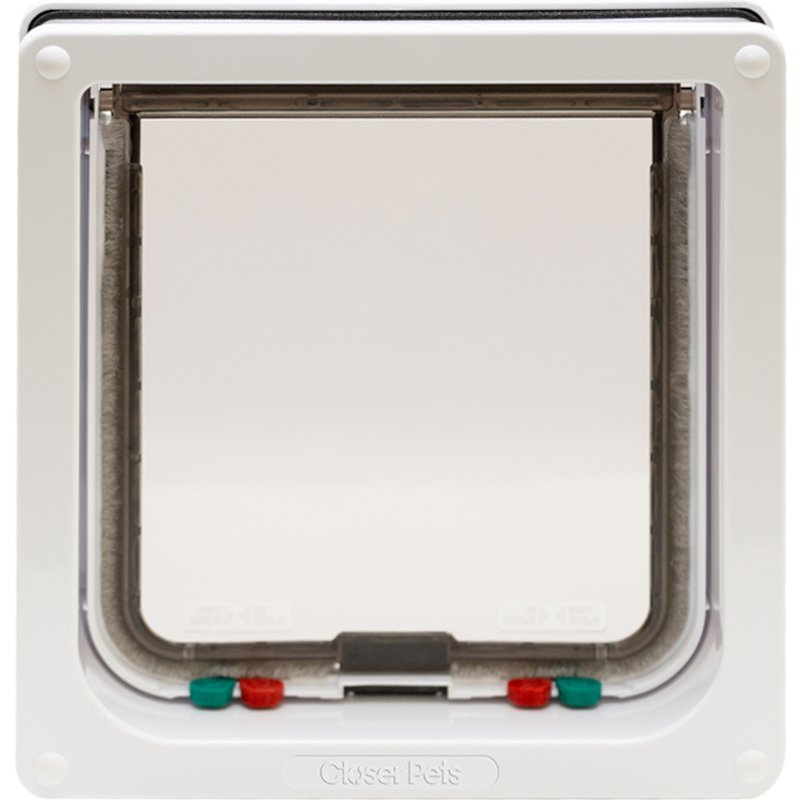
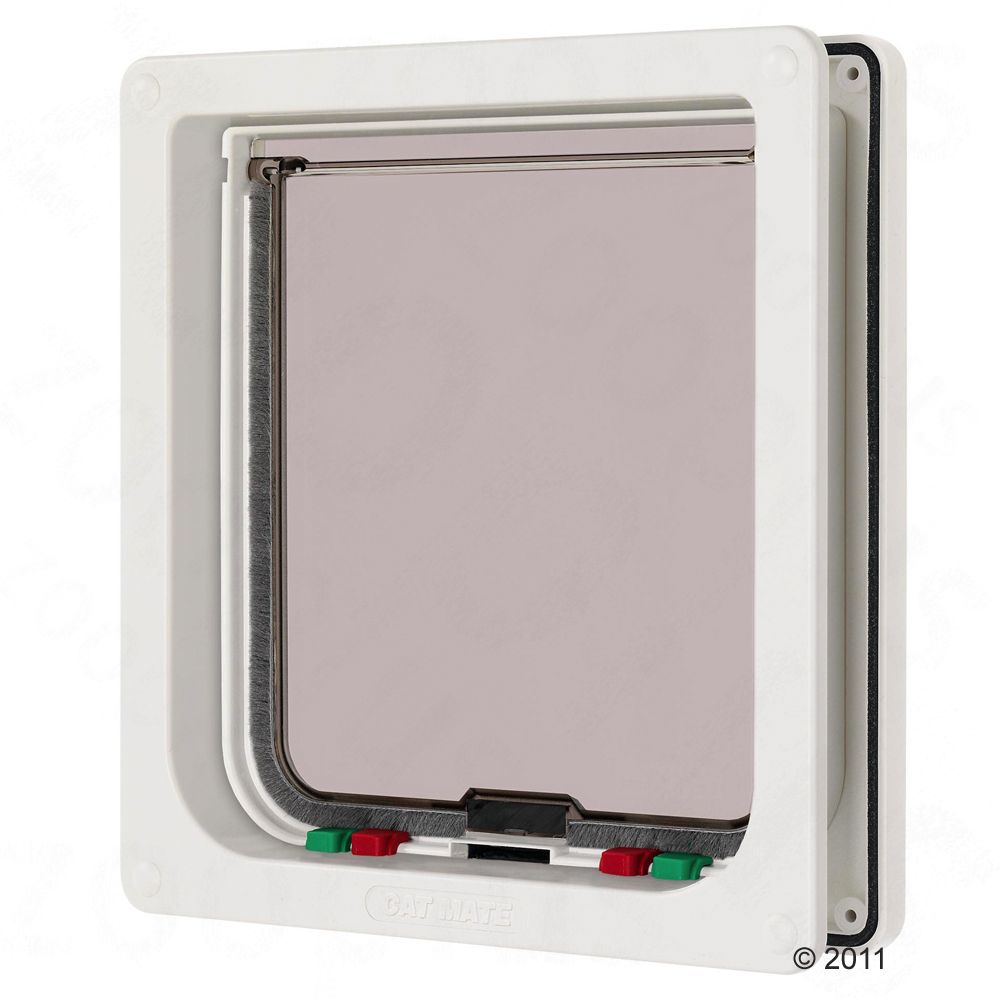
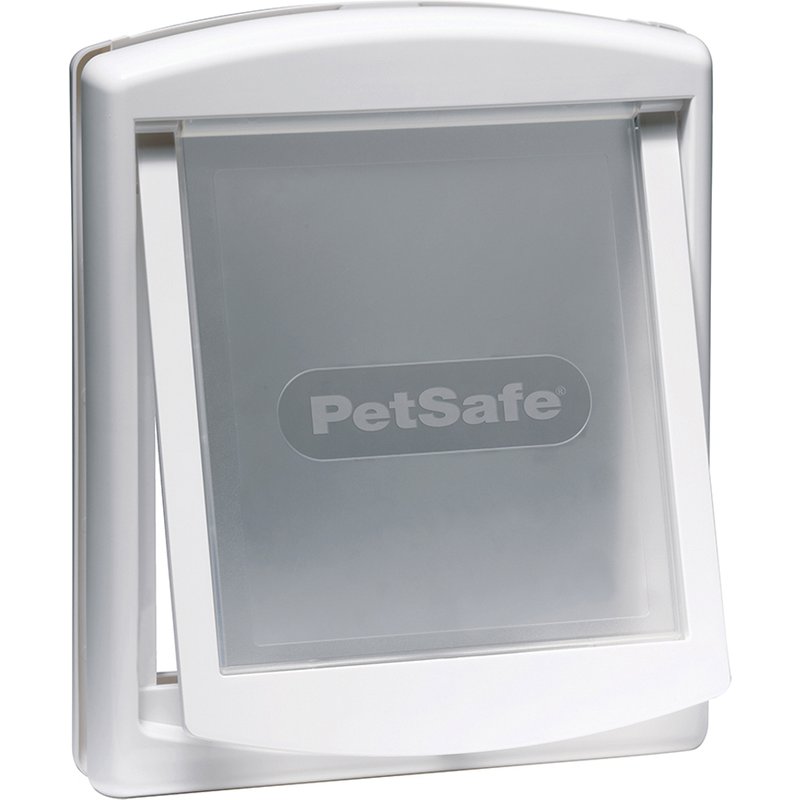
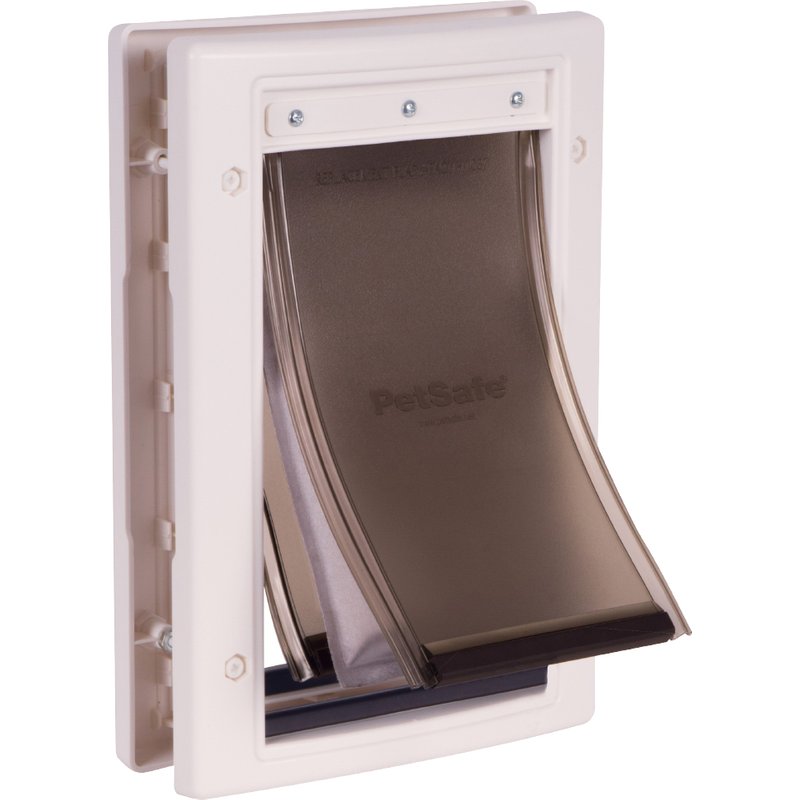
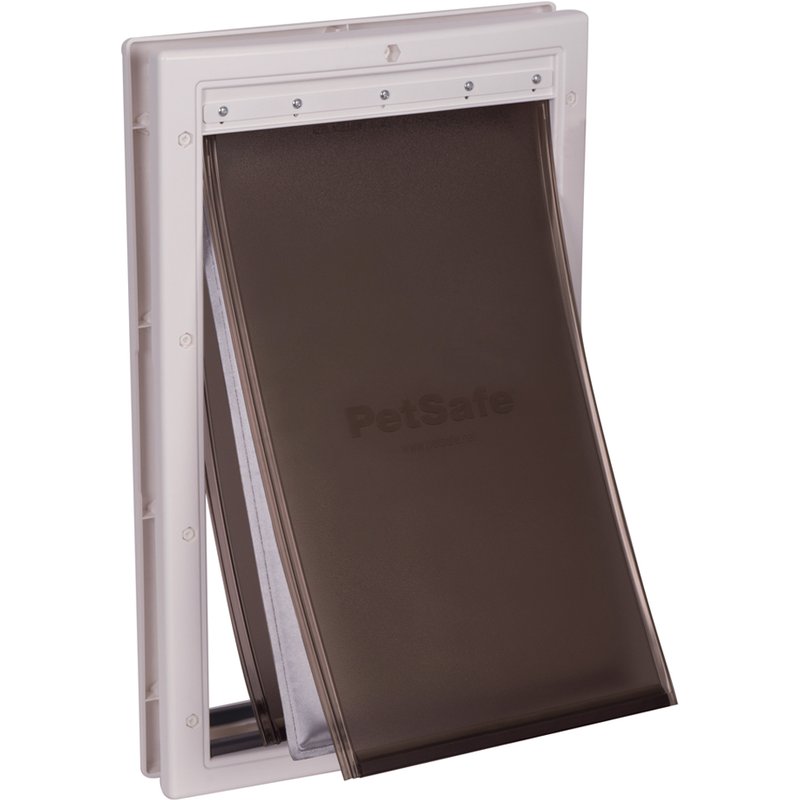
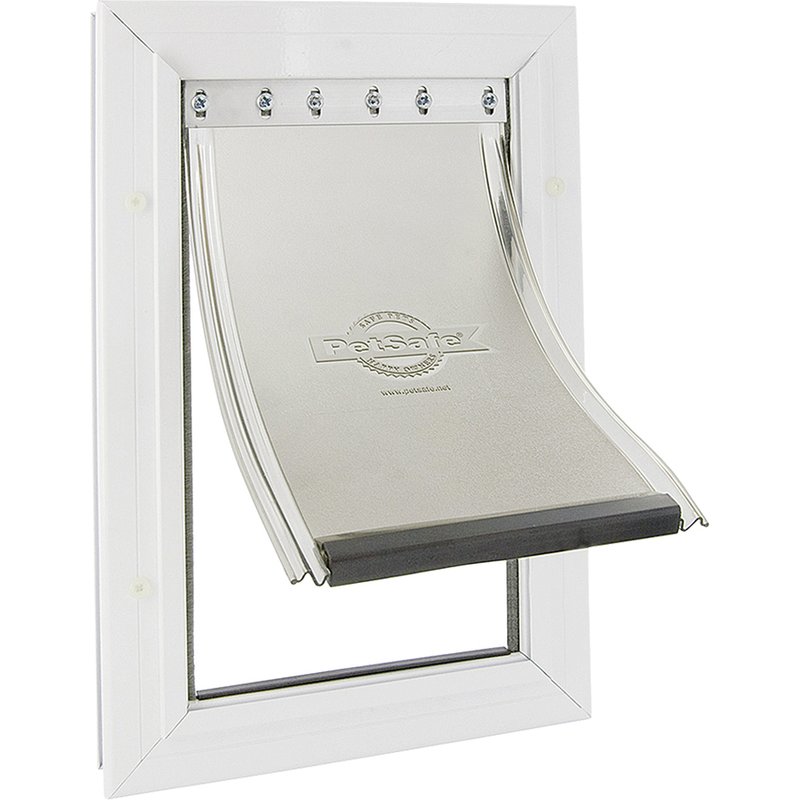
Getting the size right is everything. A flap that is too small means the dog has to crouch and twist; too big and it is a draught and a security gap.
- Height: measure from the floor to the highest point of your dog’s back while it stands. The top of the flap opening should be a little above this.
- Width: measure the widest part of your dog, usually the shoulders or chest.
- Step-over: the bottom of the flap should be low enough for your dog to step through comfortably, roughly no more than a third of its height. Older and short-legged dogs need a lower step.
With several dogs, size the opening for the tallest and the step-over for the shortest. Cutting a cardboard template and taping it to the door frame is a quick way to test before you commit.
Large flaps can be big enough for a person to reach or climb through, so choose a model that locks, and it is worth checking with your home insurer before fitting one in an external door. Fitting a flap into glass needs a glazier. For cats, look at our cat flaps instead, which are sized for smaller animals.
Gates and barriers
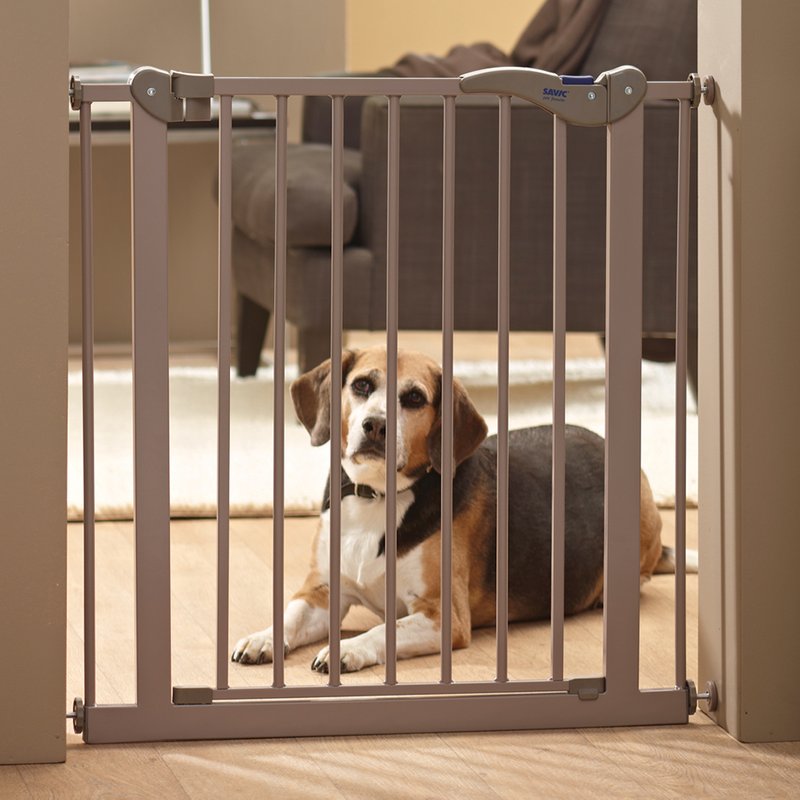
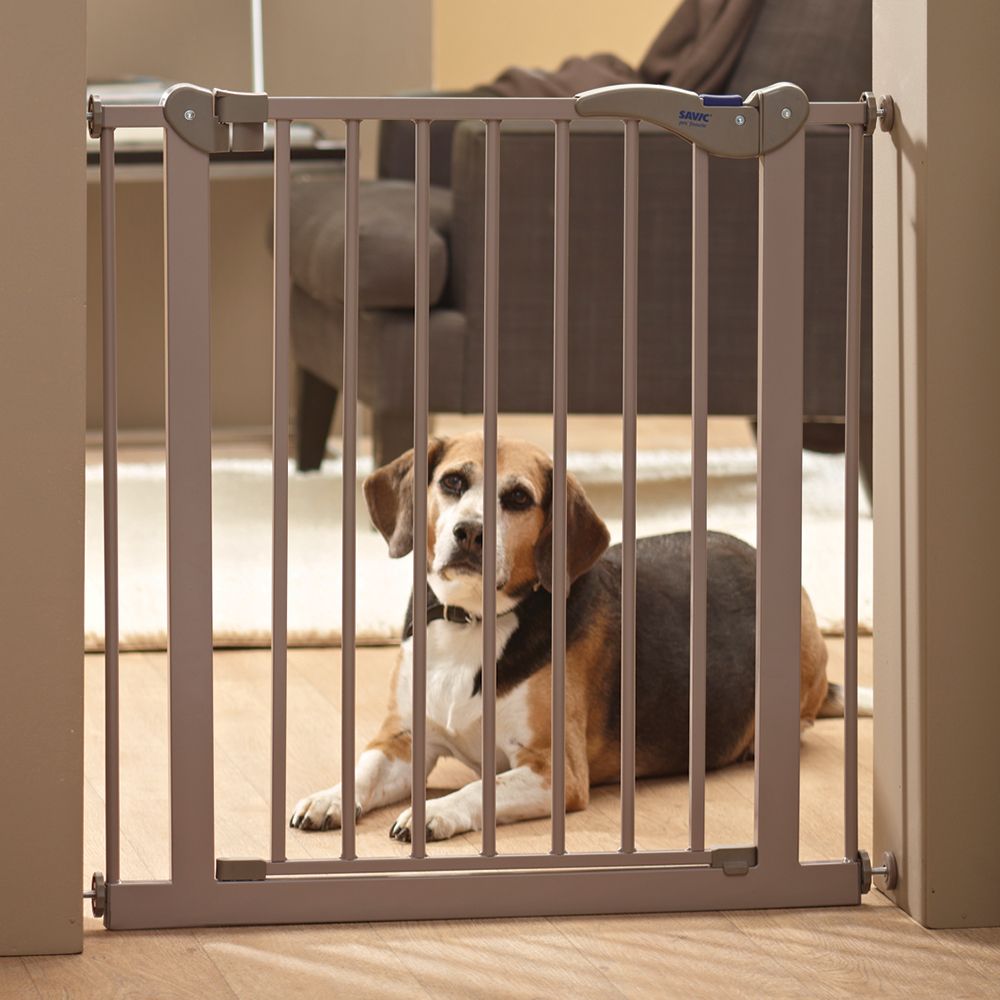
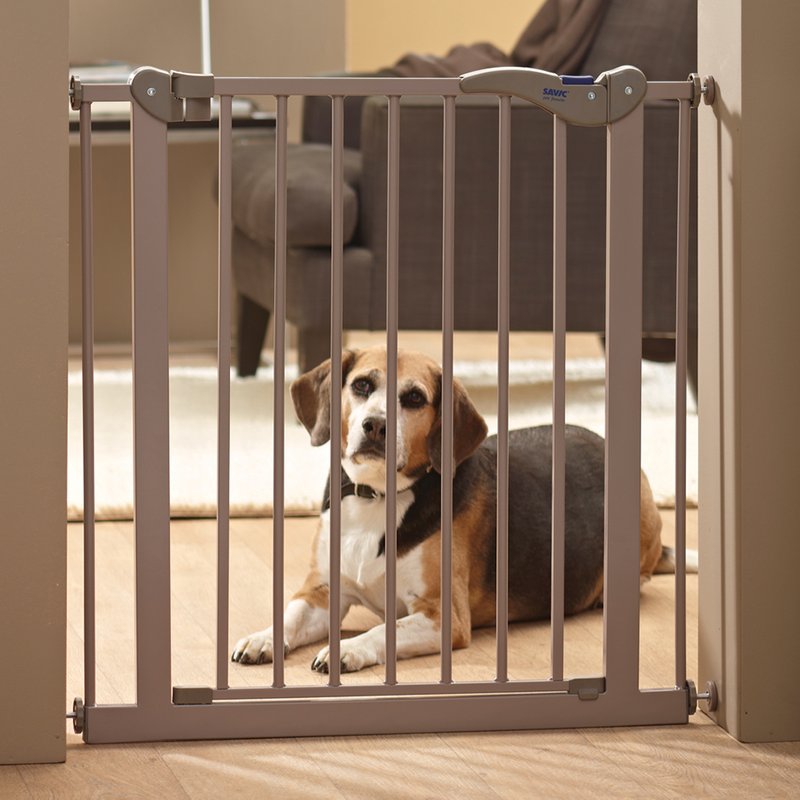
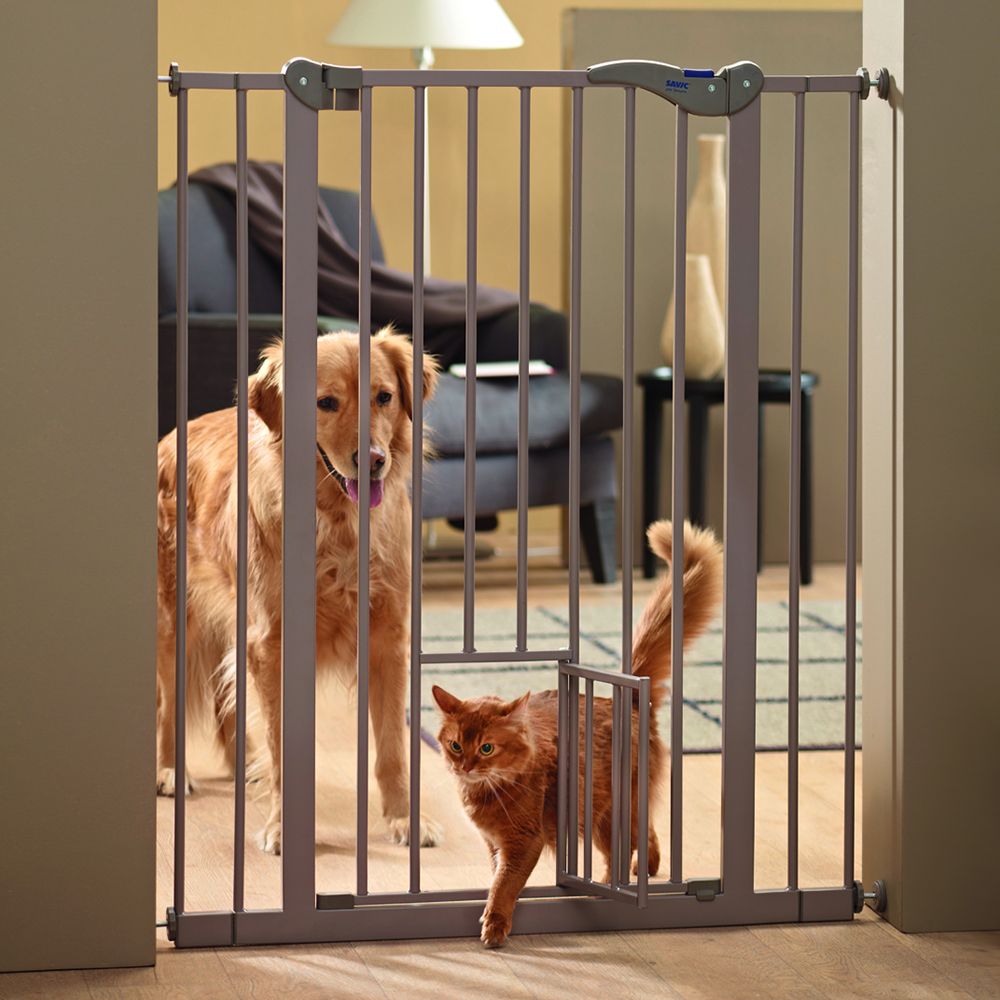
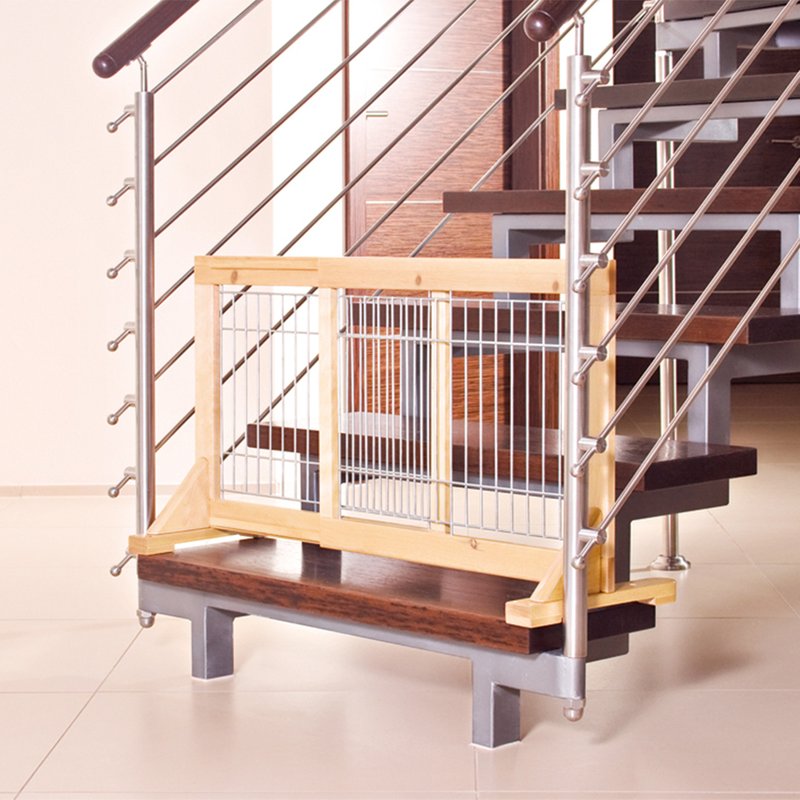
Gates keep a dog out of the kitchen, off the stairs or in one part of the house while a puppy settles in.
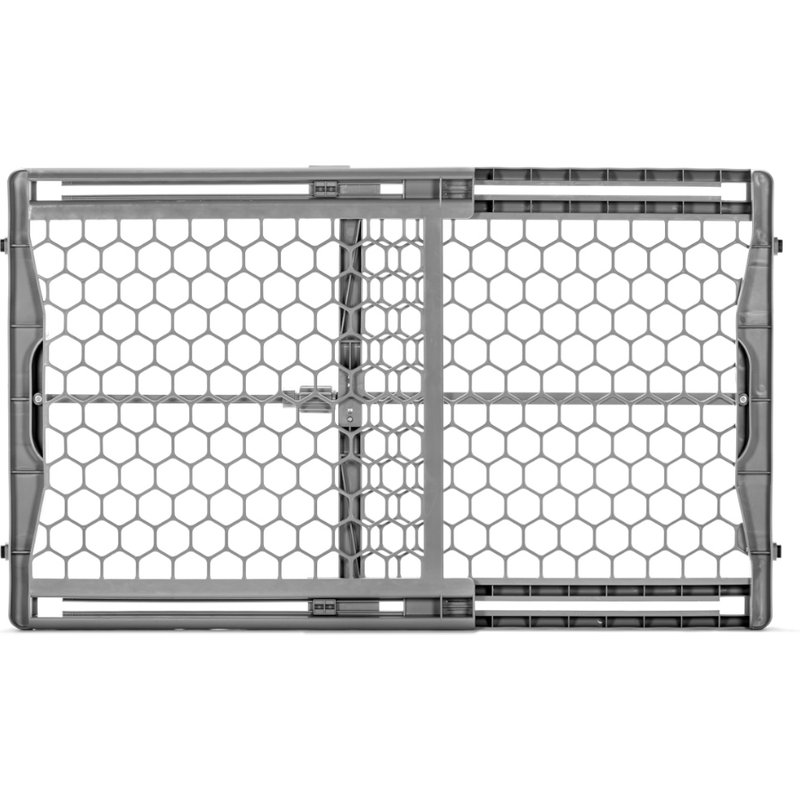
- Pressure-fit gates wedge between two walls or a door frame with no drilling. They are quick to move but have a bar across the bottom, which is a trip hazard. Do not use them at the top of stairs.
- Screw-fit gates fix to the wall and are the safer choice at the top of stairs and for strong dogs that lean or jump.
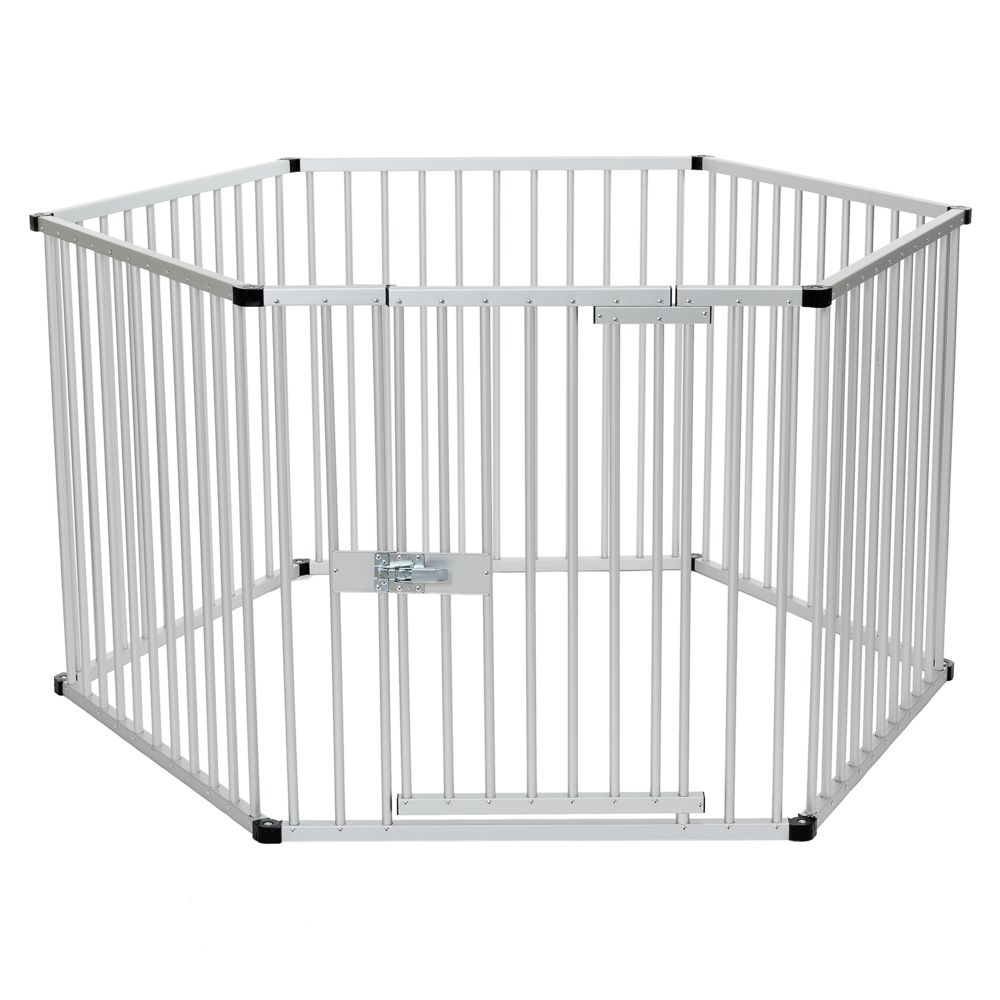
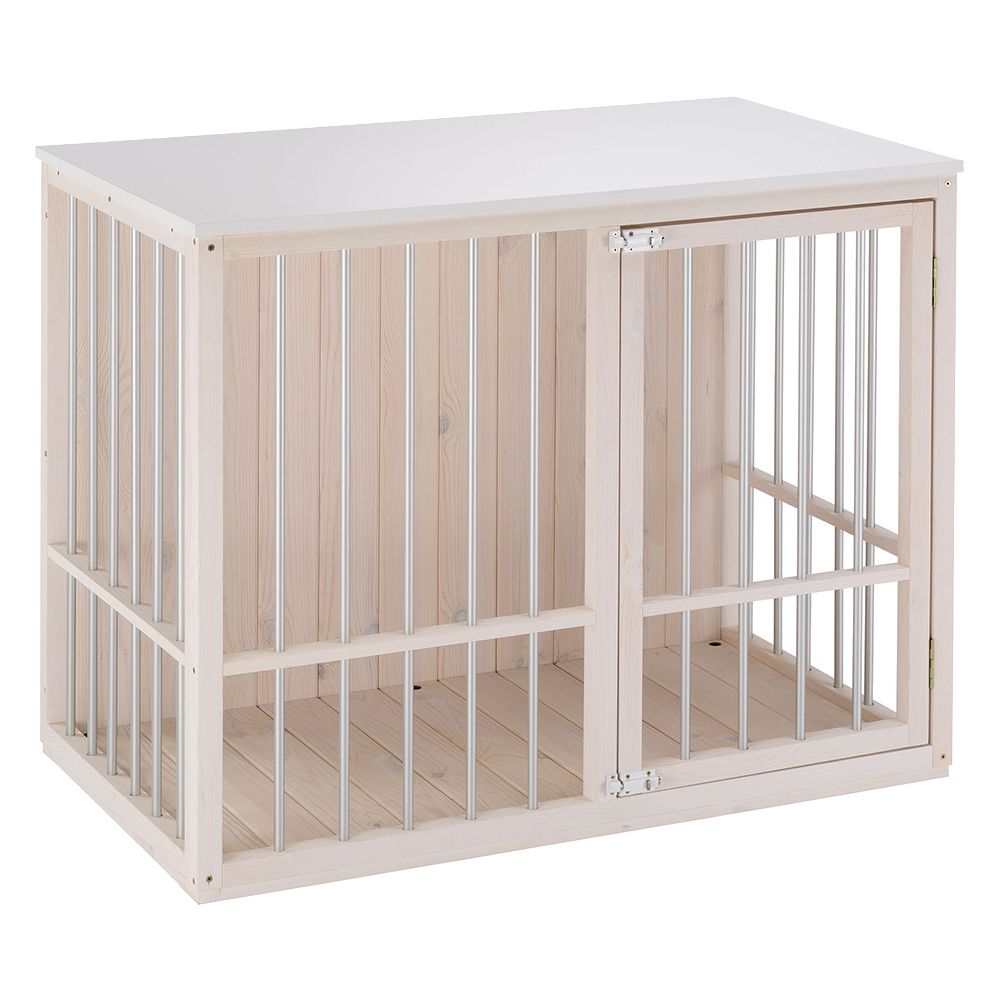
- Freestanding barriers and playpens need no fitting at all and are useful for open-plan rooms.
Measure the opening at both the top and the bottom, since skirting boards often make the bottom narrower, and check whether you need extension panels. For small dogs and puppies, check the gap between the bars so a head cannot get stuck. For jumpers, choose an extra-tall model.
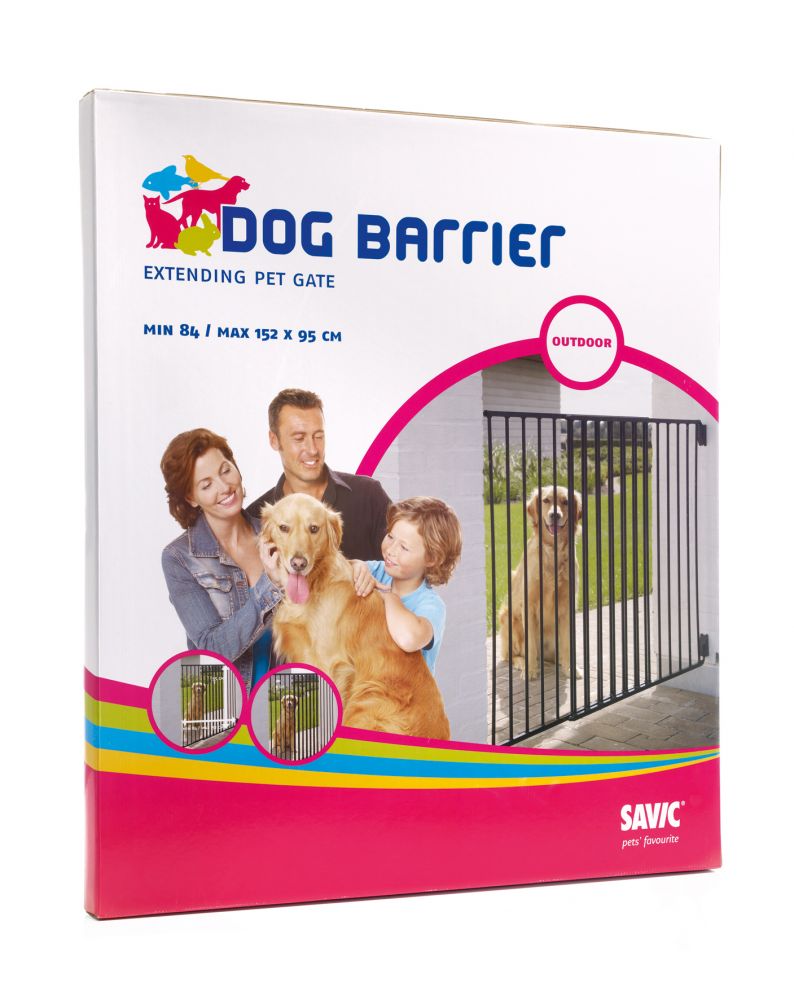
Outdoor gates and garden barriers follow the same rules. Check the gaps at the bottom and sides as well as the height, because many dogs dig or squeeze rather than jump.
Common questions
What size dog flap do I need?
Measure your dog’s height from the floor to the highest point of its back and its width at the widest point. The flap opening should be slightly bigger than both. Keep the bottom of the flap low enough to step over easily, roughly no more than a third of your dog’s height.
Can I use a pressure-fit gate at the top of the stairs?
No. Pressure-fit gates have a bar across the bottom that is a trip hazard, and they can be pushed loose. At the top of stairs, use a gate that screws into the wall. Pressure-fit gates are fine for doorways and the bottom of stairs.
How do I keep my dog’s kennel warm in winter?
Choose a kennel only slightly bigger than your dog so its body heat warms the space, with a raised floor and the door facing away from the wind. Add thick, dry bedding and check it often. In very cold weather, bring your dog indoors.