
Which material
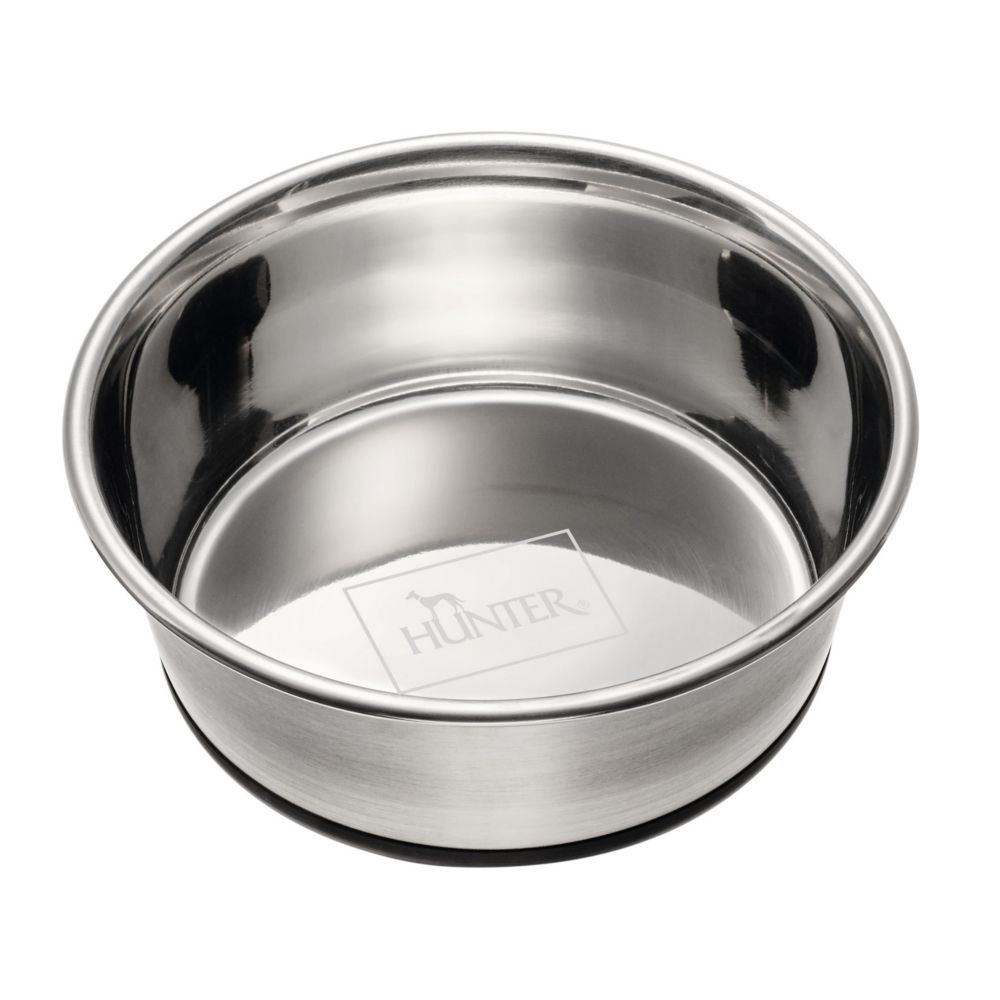
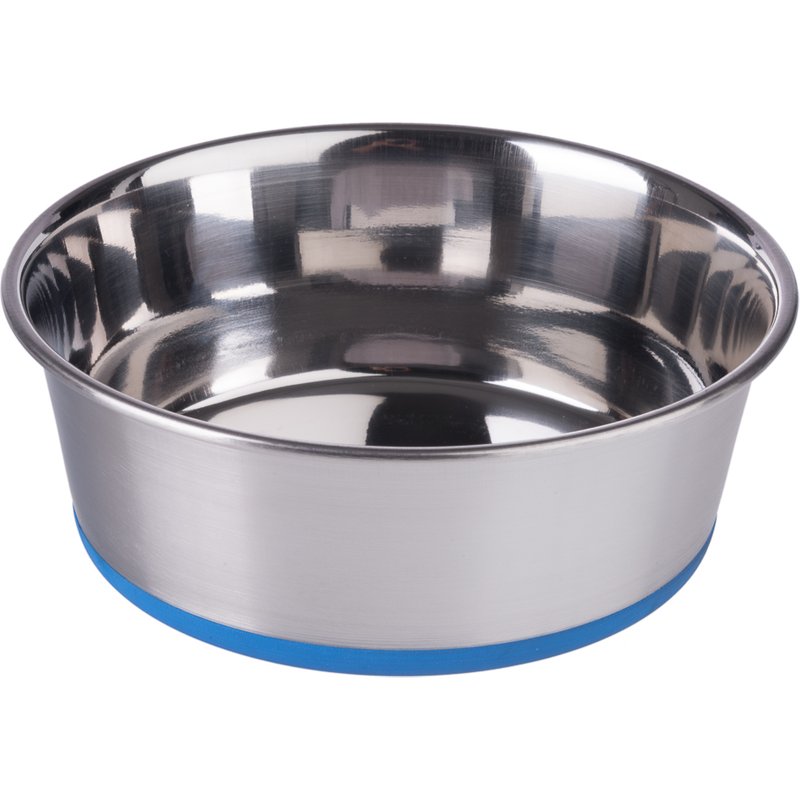
- Stainless steel is the everyday choice for most owners. It does not scratch easily, goes in the dishwasher and is almost impossible to break. Look for a rubber base so it does not slide around the floor.
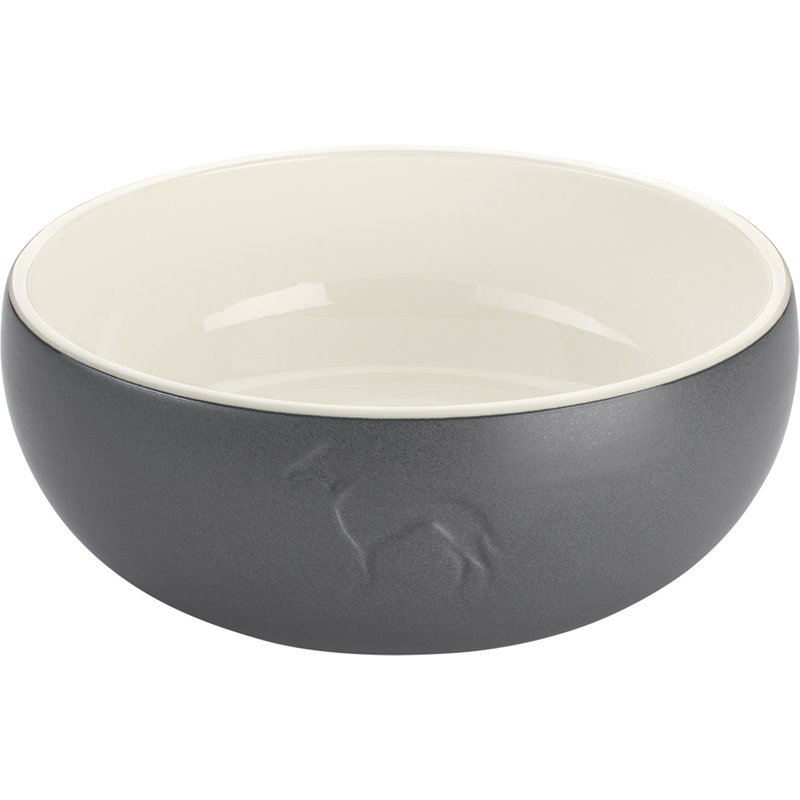
- Ceramic is heavy and stable, which suits dogs that push their bowl around. Check it regularly for chips and cracks, which can harbour bacteria and cut a tongue, and replace it if damaged.
- Plastic is light and cheap but scratches easily, and scratches are hard to clean. Some dogs also chew plastic bowls. Fine for travel or short-term use, less so as the main bowl.
- Silicone collapsible bowls fold flat and are useful for walks and days out.
Size and shape
Choose a food bowl that holds a full meal without food spilling over the edge, and a water bowl that is bigger than you think you need, especially for large dogs or in summer. Running out of water while you are out is the most common problem.
Shape matters for some dogs:
- Long-eared breeds such as spaniels and Bassets do better with narrower, deeper bowls that keep their ears out of the food.
- Flat-faced breeds such as Pugs and French Bulldogs find shallow, wide bowls easier.
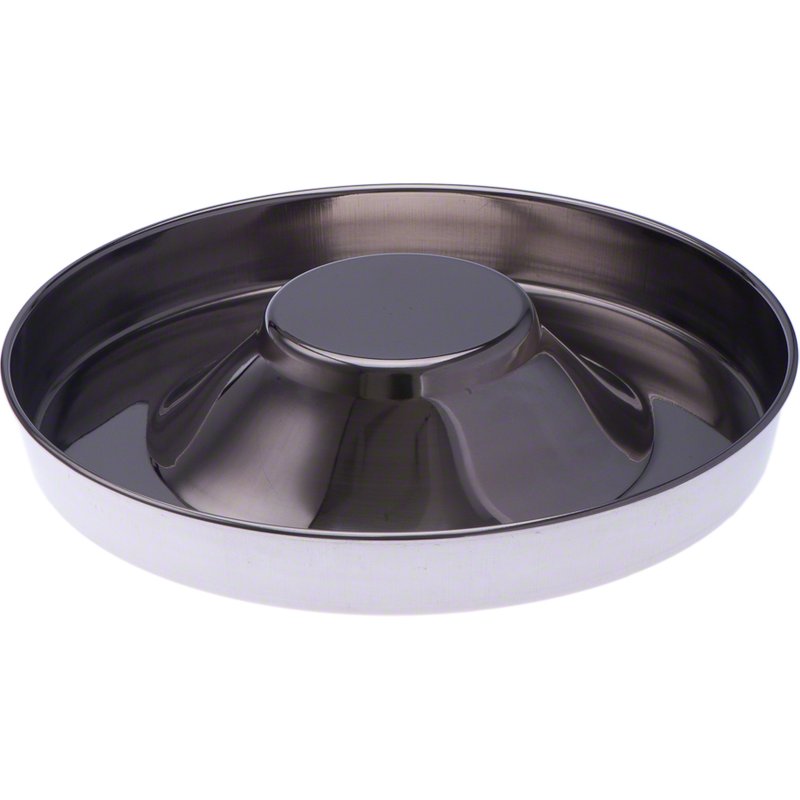
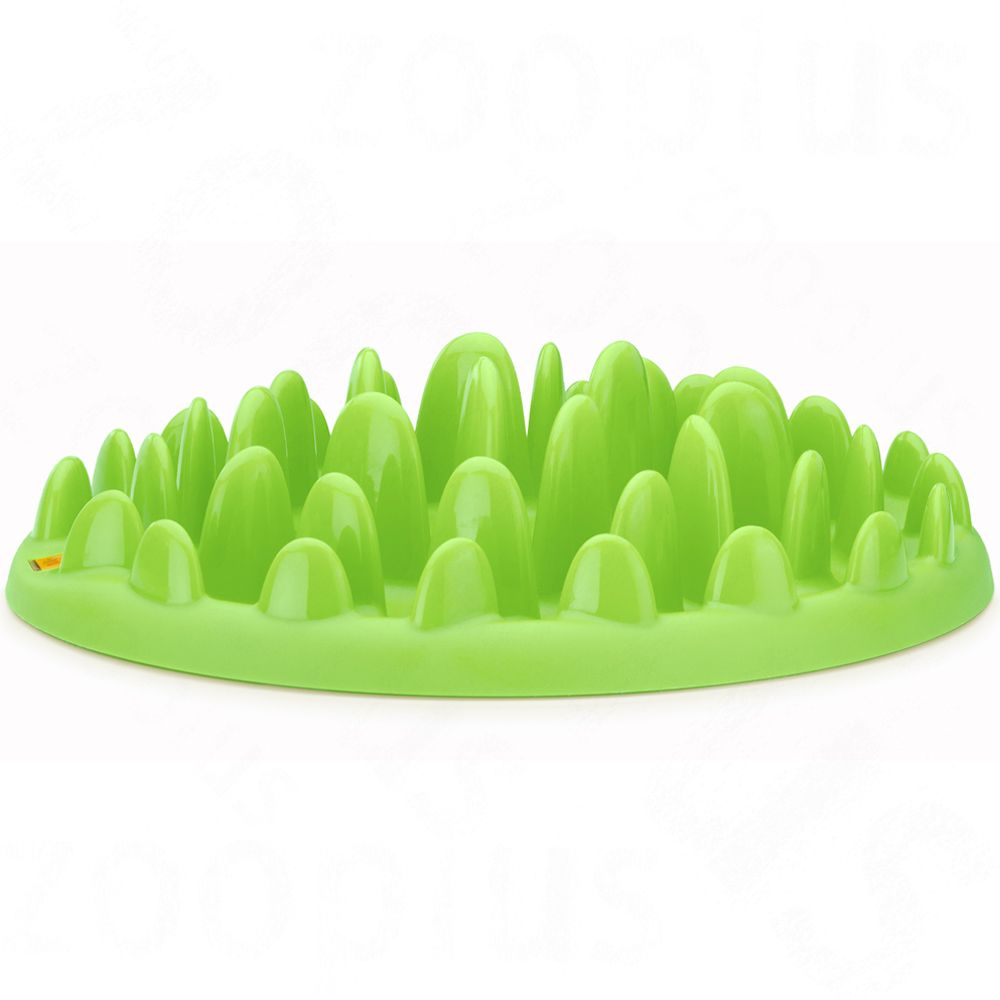
- Fast eaters benefit from a slow feeder bowl, which has ridges or a maze that makes the dog work round the food. A puzzle toy does a similar job.
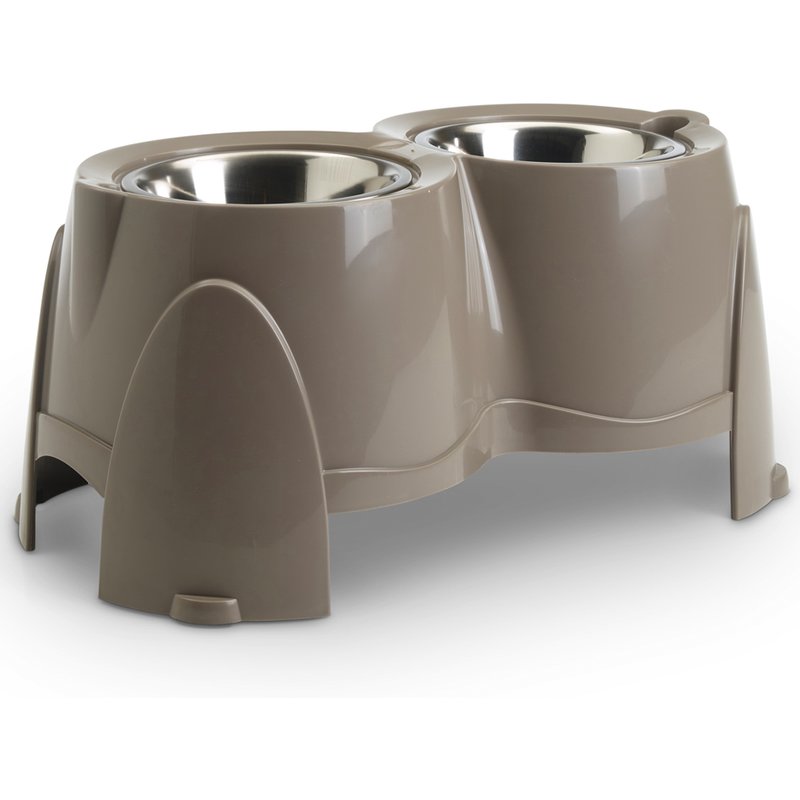
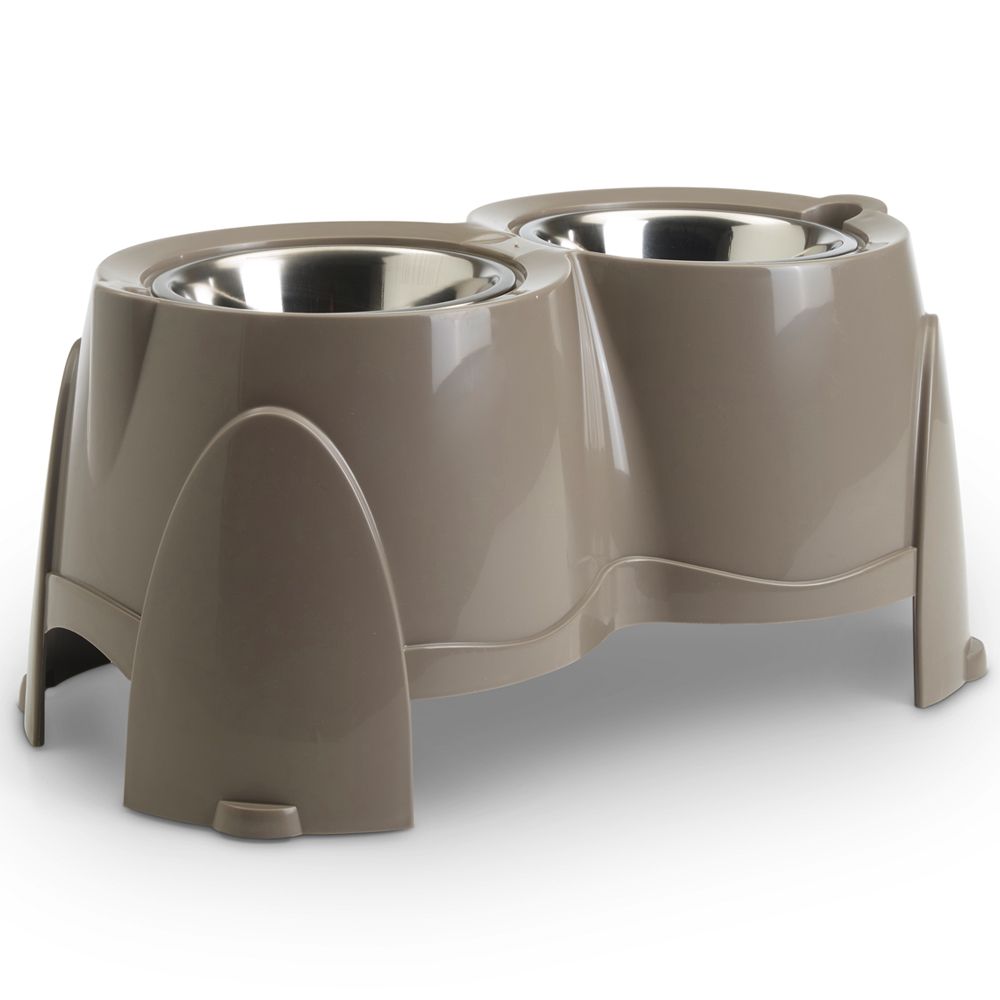
Raised feeders
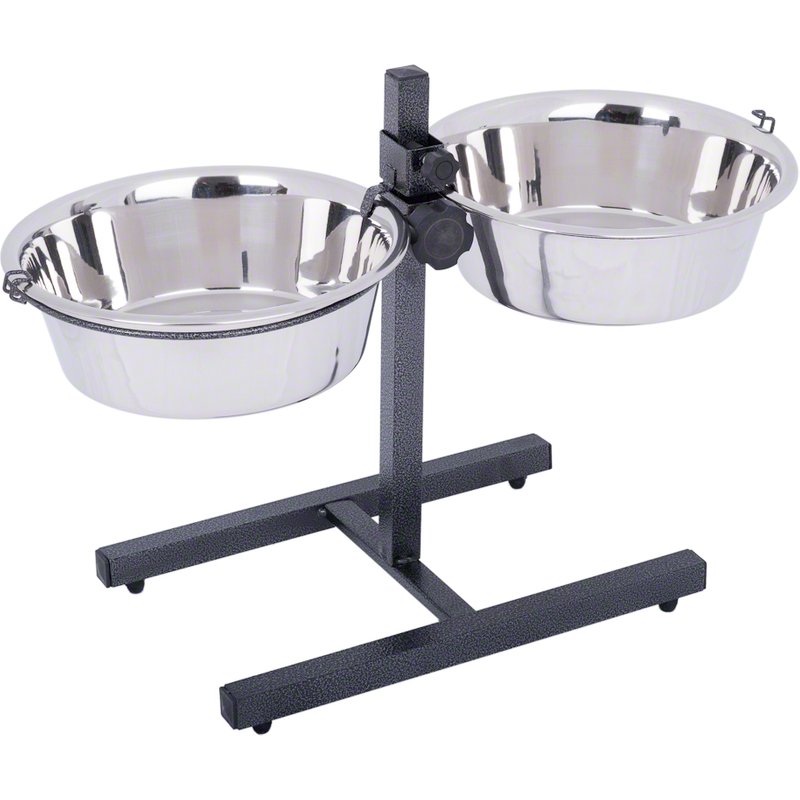
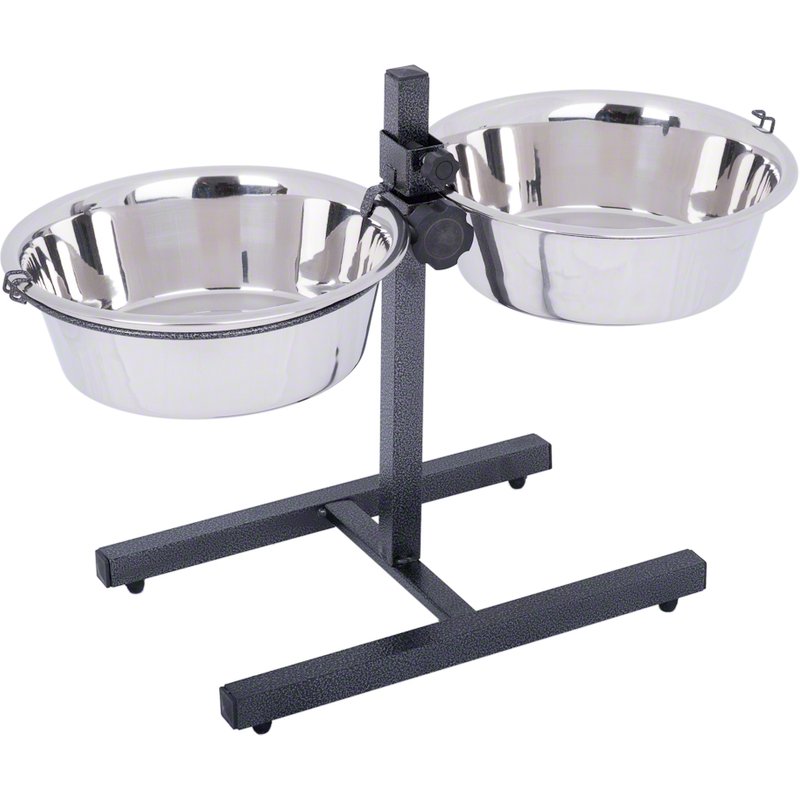
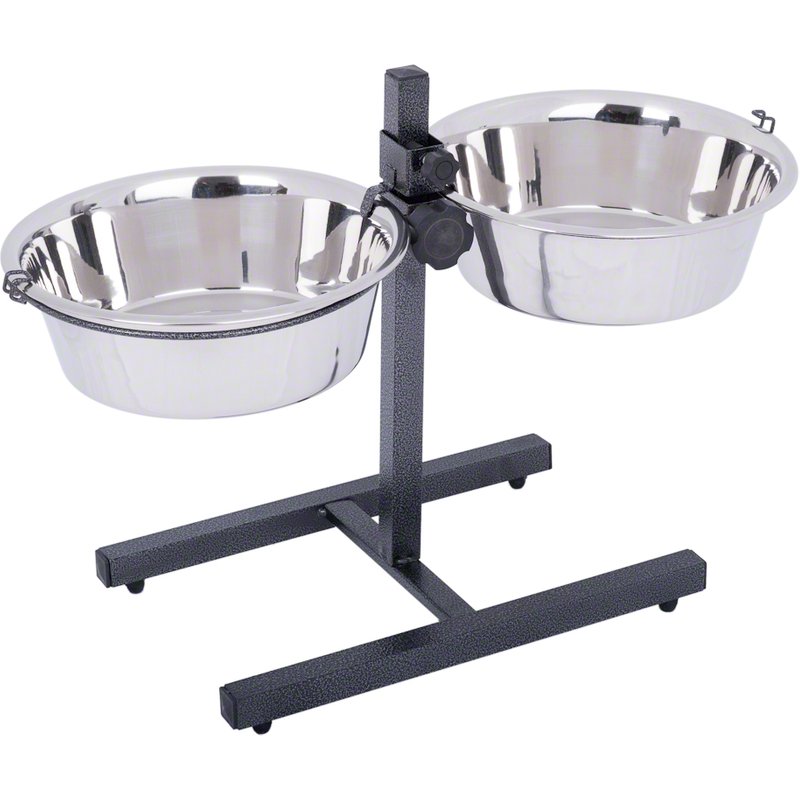
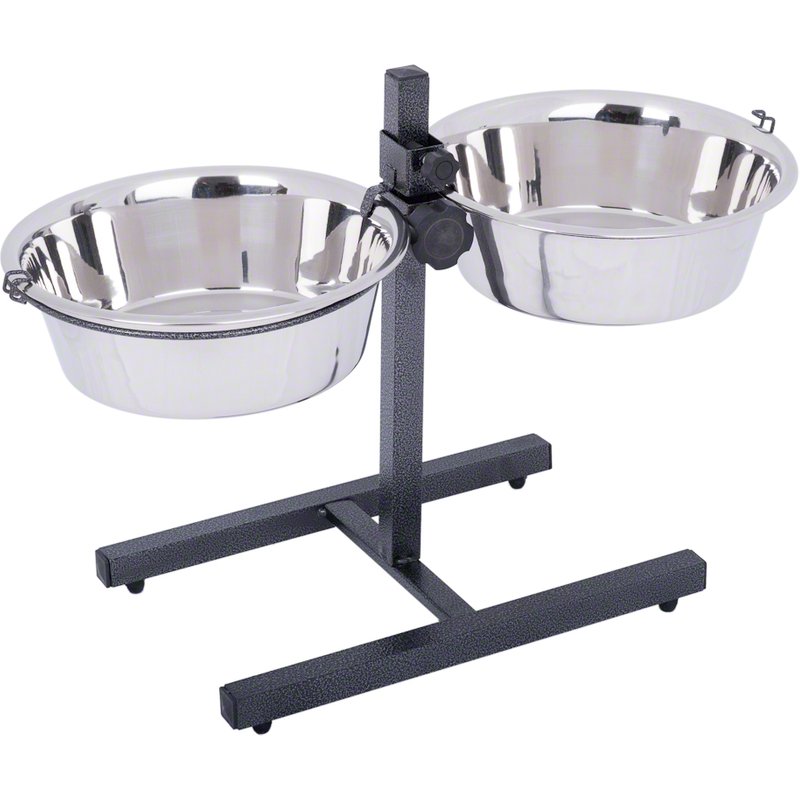
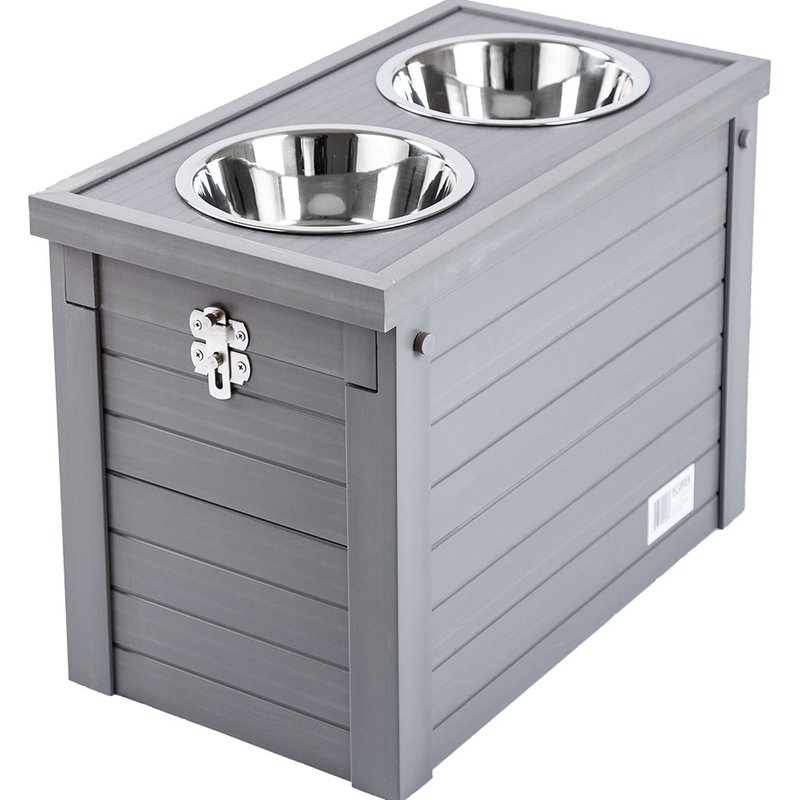
Raised bowls and feeding stands are often sold as helping to prevent bloat (gastric dilatation and volvulus, a life-threatening emergency in deep-chested dogs). The evidence does not support that. One large study found raised feeders were linked to a higher risk of bloat in large and giant breeds, and another found no effect either way. No study has found that raising the bowl reduces the risk.
Raised feeders can still be more comfortable for dogs with arthritis or neck problems. If you have a deep-chested breed such as a Great Dane, German Shepherd or Setter, ask your vet before switching.
Water
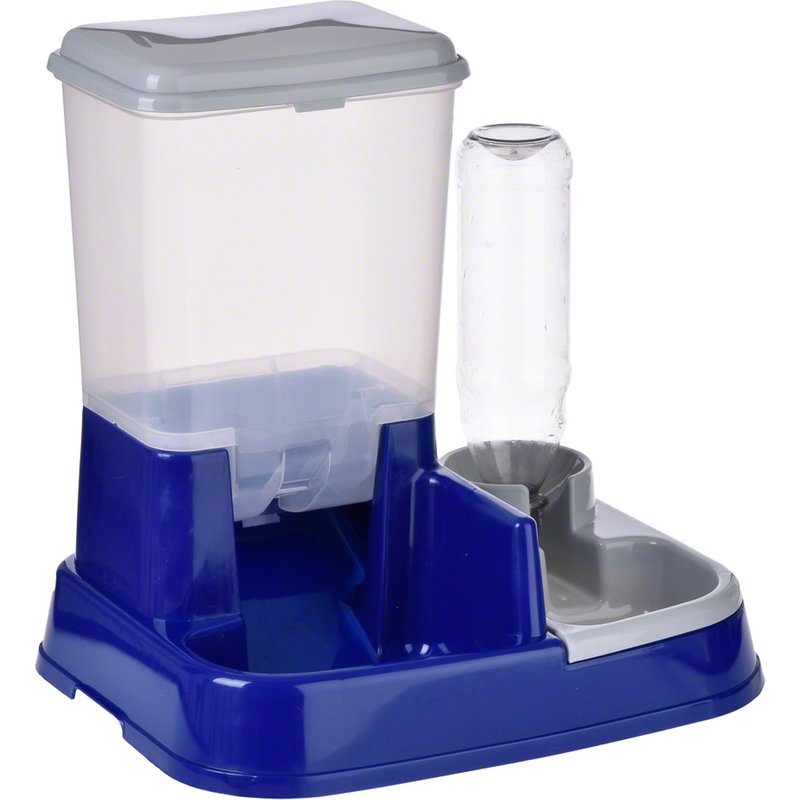
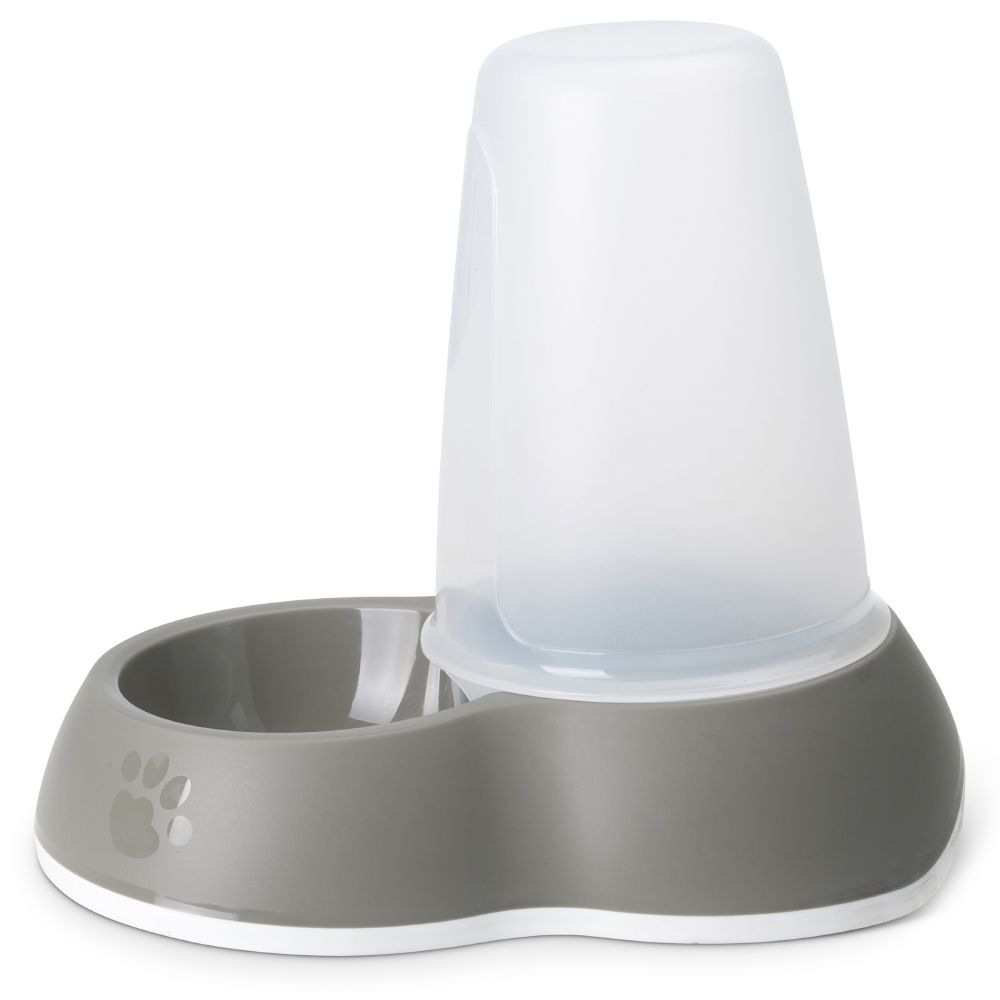
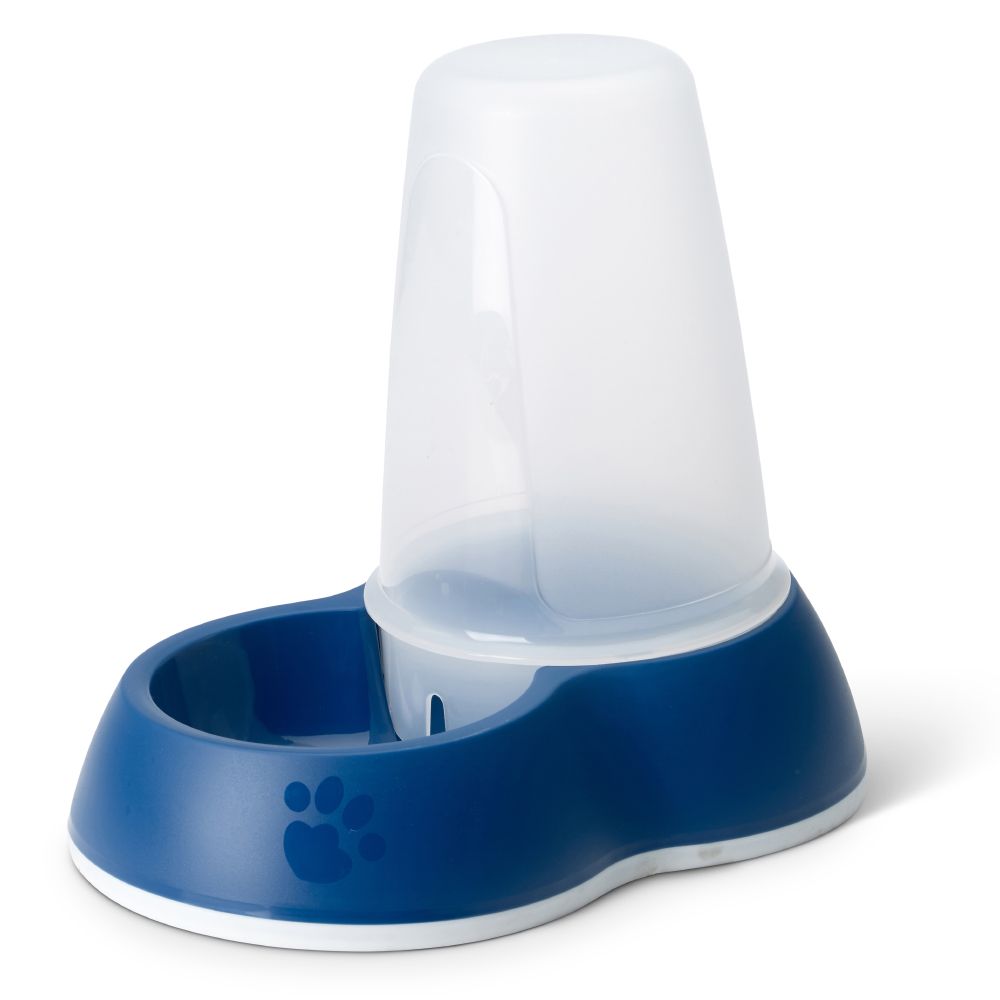
Your dog should always have access to fresh water. Gravity water dispensers keep a bowl topped up and are handy if you are out for a few hours, but they still need emptying and cleaning, not just refilling. Change water at least daily.
Keep water and food bowls indoors where you can. Slugs and snails crawl into bowls left outside, and their slime can carry lungworm larvae. More on prevention in dog flea, tick and worming.
A dog that suddenly drinks a lot more than usual should see the vet, as increased thirst can be a sign of illness.
Hygiene
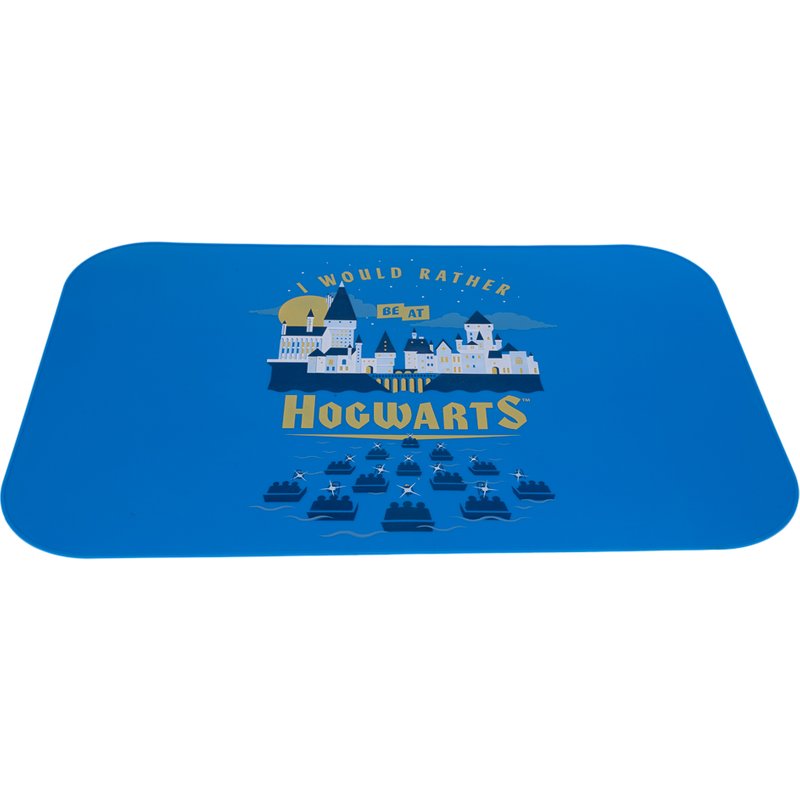
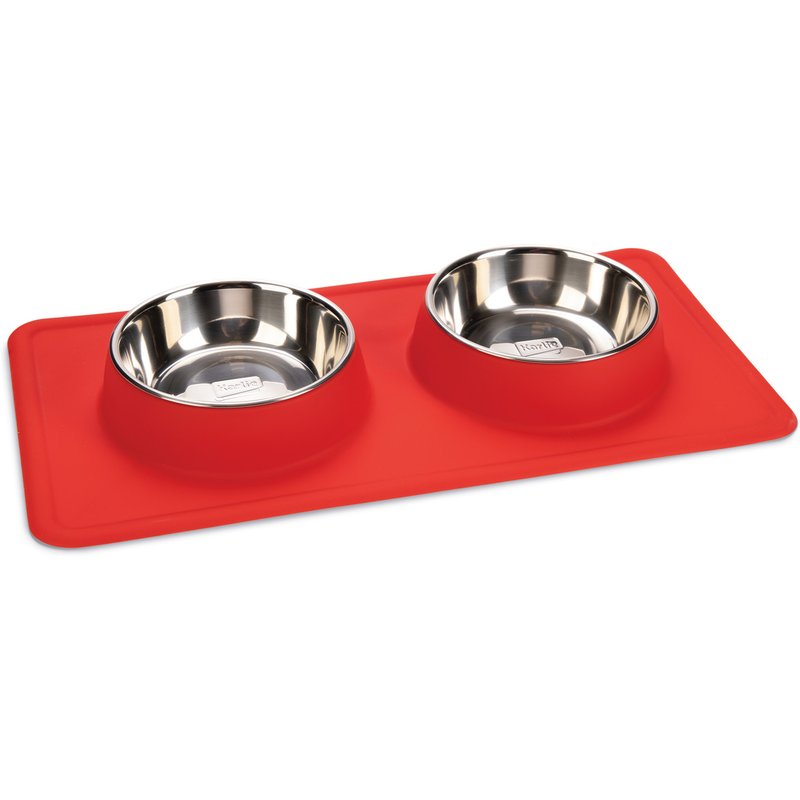
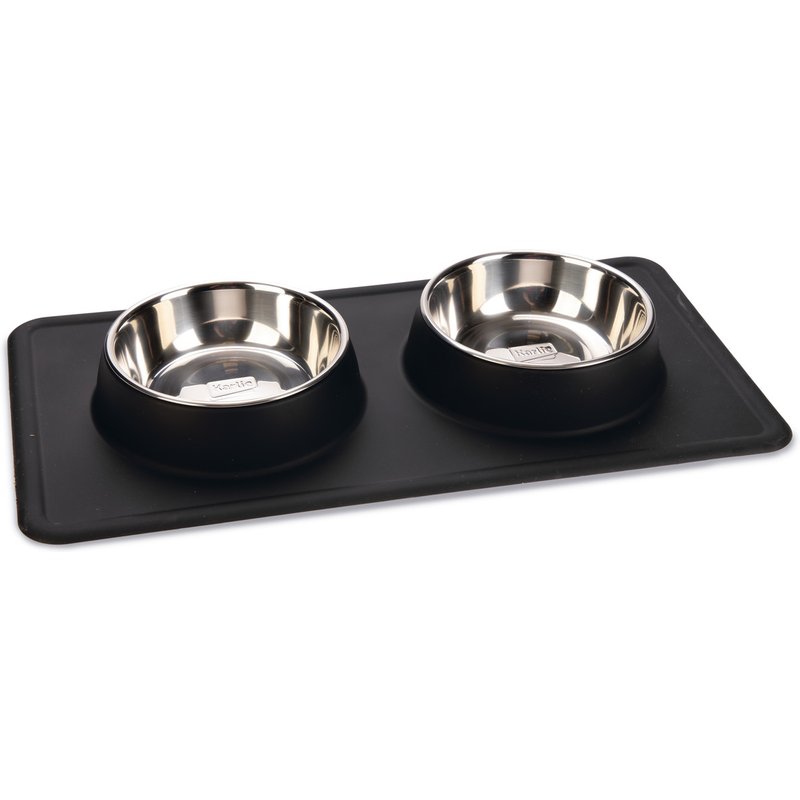
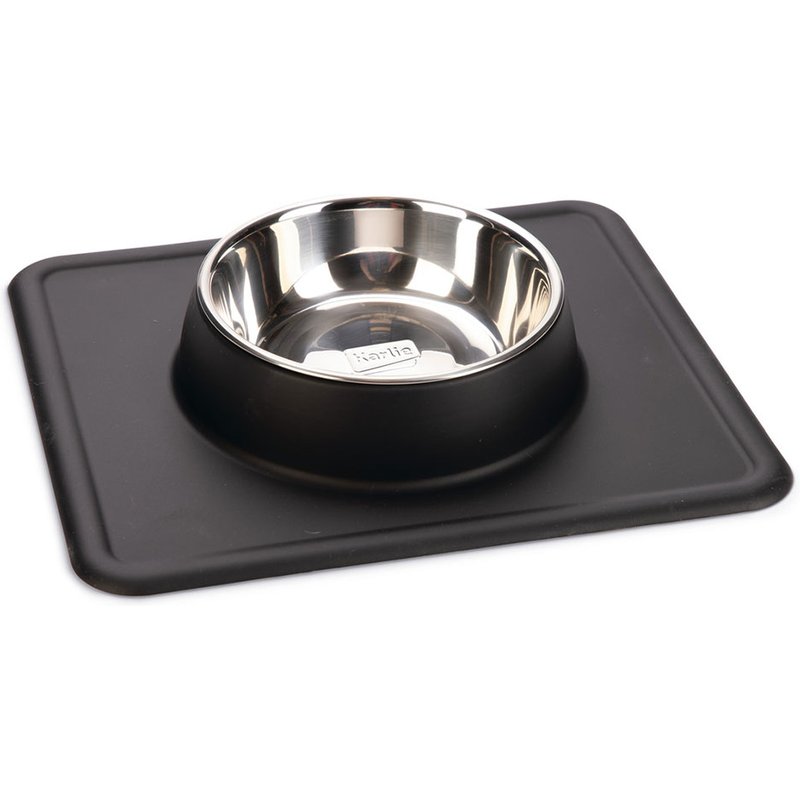
Wash food bowls after every meal and water bowls every day, using hot soapy water and a sponge or brush kept just for pet bowls. Stainless steel and most ceramic bowls can go in the dishwasher. A silicone or rubber placemat under the bowls catches spills and makes the floor easier to keep clean.
For dogs that eat from the floor in a crate or car, see crates and travel.
Common questions
What is the best material for a dog bowl?
Stainless steel is the most practical for most dogs: durable, easy to clean and dishwasher safe. Ceramic is a good option if it stays free of chips and cracks. Plastic scratches easily and is better kept for travel.
Are raised dog bowls good for dogs?
They can help dogs with arthritis or neck problems eat more comfortably. However, they do not prevent bloat, and one study linked them to a higher bloat risk in large and giant breeds. If you have a deep-chested dog, ask your vet first.
How often should I clean my dog’s bowls?
Wash food bowls after every meal, especially with wet food, and clean and refill water bowls at least once a day. Use hot soapy water or the dishwasher, and keep a separate sponge for pet bowls.
How much water should my dog drink a day?
It varies with size, diet, weather and exercise. Vets often quote a normal range of roughly 20 to 70ml per kilo of body weight per day, with dogs on wet food drinking less from the bowl. If your dog starts drinking noticeably more than usual, see your vet.