The price comes from the shop and can change. Check price, size and delivery on the shop's page before you order.
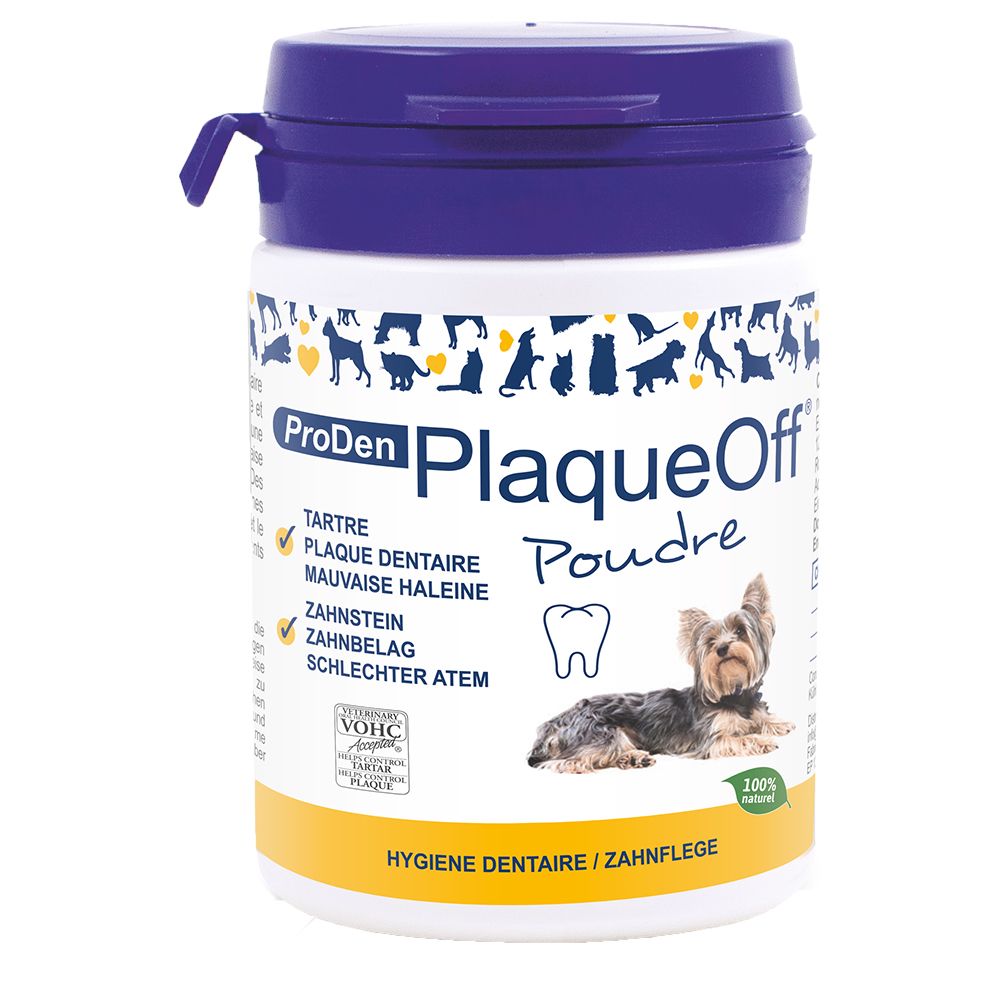
Unhealthy gums and lack of tooth care may have wide-ranging effects for your pet’s whole organism. Bacteria can spread via the gums to the digestive tract and into the blood stream, reaching lungs, joints, kidneys, liver and the heart, where they can cause inflammation. Regular dental care is essential for your dog’s cat’s well-being and will likely save on costly vet bills. PlaqueOff Animal is a completely natural product. It is a special type of seaweed which has been found to have specific beneficial effects for oral care. It is rich in natural iodine and contains important vitamins and minerals and is free from artificial colours, preservatives, gluten and sugar. PlaqueOff Animal has been found to be of great benefit in the treatment of tartar and bad breath. Used consistently every day any existing tartar will brighten over time (depending on the state of your dog’s teeth) and may then be quite easily scraped off. PlaqueOff was originally developed and tested for humans and was then found to have great effects on animals, too. This led to the development of PlaqueOff Animal. Use: ProDen PlaqueOff Dental Care Powder for Dogs Cats comes in a granulated form which is easily added to food every day with the included measuring spoon. PlaqueOff Animal is suitable for both cats and dogs. Small dog breeds (up to 10 kg) and cats: 1/2 to 1 scoops per day Medium-sized dog breeds (10 to 25 kg): 1 bis 2 scoops per day Large dog breeds (from 25 kg): 2 scoops per day
Prices come from the shop and may have changed. Check price and delivery with the shop before you buy.
How long does a hypoallergenic food trial take?
The elimination phase usually lasts 6 to 8 weeks, fed strictly with nothing else. Your vet may then reintroduce the old food to see whether symptoms return. Follow your vet’s plan, as the details vary by dog.
Can I buy a veterinary diet without seeing a vet?
Many shops sell veterinary diets without a prescription because they are foods, not medicines. However, they are formulated for specific medical conditions, and the labels recommend a vet’s opinion before use. Feeding the wrong one can cause problems, so use them under veterinary guidance.