Wet and dry food can both make a healthy diet for a cat. What matters more than the format is that the food is labelled “complete”, suits your cat’s age, and is fed in the right amount. Many owners feed a mix, which is perfectly sensible.
The real differences are water and calories. According to UK Pet Food, wet food is roughly 70 to 80% moisture and dry food about 8 to 10%. A cat on wet food takes in much of its water with meals; a cat on dry food has to drink it. Dry food is also far more energy dense: International Cat Care gives typical figures of 3 to 4 kcal per gram for dry food against 0.8 to 1.5 kcal per gram for wet. A small handful of biscuits can be most of a day’s calories.
In short, wet food helps with water intake and portion control; dry food is cheaper and can be left out. Choose on your cat’s health, weight and habits, then weigh the portions.
How wet and dry food compare
| Wet food | Dry food | |
|---|---|---|
| Moisture | About 70 to 80% | About 8 to 10% |
| Energy per gram | About 0.8 to 1.5 kcal | About 3 to 4 kcal |
| Cost per day | Higher | Lower |
| Leaving it out | Replace at least twice a day | Can stay out all day |
| Puzzle feeders | Awkward | Works well |
| Often suits | Cats that drink little or need to lose weight | Thin cats, grazers, busy households |
When wet food makes sense
Cats evolved eating prey that is more than 60% water, and International Cat Care notes that they tend to concentrate their urine rather than drink more. Wet food can help produce more dilute urine, which the charity says may help cats prone to cystitis or bladder stones. It is bulkier for the same calories, which helps weight loss, and softer for cats with sore mouths. Pouches, trays and tins of wet cat food all do the same job; pick a size your cat finishes in one or two sittings.
The downsides are cost, smell and summer flies.
When dry food makes sense
Dry food is convenient and cheaper per day, and it suits cats that graze or eat from puzzle feeders. It is also a useful way to get enough calories into a thin or fussy cat. A good dry cat food should still be a complete food, not a mixer.
One common belief is that biscuits clean teeth. International Cat Care says not every dry diet has a texture that tackles plaque, and that tooth brushing remains the gold standard.
The main risk with dry food is overfeeding, because a correct portion looks small. Cats on mostly dry food also need easy access to water: put bowls away from the food and the litter tray, change the water daily, and consider a wide bowl or a fountain from the bowls and fountains range for a reluctant drinker. Fountains need cleaning often.
What to check on the label
- Complete or complementary. A complete food provides everything a healthy cat needs. Complementary foods, which include most treats and some pouches, must be fed alongside a complete food.
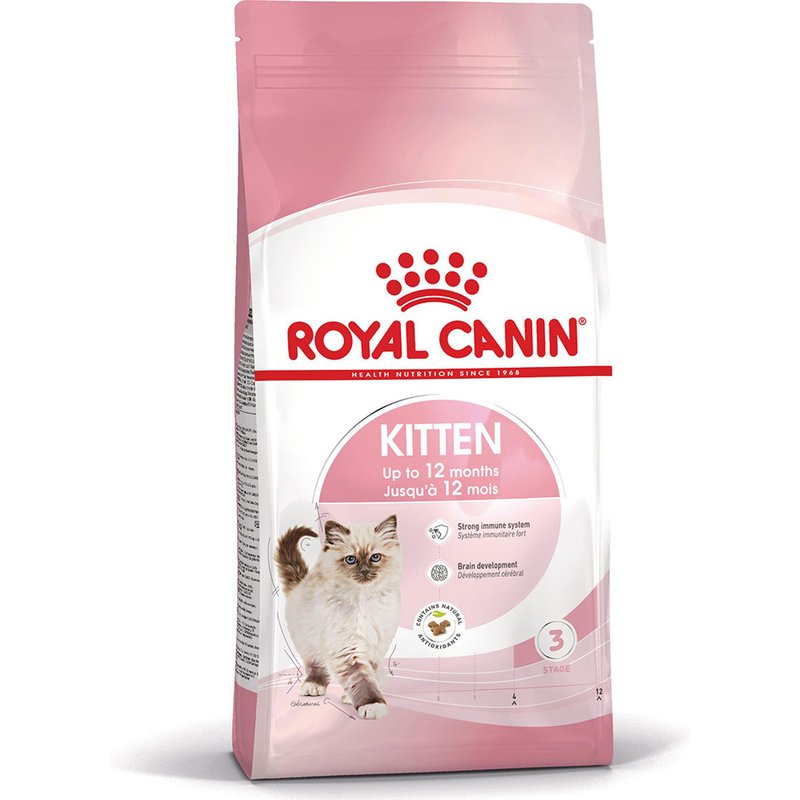
- Life stage. Kitten food is designed for the first year. Senior foods start somewhere between about 8 and 11 years, depending on whose guidance you read.
- Feeding guide. Grams per day by bodyweight. UK Pet Food calls it a starting point, not a fixed rule.
- Analytical constituents. Protein, fat, fibre and ash, plus moisture when above 14%. Wet food’s protein figure looks low next to dry food because of the water; compare like with like.
- Highlighted ingredients. If the pack draws attention to an ingredient, such as “with salmon”, the label must state the percentage of it.
How much to feed
Start with the feeding guide for your cat’s ideal weight, not its current weight if it is overweight. Weigh the day’s food with kitchen scales; measuring dry food by eye is very error prone.
As a worked example, UK Pet Food calculates that a neutered, fairly active 4 kg cat needs about 190 kcal a day. Using the typical energy figures above, that comes to roughly:
| Diet | Approximate daily amount for 190 kcal |
|---|---|
| All dry (3.5 to 4 kcal per gram) | 48 to 54 g |
| All wet (0.8 to 1.2 kcal per gram) | 160 to 240 g, about two to three 85 g pouches |
| Half wet, half dry by calories | 24 to 27 g dry plus 80 to 120 g wet |
These figures are an illustration; check the energy value on your own food if the pack gives one. If you mix two foods, feed a share of each pack’s daily amount, not the full amount of both.
Then adjust to your cat. You should be able to feel the ribs easily under a thin layer of fat. Cats Protection advises that neutered cats usually need less food, and that a cat more than 15% over its ideal weight counts as overweight. Weigh your cat every few weeks.
Meals, treats and freshness
Cats naturally eat little and often, so split the daily ration into at least two meals, more if you can. Treats should be no more than 10% of daily calories and come out of the day’s allowance, including cat treats labelled complementary.
Replace wet food at least twice a day. Cover opened tins and keep them in the fridge, following the pack’s storage advice, and let chilled food reach room temperature before serving, as many cats refuse cold food. Never feed dog food as a regular diet.
Changing food without an upset stomach
Sudden changes often cause diarrhoea or food refusal. PDSA suggests taking about two weeks:
- Days 1 to 4: offer a teaspoon of the new food on a separate plate beside the usual food.
- Days 5 to 10: gradually increase the new food and reduce the old.
- Days 10 to 14: phase out the old food once your cat has been eating both consistently.
Only move to the next step after your cat has happily eaten the new food for at least three days. If your cat refuses it or becomes unwell, go back to the old food and speak to your vet. Kittens should stay on their familiar food at first; the new kitten checklist and kitten products cover the first months.
Special diets and when to see a vet
Prescription and veterinary diets, such as urinary or kidney foods, are designed to be used under veterinary guidance, so check with your vet before starting or stopping one. Supplements and special cat food are not a substitute for a diagnosis.
Speak to your vet if your cat suddenly eats much more or less, drinks noticeably more, changes weight without a change in diet, or has vomiting or diarrhoea that does not settle. Straining in the litter tray with little or no urine is an emergency; the guide to choosing cat litter explains what to watch for.
Quick checklist
- Buy food labelled “complete” and matched to your cat’s life stage.
- Use the feeding guide for your cat’s ideal weight as a starting point.
- Weigh dry food every day with kitchen scales.
- Replace wet food at least twice a day and refrigerate opened packs.
- Keep fresh water away from the food bowl and change it daily.
- Count treats as part of the daily allowance, no more than 10%.
- Change foods gradually over about two weeks.
- Weigh your cat every few weeks and adjust portions.
Common questions
Can I leave wet food out all day?
No. Wet food spoils and attracts flies, so replace it at least twice a day. If you are out for long periods, a measured portion of dry food or a timed feeder covers the gap better.
Is it fine to mix wet and dry food?
Yes, as long as the total calories are right. Separate bowls make it easier to see what your cat is actually eating and keep the biscuits from going soggy.
Does dry food keep my cat’s teeth clean?
Not reliably. Some dry diets are designed to reduce plaque, but many are not, and tooth brushing remains the gold standard. Ask your vet to check your cat’s teeth at the yearly health check.
Should I give my cat milk?
There is no need. Many cats cannot digest the lactose in cow’s milk, which can cause diarrhoea. Cat milks are high in calories, so treat them as an occasional extra.